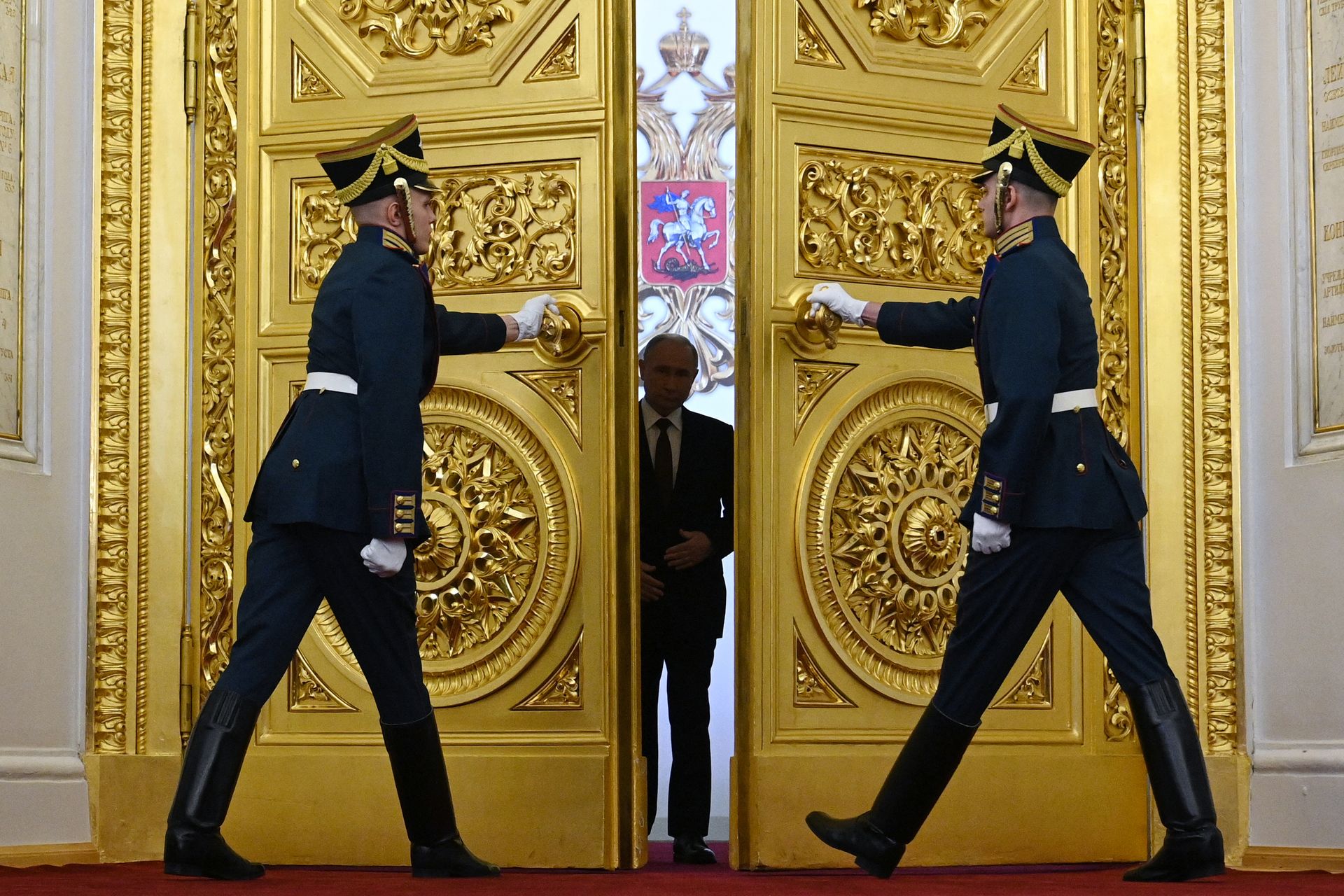
Putin’s approval rating has slipped to 73% in a state-linked FOM survey, the lowest since February 2022, while VCIOM says nearly a quarter of Russians do not trust him. The article frames the decline as a possible signal of elite disagreement over internet censorship and online control, rather than a straightforward loss of public support. It also cites growing economic stress, with Levada reporting Putin’s rating down to 79% in April 2026 from 87% in September 2025 and only 41% of Russians saying their income exceeds subsistence level in February 2026.
The important signal is not a regime legitimacy issue; it is a coordination problem inside the state. When censorship and network throttling start to impose visible economic costs, the civilian bureaucracy has incentive to leak dissatisfaction through state-sanctioned channels to push back against security hardliners. That creates a measurable policy risk premium for any Russia-adjacent asset whose value depends on a stable operating internet, payment rails, logistics coordination, or consumer demand.
Second-order damage is likely to show up first in the domestic private sector rather than in headline political stability. SMEs, ad-dependent platforms, e-commerce, delivery, telecom, and VPN-adjacent workarounds all suffer from fragmented connectivity, while defense and internal-security budgets gain relative bargaining power inside the Kremlin. Over a 3-6 month horizon, the more interesting trade is not a collapse scenario but a further erosion of productivity and a gradual widening of the gap between official growth claims and realized consumer behavior, which can pressure inflation expectations and cap discretionary spending.
The market is probably overpricing near-term regime fragility and underpricing policy persistence. A true reversal requires either a material de-escalation in wartime cyber controls or a clear elite bargain that lowers the security apparatus' influence; absent that, the crackdown likely continues even if it becomes politically inconvenient. The key tail risk is not a coup but a lurch toward deeper digital isolation, which would be negative for domestic adtech, fintech, and any foreign vendor still exposed to Russian demand or infrastructure dependencies.
AI-powered research, real-time alerts, and portfolio analytics for institutional investors.
Request DemoOverall Sentiment
mildly negative
Sentiment Score
-0.15
