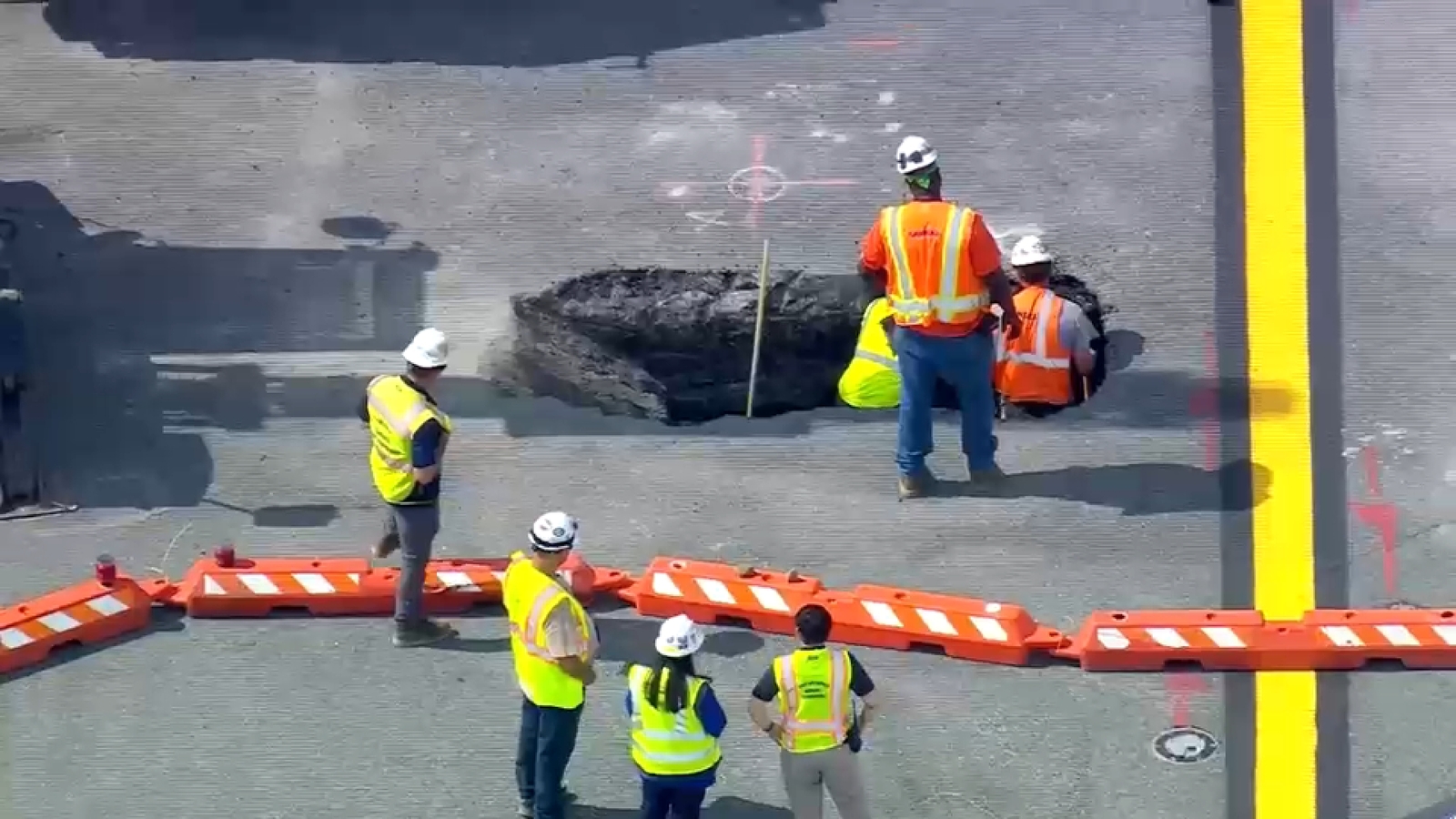
A sinkhole shut down Runway 4/22 at LaGuardia Airport, forcing departures to use the second runway and causing delays and cancellations. The runway remained closed as of 6 a.m. Thursday while emergency crews worked on repairs. The disruption is operationally negative for air travel in New York, but the broader market impact should be limited.
This is a short-duration operational shock, but the market impact is asymmetric because LaGuardia is slot-constrained and already running with limited runway redundancy. The key second-order effect is not just lost flights today; it is knock-on network disruption across short-haul East Coast routes where aircraft and crews are tightly scheduled, so even a partial reopening can take 24-72 hours to normalize.
The immediate losers are carriers with higher LaGuardia concentration and less schedule flexibility, while beneficiaries are competitors with stronger Newark/JFK/Boston alternatives and better rebooking capacity. For Air Canada, the direct financial hit is modest, but the reputational overlay matters because this runway is now associated with a prior high-profile incident; that increases the odds of heightened inspection scrutiny and longer restoration timelines than a typical pavement repair.
The market may be underpricing the possibility that this becomes a recurring maintenance issue rather than a one-off weather event. If the underlying cause is drainage or subgrade failure, the repair bill is likely less important than the risk of repeat closures during the next heavy rain cycle, which would keep a small but persistent pressure on Northeast travel yields and on-time performance metrics into the spring/summer peak.
Consensus will likely dismiss this as noise, but the better read is that constrained infrastructure creates option value for alternate hubs and premium-priced recovery capacity. The trade is not to fade airlines broadly; it is to isolate names with the most LaGuardia exposure versus those with stronger operational flexibility and lower disruption sensitivity.
AI-powered research, real-time alerts, and portfolio analytics for institutional investors.
Overall Sentiment
mildly negative
Sentiment Score
-0.20
Ticker Sentiment
