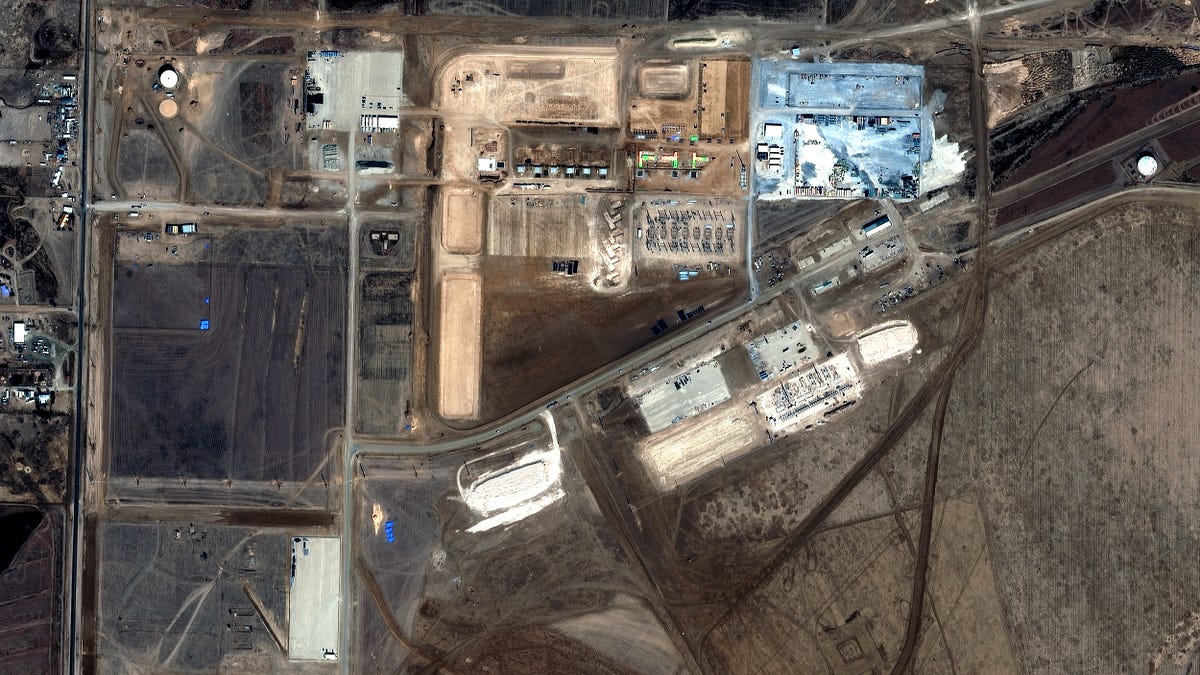
Fermi America’s $746 million IPO-backed data center project is at least a year behind schedule, with satellite imagery indicating it has yet to start meaningful construction despite prior claims that the first phase was nearly complete. The company also lost a key tenant, faces a class action lawsuit over tenant-demand disclosures, and announced CEO Toby Neugebauer’s immediate departure on April 17, sending shares down as much as 31% in post-market trading. If Fermi cannot secure a tenant and financing, its targeted first 1 GW buildout slips to May 2027 versus the original April 2026 timeline.
This is less a construction miss than an underwriting failure. The market is being forced to reprice a story stock whose equity value depended on two scarce inputs arriving in the right order: a committed tenant and executable power delivery. When either slips, the project is not just delayed; the capital stack becomes self-reinforcingly weaker because counterparties, suppliers, and local regulators all start treating the sponsor as optional rather than inevitable.
The second-order loser is not only Fermi equity holders but also the broader “AI infrastructure at any cost” trade. Every month of visible inactivity raises the hurdle rate for other megacampus developers because it hardens skepticism around pre-let assumptions and narrows the pool of investors willing to fund speculative power-gen buildouts. That said, the construction bottleneck itself is bullish for the incumbent platforms that already have land, grid access, and tenants — the scarcity premium shifts toward operational scale, not promised scale.
AMZN is the cleaner relative beneficiary if enterprise AI demand remains intact: hyperscalers with balance-sheet flexibility can wait out broken private projects and redirect workloads to capacity they can control or prepay. META benefits indirectly if capital markets punish late-stage private entrants, because every failed mega-campus tightens the narrative moat around large public operators that can self-fund infrastructure. The more important read-through is to EPC, turbine, and utility-equipment vendors: project slippage pushes revenue recognition to the right, but preserves backlog if financing survives; if financing breaks, orders can be canceled or reallocated, which is the real hidden risk.
The contrarian point is that this is not necessarily terminal. If the company secures a credible anchor tenant and financing, the stock can bounce violently because expectations are already deeply depressed and the physical timeline is still the dominant variable over a multi-year horizon. But the market is likely underestimating how much management credibility erosion impairs even a good asset — in megaprojects, losing 6-12 months early often costs 18-24 months in total because every subsequent milestone becomes harder to fund.
AI-powered research, real-time alerts, and portfolio analytics for institutional investors.
Request DemoOverall Sentiment
strongly negative
Sentiment Score
-0.68
Ticker Sentiment
