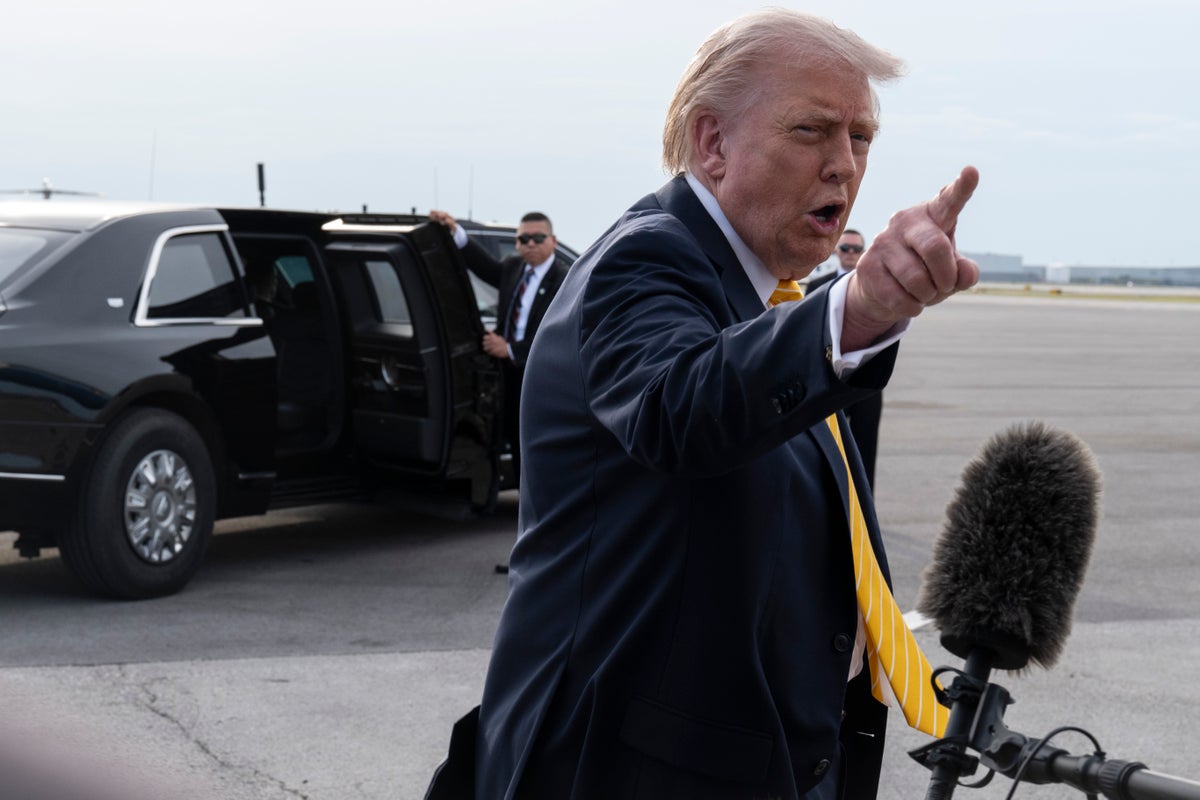
Trump said he may authorize new strikes on Iran if it "misbehaves," while a senior Iranian official warned that renewed conflict with the US is "likely" and the ceasefire could collapse. The article also says the US blockade of Iranian ports remains in place, with Tehran proposing a staged deal that would reopen the strait before nuclear talks, underscoring continued disruption to global shipping and energy flows. Separately, Trump signaled a larger-than-expected US troop drawdown in Germany, adding to transatlantic security तनाव.
The market implication is less about the diplomacy headline than the re-pricing of tail risk around Gulf supply lanes and allied basing. Even without a full restart of hostilities, a persistent blockade/retaliation cycle keeps insurance premia, tanker utilization, and routing complexity elevated, which is the real earnings lever for shipping, offshore logistics, and regional airline margins. The second-order effect is that Europe absorbs more security burden just as defense budgets and industrial capacity are already under pressure, which favors prime contractors with NATO exposure while penalizing politically sensitive suppliers tied to German basing and transatlantic deployments.
The more important catalyst window is days to weeks, not months: any miscalculation in the Strait or a renewed strike would immediately hit crude prompt spreads, refined product crack volatility, and airfreight/ocean freight schedules. Energy equities may not move linearly with crude if the market starts to price in demand destruction or policy intervention, but the winners in a controlled escalation are upstream names with low lifting costs and defense firms with replenishment exposure, while losers are transport operators, European cyclicals, and refiners facing feedstock/input whiplash. The Germany troop drawdown is a separate but reinforcing signal that Europe must self-fund more of its security architecture, which is medium-term bullish for continental defense procurement and negative for USD-sensitive industrial suppliers reliant on US basing continuity.
Consensus appears too anchored to a negotiated de-escalation path. The underappreciated risk is that both sides can claim tactical restraint while still preserving a high-probability re-escalation channel, which keeps implied volatility too cheap if the market is pricing a clean ceasefire. The right way to express this is through convexity rather than outright beta: long defense and select energy logistics, short exposed transport/European cyclicals, and use options around the next 2-6 week catalyst window rather than cash equity where headline risk can whipsaw positioning.
AI-powered research, real-time alerts, and portfolio analytics for institutional investors.
Request DemoOverall Sentiment
strongly negative
Sentiment Score
-0.62
