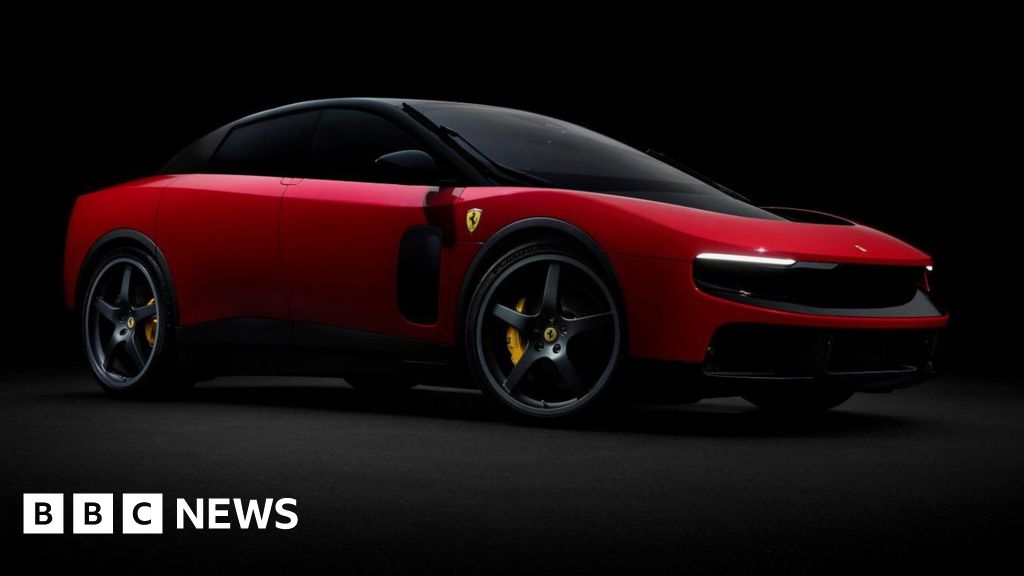
Ferrari unveiled its first fully electric car, the $640,000 Luce, after roughly five years of development, marking a major strategic shift from its prior EV reluctance. The model is Ferrari's first five-seater and uses in-house electric motors on each wheel, but the launch drew mixed reactions online and comes as rivals Lamborghini and Porsche scale back EV ambitions amid weak luxury EV demand. The announcement is strategically important for Ferrari, though near-term market impact is likely limited.
Ferrari’s EV move is less a demand signal for the luxury auto category than a brand-defensiveness move: it is trying to own the high-margin end of electrification before Chinese OEMs force a price-and-feature war. The important second-order effect is that Ferrari can afford to be a technology showcase while most peers cannot, which raises the bar for perceived innovation across the ultra-luxury segment without requiring near-term volume success. If the market rewards the launch, the real beneficiary is not the EV unit itself but Ferrari’s pricing power across the entire model line via halo effects.
The bigger competitive read-through is negative for companies that need EVs to be mass-market profitable, because Ferrari is proving that even at the top end the product is polarizing and the adoption curve is likely to be slow. That helps explain why legacy luxury and premium manufacturers are retreating: the economics of bespoke EV platforms deteriorate quickly when volumes are low and battery costs remain sticky, while Chinese entrants keep compressing pricing. Over the next 6-18 months, the risk is not that Ferrari’s EV flops on launch day, but that it becomes a margin drag in R&D and tooling if management overbuilds the transition before consumer acceptance is visible.
For automakers with exposed EV narratives, this is a reminder that sentiment can shift faster than unit economics. The market may overreact positively to Ferrari because scarcity and design matter more than drivetrain mix at the very high end, but that does not translate to a broad EV demand resurgence. The contrarian point is that a controversial launch can still be a strategic success if it preserves brand exclusivity and lets the company price the option value of electrification rather than betting the franchise on it.
The tradeable implication is mainly relative value, not outright sector beta. Near term, any pop in Ferrari should be faded if it drives the multiple above peers without evidence of order conversion, while automakers with weaker balance sheets and high EV capex remain vulnerable to de-rating if the market interprets this as another sign of slow luxury EV adoption.
AI-powered research, real-time alerts, and portfolio analytics for institutional investors.
Request DemoOverall Sentiment
neutral
Sentiment Score
0.15
Ticker Sentiment
