
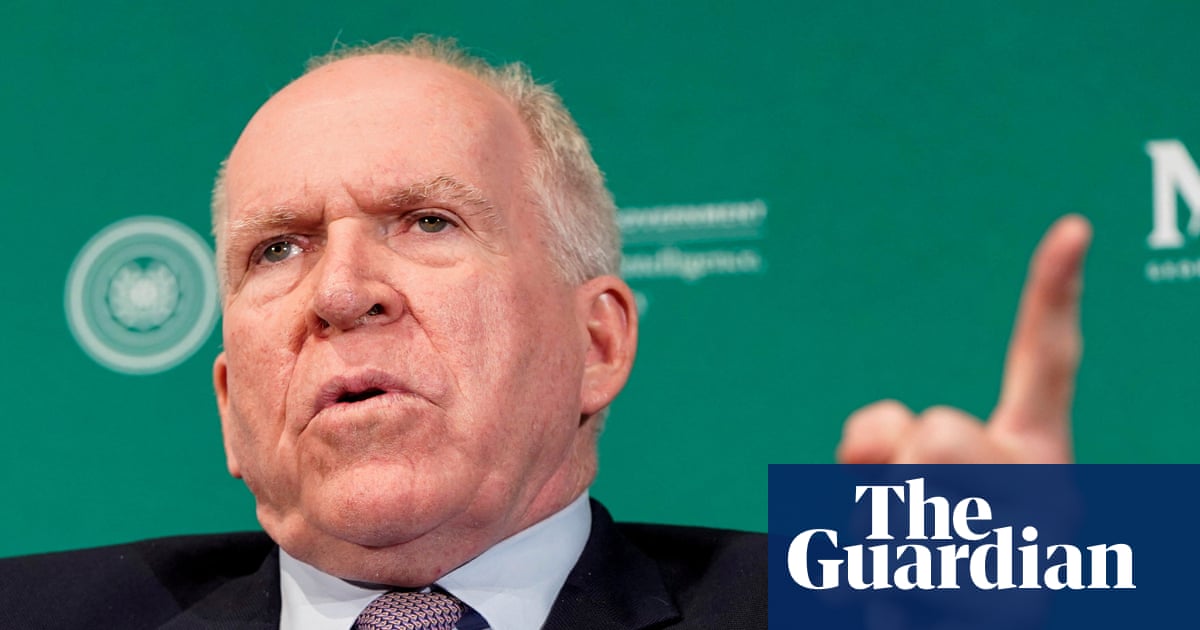
A federal prosecutor leading the John Brennan investigation stepped away after reportedly expressing reservations, while the Southern District of Florida is said to be moving toward a potential indictment soon. The article also highlights continued Trump-era pressure on Justice Department personnel and politically sensitive prosecutions. The development is notable for legal and governance implications, but it is unlikely to have broad market impact.
This is less about the underlying investigation and more about the signal it sends on institutional process drift inside DOJ: when career attorneys step back and politically aligned personnel rotate in, the market should infer a higher probability of headline-driven actions with lower procedural durability. That raises the odds of an indictment being used as a short-term political instrument, but it also increases the chance of later dismissal, suppression fights, or venue/authority challenges that can stretch over quarters rather than days.
For markets, the direct equity read-through is modest, but the second-order effect is a risk premium on any asset tied to policy credibility and legal predictability. The bigger issue is not one individual case; it is whether enforcement becomes more discretionary and personnel-sensitive across antitrust, finance, and regulated sectors, which could compress multiples for companies with open legal overhangs and expand dispersion between politically exposed names and cleaner balance sheets.
The contrarian view is that this may be largely priced as Washington noise unless it broadens into a visible pattern of retaliatory prosecutions or DOJ leadership churn. If the story stays contained, the tradeable impact is mostly in event-vol legal volatility rather than directional equity beta. But if the investigation accelerates toward an indictment inside 2-6 weeks, expect a short, sharp spike in political-risk hedges and in names that trade on rule-of-law confidence, with the reversal risk highest once courts or internal DOJ objections surface.
Bottom line: the setup argues for selective optionality rather than outright directional shorts. The risk/reward is best in hedges that benefit from an expansion of political/legal uncertainty, while keeping position sizes small because the catalyst can resolve quickly or be reversed by a personnel change.
AI-powered research, real-time alerts, and portfolio analytics for institutional investors.
Request TrialOverall Sentiment
mildly negative
Sentiment Score
-0.15
Ticker Sentiment
