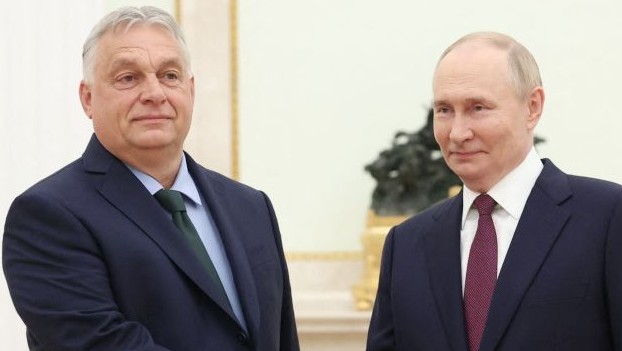
Hungary's prime minister Viktor Orbán is visiting Moscow primarily to discuss oil and natural gas supplies, reflecting Budapest's continued reliance on Russian energy despite the Ukraine war and Western sanctions. Orbán — who has maintained ties with both Vladimir Putin and Donald Trump and previously secured an exemption from U.S. sanctions — risks setting a precedent for other Eastern European governments seeking restored gas flows. The trip occurs amid active diplomacy, including an expected U.S. delegation to Moscow and cautious comments from Putin about the prospects for a near‑term peace deal, leaving energy-security and sanction-enforcement uncertainty for markets.
Market structure: Orban’s Moscow visit increases the probability of bilateral discounted pipeline gas to Hungary and potentially selective re-routing of Russian volumes, which benefits Russian exporters and Hungarian incumbents (MOL, state utilities) while pressuring spot TTF/NBP prices in Central Europe. Competitive dynamics: if Hungary secures cheaper contracted supply, it can undercut regional wholesale prices and hurt LNG regas margin capture in neighbouring markets; pipeline capacity remains the choke point so market share shifts will be gradual (weeks–months) not instantaneous. Cross-asset: expect short-lived compression of European gas forwards (3–6 month tenor) and knock-on downward pressure on European utility equities and commodity-linked sovereign spreads; safe‑haven bonds (Bunds) could rally into headlines, HUF vs EUR will be headline‑sensitive.
Risk assessment: Tail risks include an EU political response (sanctions or suspension of intra‑EU energy flows) and a détente that reduces the energy risk premium — both are low‑probability but high‑impact and asymmetric for assets. Time horizons: immediate (days) headline volatility around the visit; short-term (1–3 months) contract adjustments and storage refills; long-term (6–24 months) structural divergence if Eastern EU negotiates separate gas deals. Hidden dependencies: pipeline physical capacity, EU solidarity on sanctions, and LNG tanker routing economics — a single pipeline capacity constraint can nullify contractual deals. Catalysts: confirmation of export volumes, EU Council statements, and US/Moscow diplomatic outcomes.
Trade implications: Tactical long on spot/near-term gas exposure and LNG exporters is favored if flows are disrupted; hedge with shorts in European merchant utilities and selective FX positions. Direct plays: buy short‑dated TTF calls or 3‑month forward positions to capture spikes; pair trades: long US/merchant LNG (Cheniere LNG) vs short German utilities (Uniper/RWE) to express rerouting demand. Options: use call spreads to limit premium paid into likely headline volatility window (enter within 7 trading days). Sector rotation: overweight global LNG developers and underweight European merchant utilities and select sovereign‑credit exposed CEE banks for 1–6 months.
Contrarian angles: Consensus views this as purely Hungarian — miss is that a durable bilateral discount could force downward repricing of EU gas curves by 10–25% over months and accelerate pooled purchasing reforms that benefit large LNG sellers. The market may be underpricing a scenario where Hungary’s cheaper input reduces European industrial gas bids and thus utility margins; conversely, overreaction risk exists if headlines trigger a temporary selloff in HUF/CE assets that reverses once flows are verified. Historical parallels: 2014/15 gas disputes show market moves are sharp but mean‑revert when storage and alternative routes kick in. Unintended consequences: EU policy tightening or expedited LNG terminal investments could shift returns away from Russian pipeline beneficiaries toward global LNG infrastructure owners.
AI-powered research, real-time alerts, and portfolio analytics for institutional investors.
Request DemoOverall Sentiment
mildly negative
Sentiment Score
-0.25
