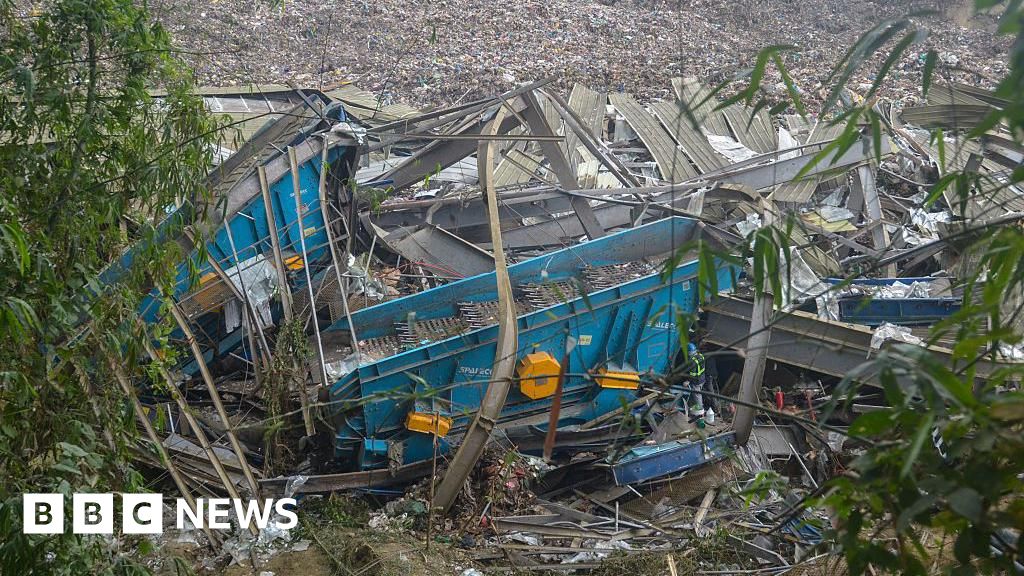
A privately owned Binaliw landfill in Cebu City collapsed on Thursday while about 110 workers were on site; rescuers have confirmed four deaths, 12 hospitalizations and more than 30 people missing as teams race to find survivors amid unstable debris and await a 50-ton crane. The 15-hectare site failure—attributed by local officials to poor waste-management practices—creates immediate humanitarian and operational risk and could trigger ESG, regulatory and potential liability scrutiny for operators and municipal authorities, though the event is unlikely to move broader financial markets.
Market structure: The immediate winners are engineered waste-management and heavy-equipment suppliers (crane rental, earthmoving) and geotechnical/remediation contractors; losers are informal/private landfill operators and nearby small-cap property/municipal issuers bearing cleanup liability. Expect a rotation toward capital‑intensive, compliance‑focused providers over the next 6–24 months as municipalities face pressure to close or retrofit unsafe sites — this shifts pricing power to global OEMs and specialized EPCs that can deliver turnkey solutions.
Risk assessment: Tail risks include a large regulatory sweep (national closure order) that forces retrofits costing PHP billions or triggers class-action liabilities for operator(s), which could widen Philippine corporate/sovereign spreads by 20–50bp short term. Time horizons: days — rescue and reputational shock; weeks — investigations and emergency procurement; 6–18 months — contract awards and capex. Hidden dependencies: election funding cycles, ADB/World Bank financing, and local legal judgments that could amplify costs.
Trade implications: Tactical long bias to industrial OEMs and engineered-waste names (3–12 month horizon) via equity or call spreads; increase defensive insurance/reinsurance hedges if casualties/claims escalate. Reduce unhedged exposure to Philippine small-cap contractors and local municipal credit for 30–90 days until investigation clarifies liability. Cross-asset: modest short-term pressure on PHP and local credit, small pickup in demand for steel/used cranes.
Contrarian angle: Markets underprice structural capex opportunity in SE Asia waste infrastructure — if governments commit >PHP 5–10bn regionally within 12 months, select mid-cap EPCs and waste‑to‑energy developers should re-rate. Beware ESG backlash and political risk that could divert funds to low‑cost fixes instead of long‑term solutions.
AI-powered research, real-time alerts, and portfolio analytics for institutional investors.
Request DemoOverall Sentiment
moderately negative
Sentiment Score
-0.45
