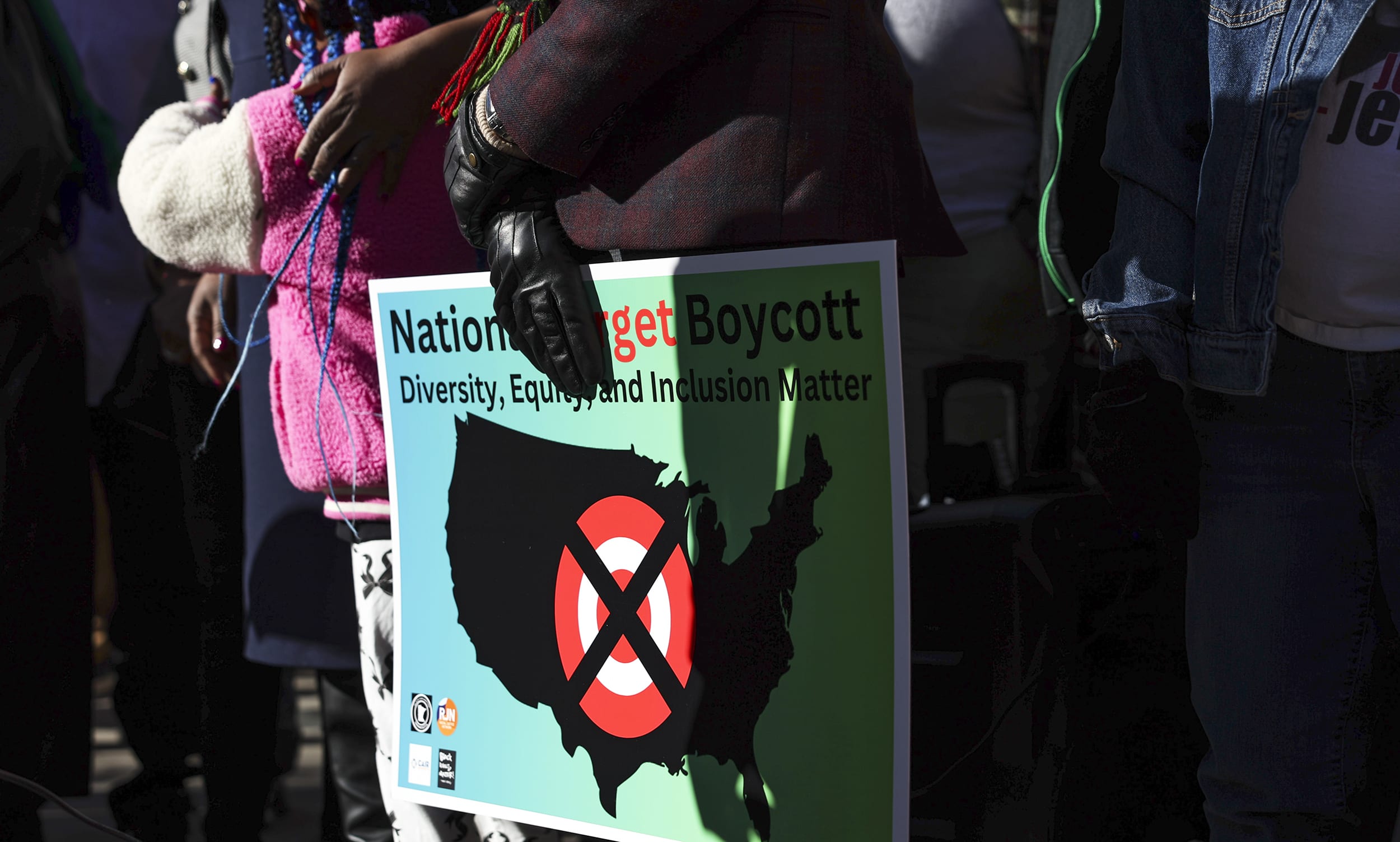
Billions of dollars of Target market value have been wiped out after a nationwide boycott that began Feb 1, 2025, following Target’s rollback of DEI commitments and a $1M donation tied to the Trump–Vance inauguration. The boycott has driven declining store traffic, reduced sales and revenue, significant drops in the stock price, and the replacement of the longtime CEO, signaling material reputational and sales risks among core customer communities despite prior $2.1B racial-equity pledges.
The market is treating TGT as a reputation-risk lever rather than a pure retail earnings story; that amplifies volatility because lost customer trust compounds through lower visit frequency, higher promotional intensity, and elevated churn among higher-margin discretionary buyers. Conservatively, a sustained 1–2% market-share loss concentrated in urban/coastal cohorts would translate to a mid-single-digit revenue hit and a high-single to low-double-digit EPS swing once higher markdowns and remodel capex are baked in over 2–4 quarters.
Winners are those with low-friction substitution and superior fulfillment economics: national discounters (WMT), off-price apparel (TJX), and digital-first grocers (AMZN/Whole Foods, cost-to-serve arbitrage) stand to capture wallet share without the same reputational drag. Upstream second-order impacts include private-label suppliers facing accelerated churn and increased payment terms pressure, and store-level labor markets where higher turnover raises hiring costs by an estimated 5–10% in affected metros within months.
Main tail risks are non-linear: a protracted boycott could invite activist ownership, forced asset-light strategies, or litigation-driven liabilities that compress valuation multiples by another 200–400bps. Near-term catalysts that would reverse the trend are measurable — sustained positive same-store-sales (3 consecutive months), demonstrable community-restoration programs with third-party verification, or large institutional buying; absence of those leaves downside concentrated in the next 1–4 quarters.
From a portfolio standpoint treat TGT as a governance/ESG-driven idiosyncratic short while rotating into structurally advantaged peers: the setup favors asymmetric option-based shorts and pair trades that monetize sentiment unwind risk rather than naked directional exposure.
AI-powered research, real-time alerts, and portfolio analytics for institutional investors.
Request DemoOverall Sentiment
strongly negative
Sentiment Score
-0.70
Ticker Sentiment
