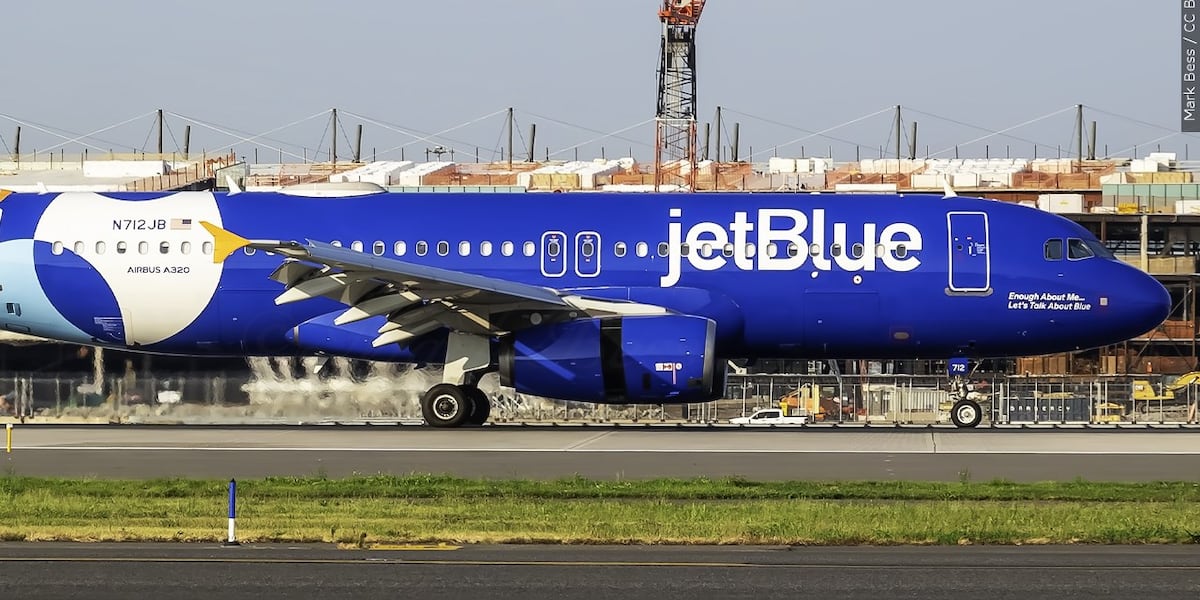
The FAA briefly grounded all JetBlue flights at the airline's request; the ground stop was imposed and lifted about 40 minutes later. JetBlue said a 'brief system outage' was resolved and operations resumed, offering no further details. The interruption was short-lived and likely has minimal near-term financial impact, though it could prompt operational or regulatory follow-up.
A transient grounding initiated at the FAA level for a single airline is disproportionately informative about operational fragility rather than demand: the FAA intervening increases the probability this was not a trivial crew delay but an IT/communication failure or a safety-related systems anomaly. If the root cause is a third‑party shared vendor (reservations, ops control, or messaging backbone), the economic impact can cascade to peers within days as re‑routing, crew timing mismatches, and gate clashes force airlines to pay incremental irregular ops costs (overtime, repositioning flights, hotel nights) that compress unit margins by low‑single digits in the following 1–4 weeks.
Second‑order revenue effects favor incumbents with spare domestic capacity and more resilient operations teams: competitors can capture yield uplift from displaced passengers and last‑minute leisure demand, producing a short‑term fare micro‑shock that benefits carriers with flexible inventory and strong loyalty booked downstream. Conversely, repeated incidents create regulatory and insurance exposures — an FAA request signals the regulator is watching, raising the conditional probability of formal inquiry or fines if corroborating incidents emerge within 30–90 days.
Operationally, the most material real cost is capex and opex to remediate (diversifying vendors, hiring ops staff, running warm failovers), which for a mid‑sized network carrier can mean a one‑time hit to free cash flow of 1–3% and ongoing structural opex increases of 50–150 bps, squeezing margins over 6–18 months. Monitoring indicators that flip the trade: repeated ground stops, vendor outage bulletins, spike in customer‑service volumes, or an FAA bulletin expanding scrutiny beyond a single event — any of these should materially widen downside for the fragile operator within a quarter.
AI-powered research, real-time alerts, and portfolio analytics for institutional investors.
Request DemoOverall Sentiment
neutral
Sentiment Score
0.00
