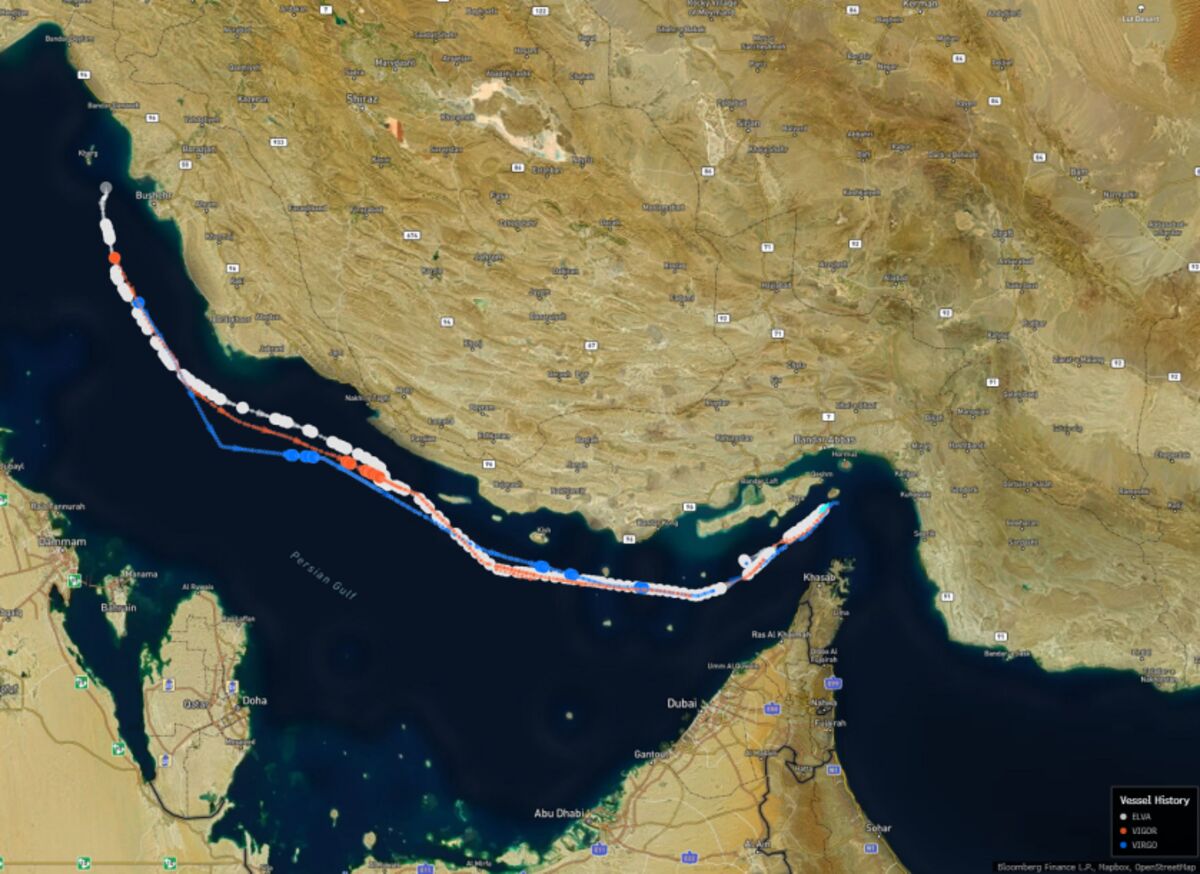
Around 6 million barrels of Iranian crude are on board three US-sanctioned supertankers transiting the Strait of Hormuz, the highest openly exported volume since the war started. The ships are reportedly headed toward waters off Singapore, where cargoes are often transferred for eventual delivery to refineries in China. The pickup in shipping activity comes as Tehran and Washington work toward a lasting peace deal, making this a geopolitically sensitive development for oil markets.
The immediate market read is not “more Iranian barrels,” but a lower probability of a sudden supply shock premium. If transit activity normalizes while negotiations progress, prompt-time spreads in crude are the first place to compress, because traders will start fading hedges that were built around disruption rather than around realized outages. That tends to hit front-month timespread volatility faster than outright prices, which matters more for refiners, shipping, and oil volatility products than for long-duration equity holders.
The bigger second-order effect is on discount differentials and sanction leakage economics. When sanctioned crude can move more freely through a chokepoint, the bottleneck shifts from transport risk to enforcement risk, which usually increases the value of gray-market logistics, storage, and blending hubs. That can support tanker utilization and certain midstream flows even if headline crude prices soften, while pressuring higher-cost Atlantic Basin producers whose realizations depend on tight global balances.
The main tail risk is political: a peace process can reduce the risk premium, but it also creates headline sensitivity if talks stall, an inspection regime tightens, or a single interdiction event occurs. Over a days-to-weeks horizon, the market may underprice how quickly risk premia can return; over months, though, sustained transit without incident argues for a gradual unwind in geopolitical premium rather than a sharp selloff. The contrarian angle is that this is less bullish for energy outright than for volatility-selling or relative-value expressions, because the most likely outcome is not a supply flood but a smaller, steadier discount embedded in logistics and sanctions arbitrage.
ELVA-specific flow is potentially more meaningful than the macro headline: sanctioned-vessel names can become event-driven proxies for enforcement intensity. If this kind of movement continues, it may improve earnings visibility for tanker owners and service providers tied to longer, more complex routing, but only if the market interprets it as persistent rather than one-off. Any return to higher interception risk would reverse that quickly and punish the most levered shipping exposures first.
AI-powered research, real-time alerts, and portfolio analytics for institutional investors.
Request DemoOverall Sentiment
neutral
Sentiment Score
0.10
Ticker Sentiment
