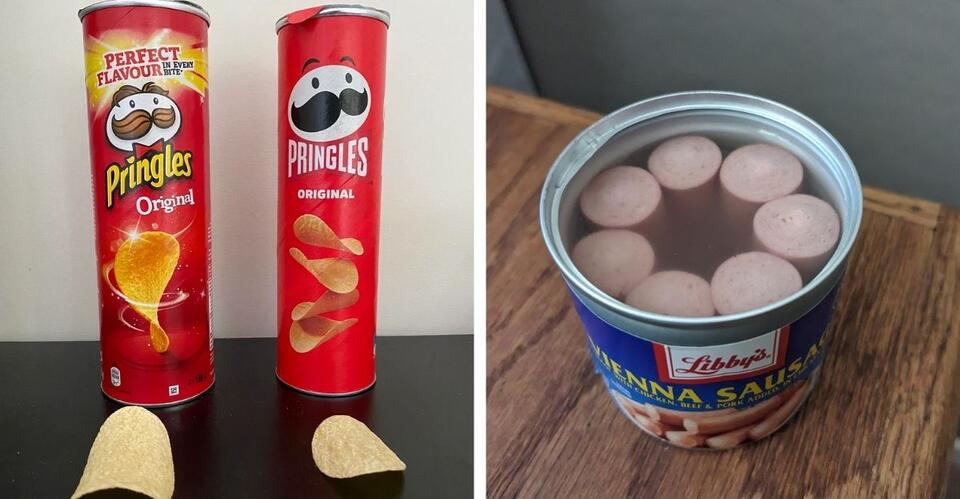
The article details the pervasive practice of 'shrinkflation,' a strategy employed by numerous companies to protect profits by reducing product size or quantity while maintaining original prices, often attributed to inflation. This trend, exemplified across various consumer goods from Charmin to Pringles, effectively means consumers are paying the same amount for less product, masking direct price increases and impacting purchasing power.
The article highlights the pervasive corporate strategy of 'shrinkflation,' where companies reduce product size or quantity while maintaining price points to protect profit margins amidst inflationary environments. This practice, described as a 'sneaky way' to adjust for inflation, effectively means consumers are paying the same amount for less product, thereby eroding purchasing power.
Major consumer goods entities, including Procter & Gamble (PG), GlaxoSmithKline (GSK), McDonald's (MCD), Conagra Brands (CAG), and Walmart (WMT), are cited as employing this tactic across various product categories. Specific examples range from Charmin Ultra Soft to Pringles and Sensodyne toothpaste, illustrating a broad industry trend that generates a 'moderately negative' sentiment among consumers.
The overall tone of the reporting is 'pessimistic' regarding this trend, reflecting potential consumer dissatisfaction and brand loyalty erosion. While the market impact score is 0.4, indicating relevance, the uniformly negative per-ticker sentiment (-0.6 for PG, GSK, MCD, CAG, WMT) suggests a reputational risk for these firms. This strategy, driven by inflation, directly influences consumer demand and retail dynamics.
AI-powered research, real-time alerts, and portfolio analytics for institutional investors.
Request DemoOverall Sentiment
moderately negative
Sentiment Score
-0.50
Ticker Sentiment
