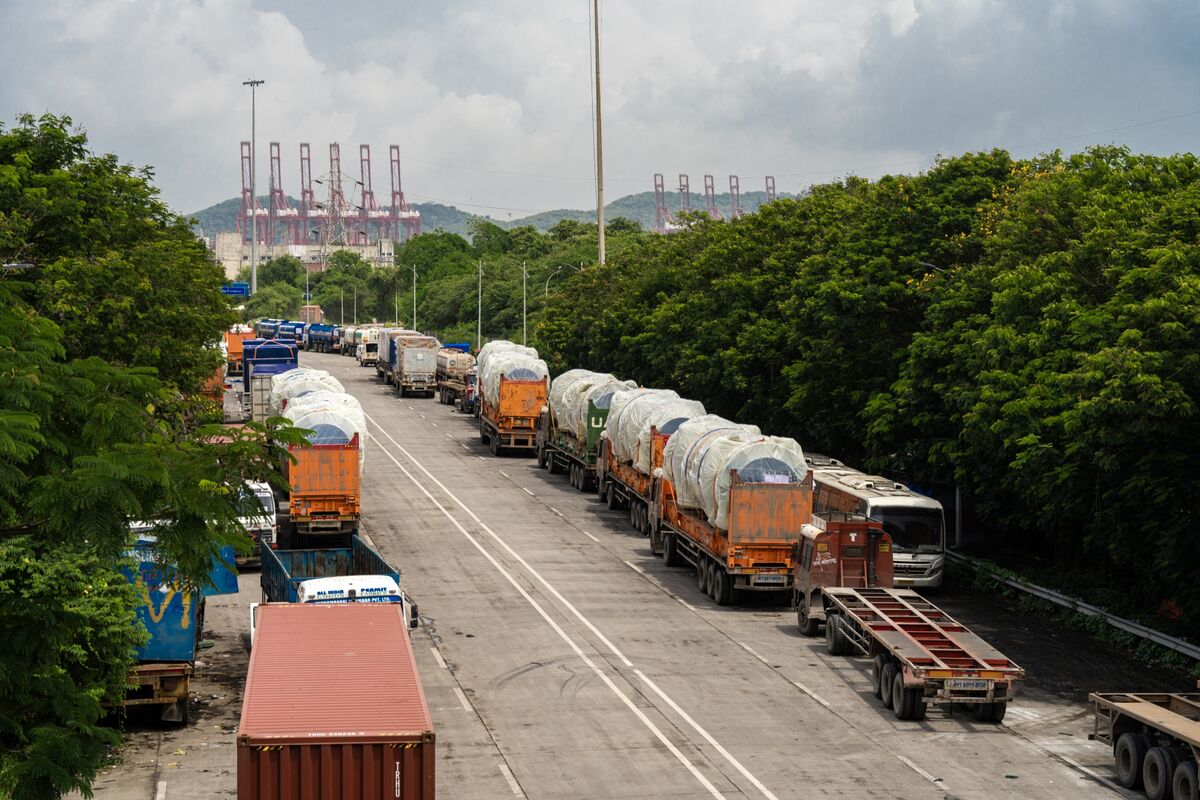
U.S. and Indian officials are attempting to reset bilateral relations, but negotiations have not produced a comprehensive trade deal, leaving key market-access and tariff issues unresolved. The lack of a clear agreement preserves policy uncertainty for companies with cross-border supply chains and investors considering exposure to India-related trade opportunities, while a diplomatic thaw could gradually improve cooperation if followed by concrete commercial accords.
Market structure: A stalled US-India trade pact but warming strategic ties favors defense primes (Lockheed LMT, RTX, NOC), cybersecurity/cloud vendors (CRWD, MSFT, AMZN) and India-focused capex beneficiaries (INDA/EPI) because procurement/FDI flows can substitute for tariff-driven trade. Export-oriented US agriculture and low-margin OEM exporters face downside from persistent tariffs and slow liberalization; expect INR volatility ±3–6% and a modest USD bid near-term. Cross-asset: safe-haven flows support USTs (2–10y) and lift implied vols on INR and EM FX; oil demand impact neutral but longer-term capex shifts could boost metals for Indian infrastructure.
Risk assessment: Tail risks include sudden US export controls or Indian retaliatory tariffs (probability <10% but high impact), a swing election in India (12–24 months) reversing openness, or a major announced defense package (>US$5bn) that materially reroutes supply chains. Immediate (days): headline-driven INR moves and EM flows; short-term (weeks–months): repricing of defense, cloud and India equities; long-term (years): structural supply-chain re-shoring and scaling of Make-in-India. Hidden deps: US Congress approvals, India offset/industrial participation clauses, and local content rules that shift winners to Tier-1 Indian suppliers.
Trade implications: Tactical overweight defense (LMT, RTX) and cybersecurity/cloud (CRWD, MSFT) for 12–36 months; rotate 3–5% from broad EM (EEM) into INDA/EPI over 30 days to capture differential FDI upside. Use options: buy a 6–12 month call spread on LMT (limited debit, 1–2% portfolio risk) and buy 3-month put spreads on Deere (DE) or a macro EM FX put (USD/INR) sized 0.5–1% as protection. Add 1–2% duration (TLT or 7–10y USTs) as a tactical hedge for 3 months if headlines intensify.
Contrarian angles: Consensus treats lack of a trade deal as purely negative for India — overlooked is that strategic/military cooperation often precedes and monetizes via big-ticket purchases and FDI, not tariff liberalization; that favors defense primes and Indian industrial OEMs more than pure exporters. Reaction is likely underdone in defense/cyber names (target +10–25% over 12–24 months if >US$3–5bn deals announced) and potentially overdone for short-term exporters whose losses could be offset by relocation spend. Watch for unintended consequence: aggressive local-content rules could shift profits to Indian suppliers (buy local Tier-1s via INDA if signs appear).
AI-powered research, real-time alerts, and portfolio analytics for institutional investors.
Request DemoOverall Sentiment
mixed
Sentiment Score
-0.05
