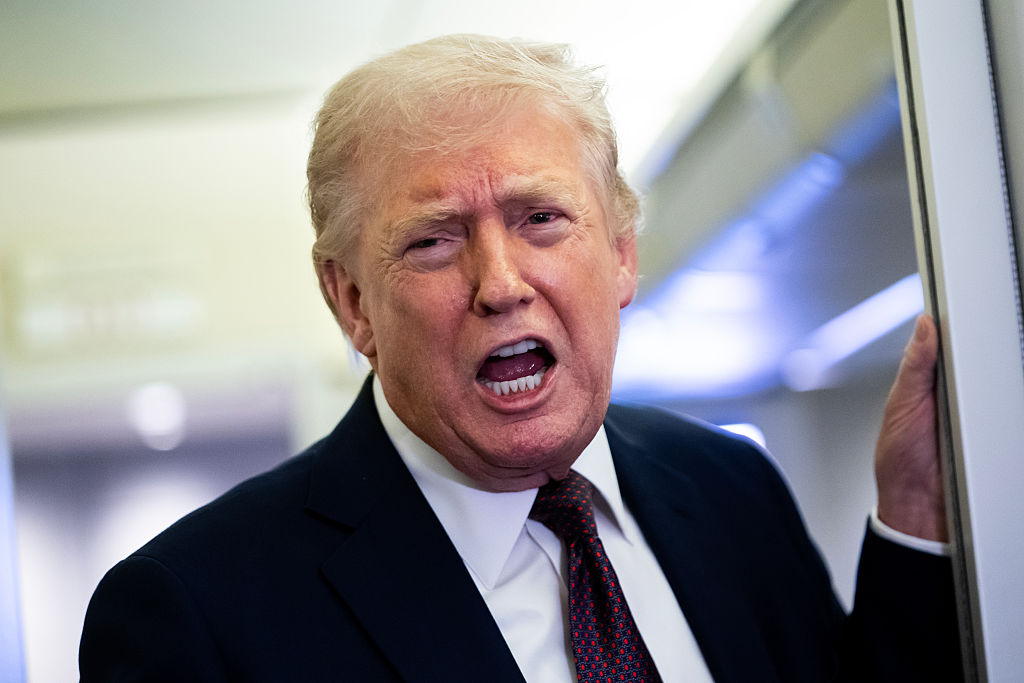
Supreme Court recently ruled that most of the Administration's post-2020 tariffs are illegal; Trump warned alternate measures could 'give away Trillions' and said his team is pursuing other options. He broadened attacks to lower courts and singled out D.C. District Chief Judge James Boasberg after subpoenas tied to alleged pressure on Fed Chair Jerome Powell were quashed; the dispute centers on a Fed HQ renovation alleged to cost $2.5B. Boasberg — who ordered Mike Pence to testify to a Jan. 6 grand jury and blocked aspects of the Administration's use of the 1798 Alien Enemies Act — faces sustained criticism from Trump and allies, raising political and legal risk but limited near-term market impact.
Elevated presidential attacks on the judiciary and sustained public pressure around trade and central-bank figures raise a measurable policy-uncertainty premium across markets. Expect increased headline-driven volatility over the next days-to-weeks and a persistent risk-premium creep in risk assets over months if litigation and subpoena activity accelerate; this typically shows up as 10–30bp wider IG credit spreads and 30–100bp realized vol spikes in small caps during similar episodes.
Second-order market mechanics matter: pressure on the Fed or visible attempts to influence monetary policy reduce the central bank’s perceived independence and increase term-premium dispersion, making front-end rates more sensitive to political news while the long end reacts to inflation-risk repricing. That dynamic compresses liquidity in rate-sensitive sectors (MBS, investment-grade credit) in the 1–3 month window and increases hedging costs for duration-heavy portfolios.
Sector winners and losers follow from policy uncertainty rather than fundamentals: exporters, global-manufacturing names, and firms with multi-country supply chains carry the largest asymmetric hit if trade/shipping frictions re-emerge; domestically-focused retailers, regional utilities, and defense contractors see relative relief. Legal and compliance spending will rise corporately — law-focused outsourcers and cyber/records-management vendors are likely to enjoy multi-quarter revenue reacceleration as firms pre-empt regulatory scrutiny.
Key catalysts to monitor are dispositive court rulings, high-profile subpoena outcomes, and any formal steps that materially constrain Fed independence; any bipartisan judicial pushback would be the fastest de-risking path and could reverse risk premia within weeks. The market may be underpricing persistent structural risk: if politicization becomes a multi-year theme, valuations for long-duration growth names and global cyclicals deserve a structural haircut beyond a simple headline-volatility re-pricing.
AI-powered research, real-time alerts, and portfolio analytics for institutional investors.
Request DemoOverall Sentiment
mildly negative
Sentiment Score
-0.25
