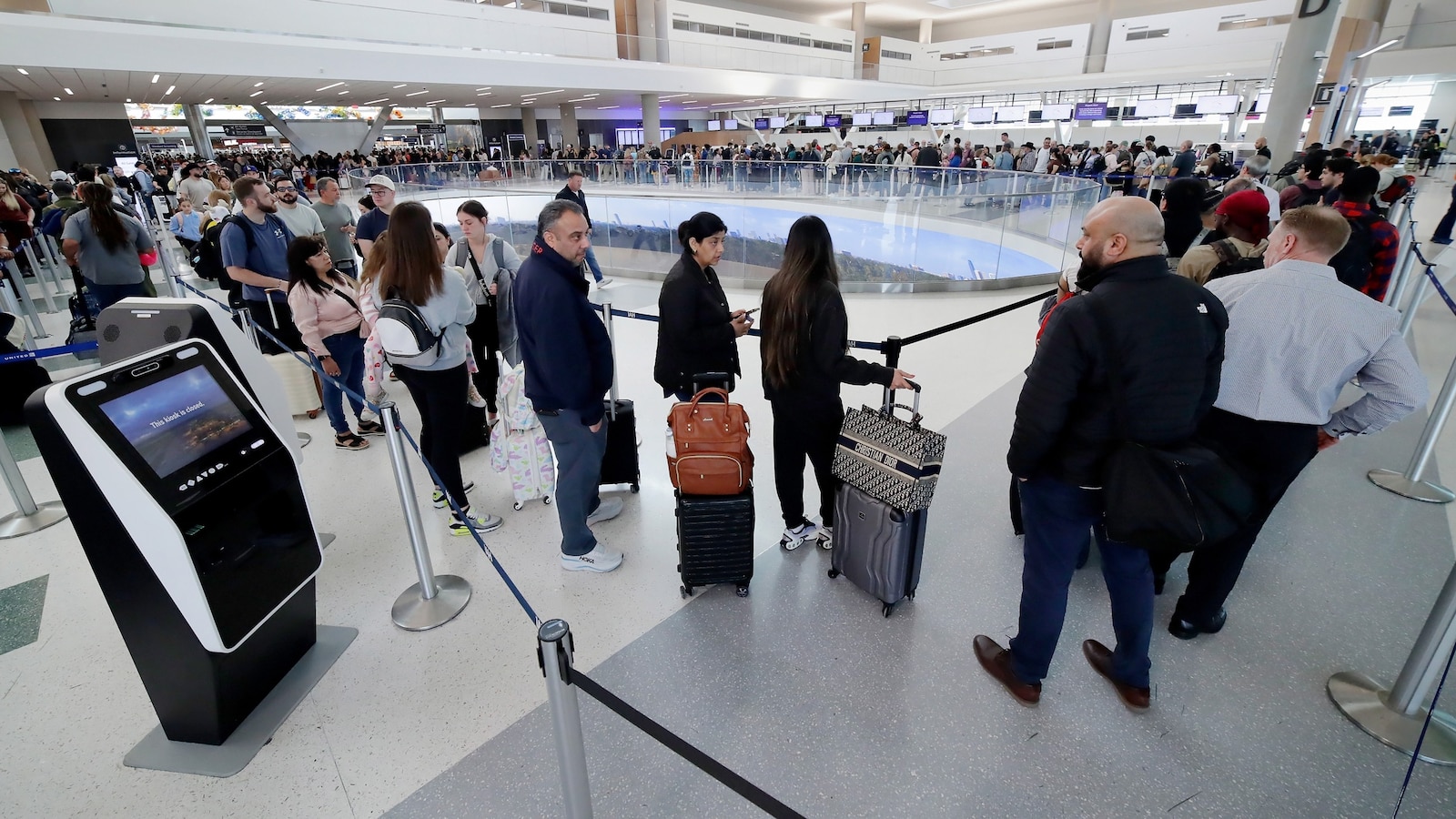
Over 3,250 TSA officers (11.51% of the scheduled workforce) called out on Saturday, March 21 — the highest rate since the partial DHS shutdown began. Several airports reported call-out rates above 30% (peak 47.4% at William P. Hobby) and extended wait times up to nearly four hours at LaGuardia, prompting the White House to threaten ICE deployments to airports despite union objections and unclear deployment details. The shutdown leaves TSA, FEMA and the Coast Guard unfunded while ICE remains funded, increasing operational risk and travel disruption until a funding resolution or policy concessions are reached.
This is an operational shock that amplifies existing margin sensitivity in passenger airlines and airport concession economics. Reduced throughput is not a linear hit: it concentrates cancellations, rebookings and ancillary revenue losses into short windows that spike unit costs (crew, gate fees, accommodations) and create outsized P&L churn for carriers with high daily utilization.
A substitution effect favors ground transport and last-mile mobility providers on a tactical basis while accelerating three structural shifts: investment in automated screening, increased contingent staffing contracts, and political pressure to reallocate or backfill security roles. Vendors of checkpoint automation and established defense/security contractors are likely to see procurement timelines pulled forward, creating a multi-quarter revenue opportunity distinct from spot staffing responses.
Market reversibility is high and hinge-driven: a funding resolution or legal/political pushback against ad-hoc deployments can normalize flows within days, but litigation, credentialing frictions or further labor actions would extend disruption into the shoulder-season months. The clearest asymmetric payoff is in short-dated airline stress and longer-dated optionality on security-tech vendors that benefit from capex acceleration, a pairing that captures both tactical dislocation and structural upside.
AI-powered research, real-time alerts, and portfolio analytics for institutional investors.
Overall Sentiment
moderately negative
Sentiment Score
-0.60
