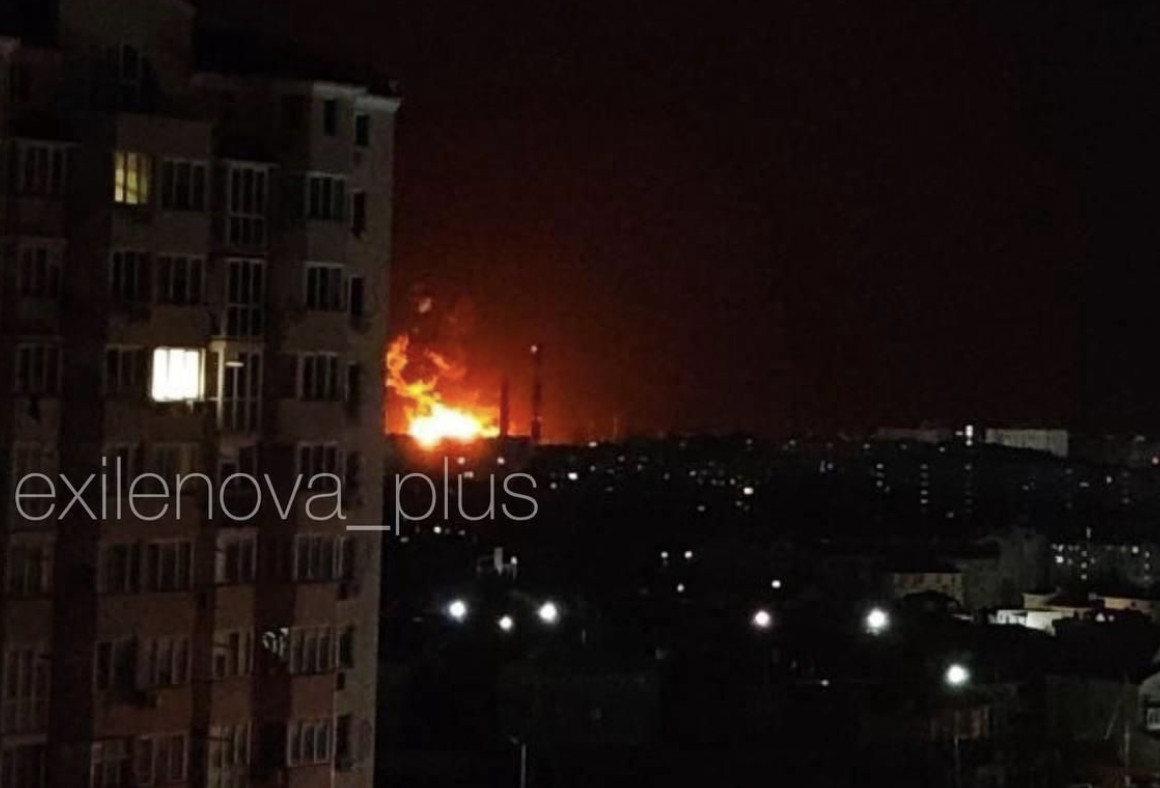
Ukraine’s SBU said it damaged three Russian Navy warships in occupied Crimea, including the landing ships Yamal and Azov, along with military communications, radar, and fuel storage infrastructure. The strikes are part of a broader campaign that also hit four major Russian oil facilities earlier on April 18, underscoring pressure on Russia’s logistics and fuel supply chain. The news is negative for Russian military capabilities and can add geopolitical risk to energy and defense markets.
The important market implication is not the headline damage itself, but the continued migration of the conflict from battlefield attrition to persistent degradation of Russia’s rear-area operating system. Repeated strikes on radar, comms, fuel, and logistics nodes raise the probability of local air-defense blind spots and higher marginal transport costs, which over weeks matters more than any single destroyed platform. That tends to widen the risk premium on any asset exposed to Black Sea stability, but the bigger second-order effect is on Russian military logistics efficiency: fewer reliable nodes means more convoy dispersion, lower sortie rates, and more fuel wastage.
For energy and transport, the nearer-term read is mixed rather than one-directional. On the one hand, attacks on refining and depot infrastructure increase the chance of temporary supply disruptions and periodic product price spikes, especially if follow-on strikes force precautionary shutdowns or rerouting. On the other hand, if damage remains tactical and localized, the market may overprice a lasting crude supply shock while underpricing the more durable effect: higher Russian internal logistics friction can constrain export optionality without immediately reducing headline production.
The contrarian angle is that this kind of campaign can become self-limiting from a pricing perspective if it fails to achieve strategic depth. Markets often react to the operational noise, but the key variable is whether Ukraine can sustain cadence against repaired or duplicated infrastructure over 1-3 months. If Russia adapts by hardening assets and dispersing fuel, the marginal impact on global oil may fade while defense-electronic warfare vendors still benefit from the demonstrated vulnerability of legacy air-defense architectures.
Net: this is mildly risk-off for regional logistics and Russian asset proxies, modestly supportive for defense and drone/ISR themes, and only conditionally bullish for energy if the strike set expands into sustained refinery downtime rather than isolated harassment.
AI-powered research, real-time alerts, and portfolio analytics for institutional investors.
Request TrialOverall Sentiment
mildly negative
Sentiment Score
-0.20
