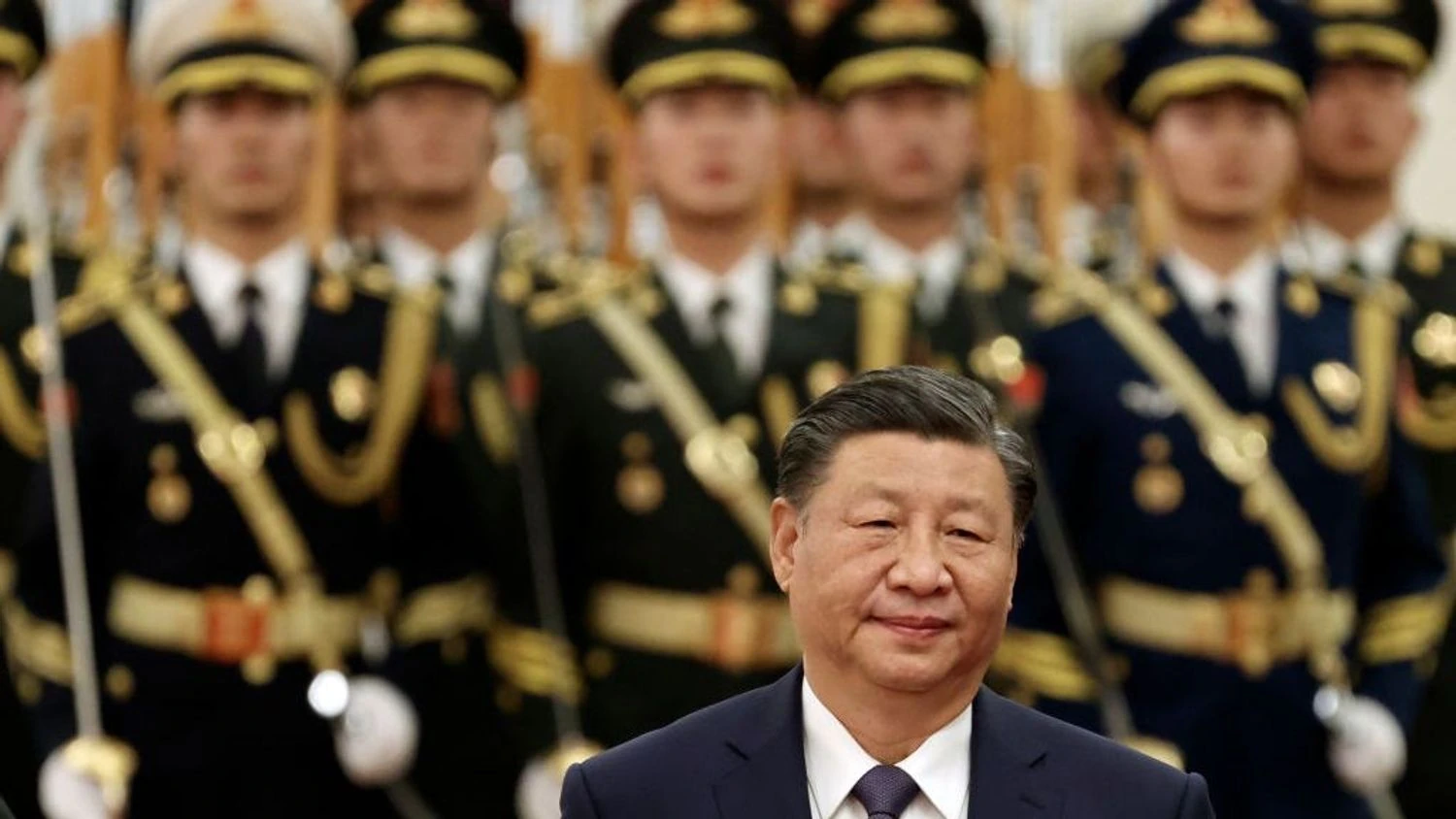
The US-China Economic and Security Review Commission's annual report warns that Xi Jinping is pursuing an alternative world order with partners including Russia and North Korea and recommends extensive research into China's economic, technological and cyber support for Russia's war machine. The 700+-page report urges increased funding for the US Space Force to counter China's anti-satellite capabilities, assessments of US readiness for 'gray zone' aggression around Taiwan (the PLA entered Taiwan's ADIZ 3,075 times in 2024), and strengthened support for regional partners such as the Philippines; the report also notes ongoing diplomatic engagement with potential Trump–Xi meetings to stabilize a trade truce.
Market structure: A sustained U.S. push to counter a Beijing–Moscow–Pyongyang axis is a clear positive for large defense primes (RTX, LHX, NOC) and space/satellite contractors (MAXR, LHX) as governments shift budgets toward anti-satellite, ISR, and air/naval capabilities; winners should see 10–25% incremental addressable-market expansion over 12–36 months if FY2025–26 budgets rise. Direct losers are China-dependent export tech and Taiwan-semicap supply-chain exposed names (TSM-heavy suppliers, CN-holding ADRs) which face higher effective trade frictions and potential export controls that compress margins and market access.
Risk assessment: Tail risks include kinetic escalation around Taiwan (low-probability, high-impact) triggering semiconductor supply shocks and >30% swing in NVDA/TSM prices and a flight-to-safety into USD/Treasuries/Gold; immediate (days) volatility spikes on headlines, short-term (weeks–months) re-rating of defense and cyber stocks, long-term (years) structural decoupling of supply chains. Hidden dependencies: fabs in Taiwan, rare-earth/prioritized shipping lanes, and Chinese intermediary firms that can undercut sanctions create second-order operational risks. Key catalysts are Trump–Xi meetings, new US export controls, and Congressional defense appropriations timing (Mar–Sep 2025).
Trade implications: Tactical long bias to defense and cyber with 6–12 month horizons (expect beta to screen positively when news flow intensifies); hedge China/EM exposure via FXI puts or KWEB short; commodities (oil, LNG) and gold likely bid on escalation—use options for convexity rather than outright positions to manage tail risk. Cross-asset: expect USD strength, steeper US yield curve (10y +10–30bp on risk-off), and higher implied vols in equity indices and EM FX over 1–3 months.
Contrarian angles: Consensus may over-penalize all China exposure — domestically oriented Chinese consumer, cloud, and industrial automation names with limited export dependencies could outperform; defense rerating might already price in base-case budget increases so smaller-cap space/sensor suppliers with contract pipelines are undercovered and can outperform if disclosures prove material. Historical parallel: post-2014 Russia sanctions saw multi-year outperformance in defense equipment and persistent repricing of energy/commodity risk premia, not a one-quarter effect.
AI-powered research, real-time alerts, and portfolio analytics for institutional investors.
Request DemoOverall Sentiment
moderately negative
Sentiment Score
-0.40
