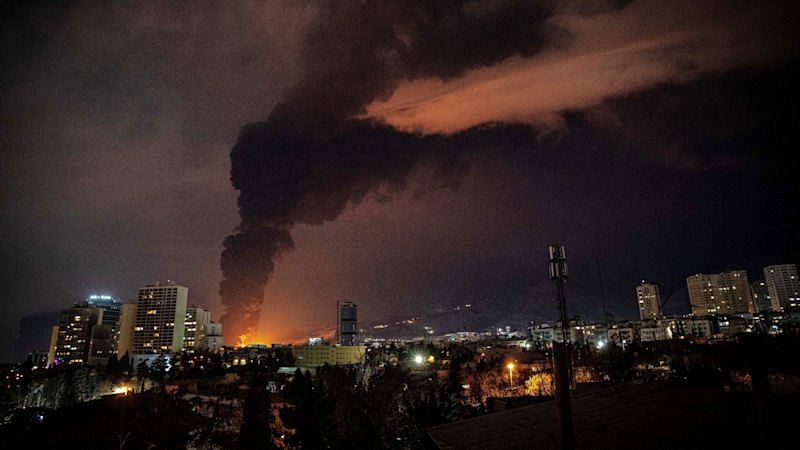
A$80 billion was wiped off the Australian sharemarket as oil spiked to US$116/barrel (briefly) before retreating to ~US$101; the S&P/ASX200 fell >4% intraday (peak intraday loss >A$110bn) and has lost ~A$200bn since the war began. 10-year Australian government bond yields rose above 5% briefly and settled at ~4.973% versus ~4.6% pre-conflict (~+37 bps), increasing fiscal pressure on a government forecasting A$25.5bn in interest costs on ~A$1tn gross debt. Global contagion is broad: US futures and Asian markets fell (Nikkei/KOSPI down ~7%), and analysts warn that sustained supply disruption could push oil >US$130/bbl and push Australian inflation toward ~5%, implying material downside to growth and continued risk-off positioning.
This shock amplifies a classic asymmetric outcome: commodity-exporting and midstream toll-takers capture immediate windfalls while balance-sheet-sensitive demand plays and cyclicals experience rapid multiple compression. Expect refinery and LNG toll margins to spike first (days–weeks) as physical flows reroute around the Strait of Hormuz, but the larger macro channel plays out over quarters via higher headline inflation, tighter central-bank paths and weaker real income that suppresses discretionary consumption.
Second-order supply-chain dynamics matter: longer tanker detours and refinery idling will raise seaborne freight and insurance rates, advantaging owners of VLCC/tanker fleets and specialty re-insurers while pressuring just-in-time importers (autos, appliances) that import finished goods. Banking and corporate credit could see idiosyncratic stress in small, levered commodity consumers and logistics companies that cannot pass through sudden energy cost increases, creating dispersion opportunities across credit instruments over 1–6 months.
Tail risks are binary and time-sensitive: diplomatic/SPR interventions or a narrow restoration of flow could collapse risk premia within days; conversely, a sustained multi-week interruption would push Brent into a regime (> $130) that forces material demand destruction and stagflation dynamics over 6–12 months. Active positioning should therefore skew to defined-risk, time-limited exposures that monetize immediate scarcity while preserving capital if geopolitical resolution arrives quickly.
AI-powered research, real-time alerts, and portfolio analytics for institutional investors.
Request DemoOverall Sentiment
strongly negative
Sentiment Score
-0.80
Ticker Sentiment
