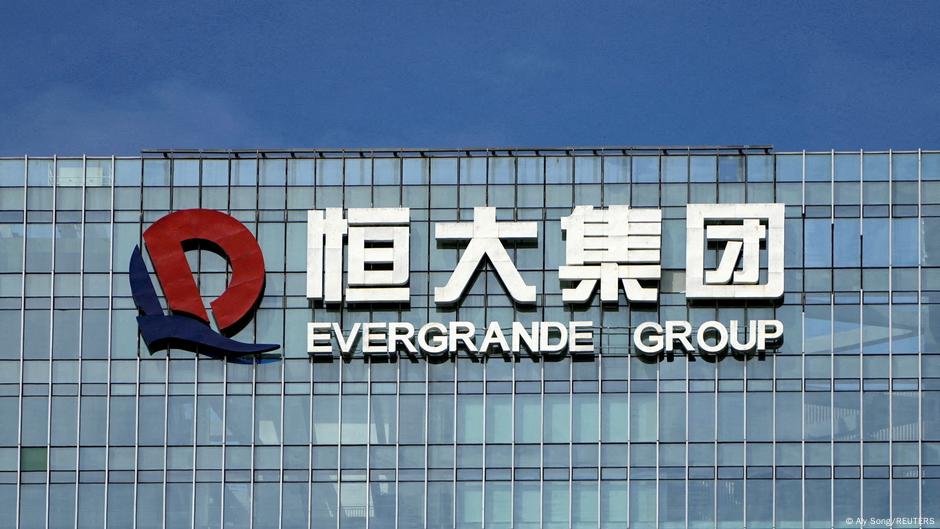
Evergrande founder Hui Ka Yan has pleaded guilty to fraud and bribery charges, with the company facing allegations including illegally absorbing public deposits, fundraising fraud, and securities violations. The developer defaulted in 2021 on roughly $300 billion of liabilities, was put into liquidation in 2024, and had its shares delisted in Hong Kong in 2025. The case reinforces the severity of China’s property-sector crisis and its spillover risk for credit markets and the broader economy.
This is less about a single developer and more about the state enforcing a clean-up of the entire late-cycle property credit stack. A guilty plea materially raises the probability that offshore creditors, contractors, and trust-product holders never see meaningful recovery, because once fraud/bribery framing is locked in, the political priority shifts from creditor rehabilitation to deterrence and social containment. That makes legacy China property claims a value trap unless investors are explicitly trading legal-process optionality rather than recovery value.
The second-order effect is on capital allocation in the sector: the signal to banks, shadow lenders, and local government financing vehicles is that implicit support is gone for weak sponsors, which should keep private developers starved even if policy eases marginally. In practice, this widens the moat for state-linked or policy-backed developers at the expense of smaller peers, and it should keep land prices and presales under pressure in lower-tier cities for multiple quarters. The real economic transmission is slower credit creation, not the headline trial itself.
For markets, the near-term risk is not a broad China equity repricing but renewed pressure in Asia high yield, distressed real estate funds, and any basket with residual China property beta. The bigger catalyst is the eventual verdict and any accompanying asset-recovery or restitution language; if the court uses the case to justify aggressive clawbacks, it could freeze any remaining restructuring negotiations across the sector for months. Conversely, a lenient outcome would be misread as stabilization, but the structural funding channel damage would remain intact.
The contrarian view is that the market may already treat Evergrande as a zero, so the direct event impact is mostly noise. The underappreciated angle is that a public criminal outcome can accelerate recapitalization of the survivors by making lenders discriminate more aggressively, which benefits the strongest state-linked names over time. That creates a slow-burn relative-value trade rather than a directionally bullish China property call.
AI-powered research, real-time alerts, and portfolio analytics for institutional investors.
Request TrialOverall Sentiment
extremely negative
Sentiment Score
-0.90
