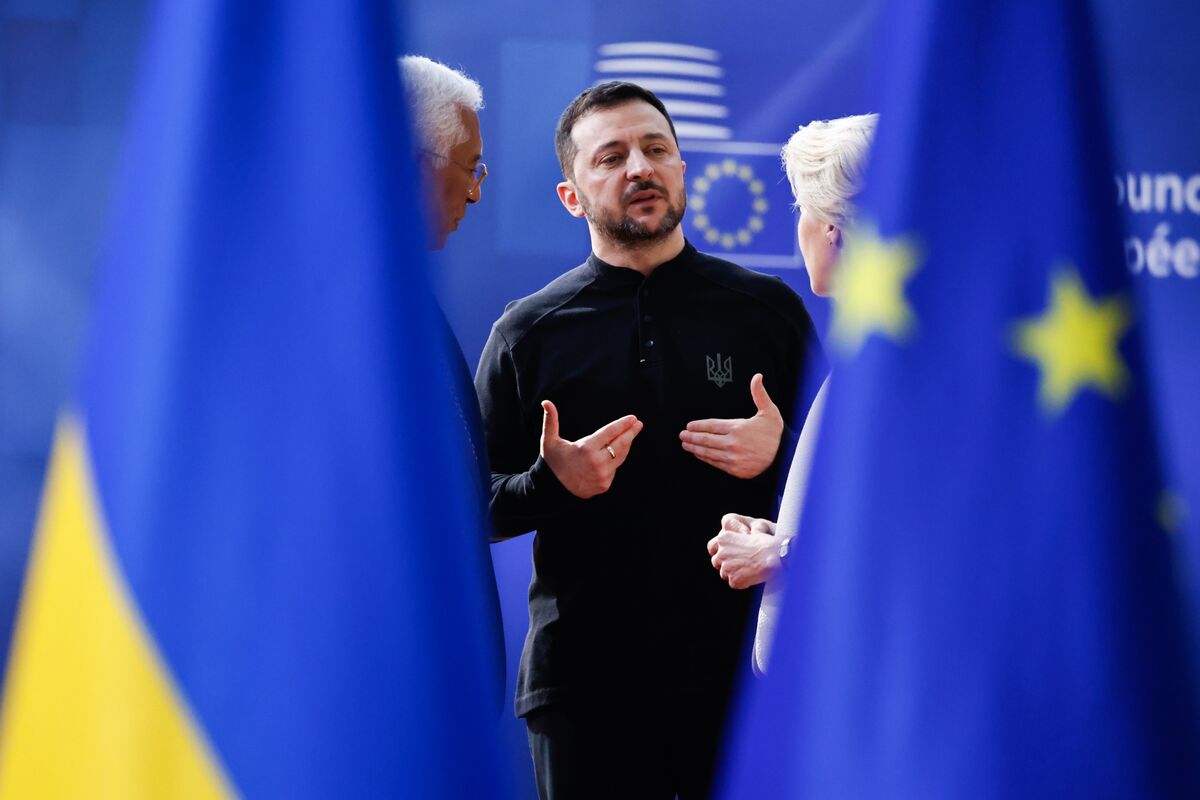
Ukraine will begin receiving a €90 billion ($106 billion) EU loan after Hungary lifted its veto, removing a major funding blockage for the war-torn country. EU ambassadors also approved a fresh package of Russian sanctions, signaling continued pressure on Moscow despite prior resistance from Hungary and Slovakia. The development is supportive for Ukraine’s financing position and reinforces the bloc’s sanctions stance.
The immediate market read is not simply “Ukraine funding improved,” but that Brussels has demonstrated a willingness to solve a politically noisy credit problem with backloaded bargaining leverage. That lowers near-term sovereign liquidity risk for Ukraine, but more importantly it reduces the probability of an abrupt fiscal discontinuity that would have forced heavier monetization, emergency domestic measures, or more disruptive financing terms over the next 6-12 months. In credit terms, this is a modest positive for the entire Eastern Europe risk complex: spreads should compress a bit, but the bigger effect is on tail-risk pricing rather than headline carry.
The second-order winner is any European constituency exposed to a prolonged war dragging on into 2025, because a less stressed Ukrainian fiscal position improves military procurement continuity and budget execution. Conversely, Hungary and Slovakia have demonstrated they can extract concessions via pipeline/sanctions linkage; that increases the odds of future episodic veto risk around EU sanctions renewals. The result is a market structure where sanctions headlines become more path-dependent and less linear, which is generally bearish for European gas and Russian export logistics confidence even if the immediate package passed.
The contrarian angle is that this may be a liquidity bridge, not a solvency fix. If war spending remains elevated and reconstruction needs keep growing, another financing cliff can reappear within quarters, especially if EU member-state fatigue rises or U.S. support becomes less predictable. So the right way to trade this is not to chase the headline, but to own the assets that benefit from reduced near-term tail risk while staying alert for renewed sanction friction and funding negotiations in the next 1-3 months.
AI-powered research, real-time alerts, and portfolio analytics for institutional investors.
Overall Sentiment
mildly positive
Sentiment Score
0.35
