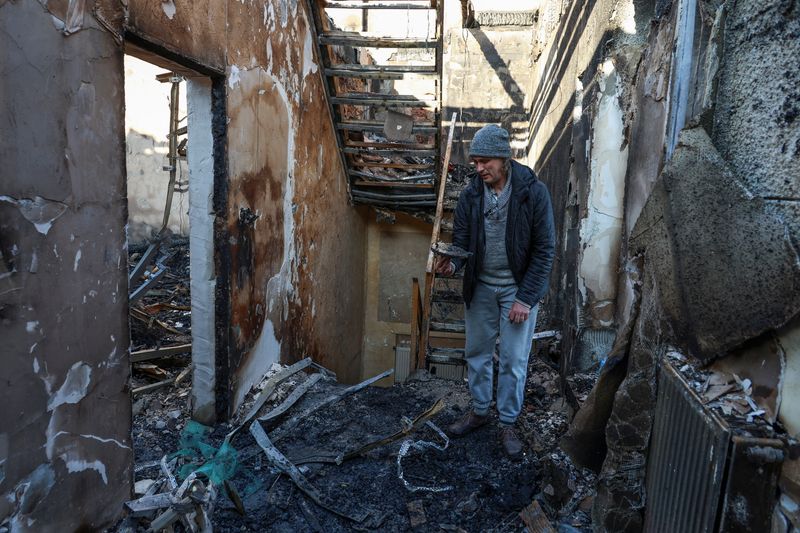
Russian forces launched a major overnight missile and drone attack on Kyiv, injuring at least 3 people and damaging residential and civilian infrastructure, including a school fire from debris. The strike follows warnings that Russia could deploy its Oreshnik hypersonic ballistic missile and comes amid elevated retaliation risks after Ukrainian drone operations in Russian-controlled Luhansk. The escalation adds to geopolitical risk and could support defense-related sentiment while weighing on broader risk assets.
The immediate market implication is not direct damage to a contractor like NOC so much as a higher probability of sustained European air-defense replenishment and munitions drawdown. That favors the parts of the defense stack exposed to interceptors, radar, electronic warfare, and munitions throughput more than platforms tied to long-cycle procurement; the second-order winners are the suppliers whose backlog can re-rate on urgency, not just size of budget. In other words, the trade is increasingly about consumables and production cadence, not headline systems.
The bigger setup is a potential acceleration in allied rearmament if the strike pattern signals escalation rather than one-off retaliation. If Kyiv’s defenses are forced to fire more expensive interceptors against low-cost saturation attacks, the budgetary pressure shifts toward emergency appropriations and stockpile replacement within weeks, while capacity constraints show up over quarters. That creates a favorable setup for names with near-term delivery optionality and exposed pricing power in missile components, air-defense subsystems, and counter-UAS.
The contrarian risk is that this can become a fatigue trade: geopolitical headlines support defense multiples for a few sessions, but unless there is a clear procurement authorization or new theater-wide escalation, the market often fades the move because the revenue impact is delayed. A second reversal path is diplomatic de-escalation or ceasefire signaling, which would compress the urgency premium before it turns into bookings. The key is distinguishing transient risk-off from a structural rearmament catalyst.
For NOC specifically, the stock may underperform in the short run if investors read the headline as broad war escalation but there is no immediate incremental program exposure. The better expression is likely a basket or pair that isolates higher-velocity missile/air-defense beneficiaries versus prime contractors with longer conversion cycles. That keeps the thesis anchored in budget urgency rather than beta to the news cycle.
AI-powered research, real-time alerts, and portfolio analytics for institutional investors.
Request DemoOverall Sentiment
strongly negative
Sentiment Score
-0.70
Ticker Sentiment
