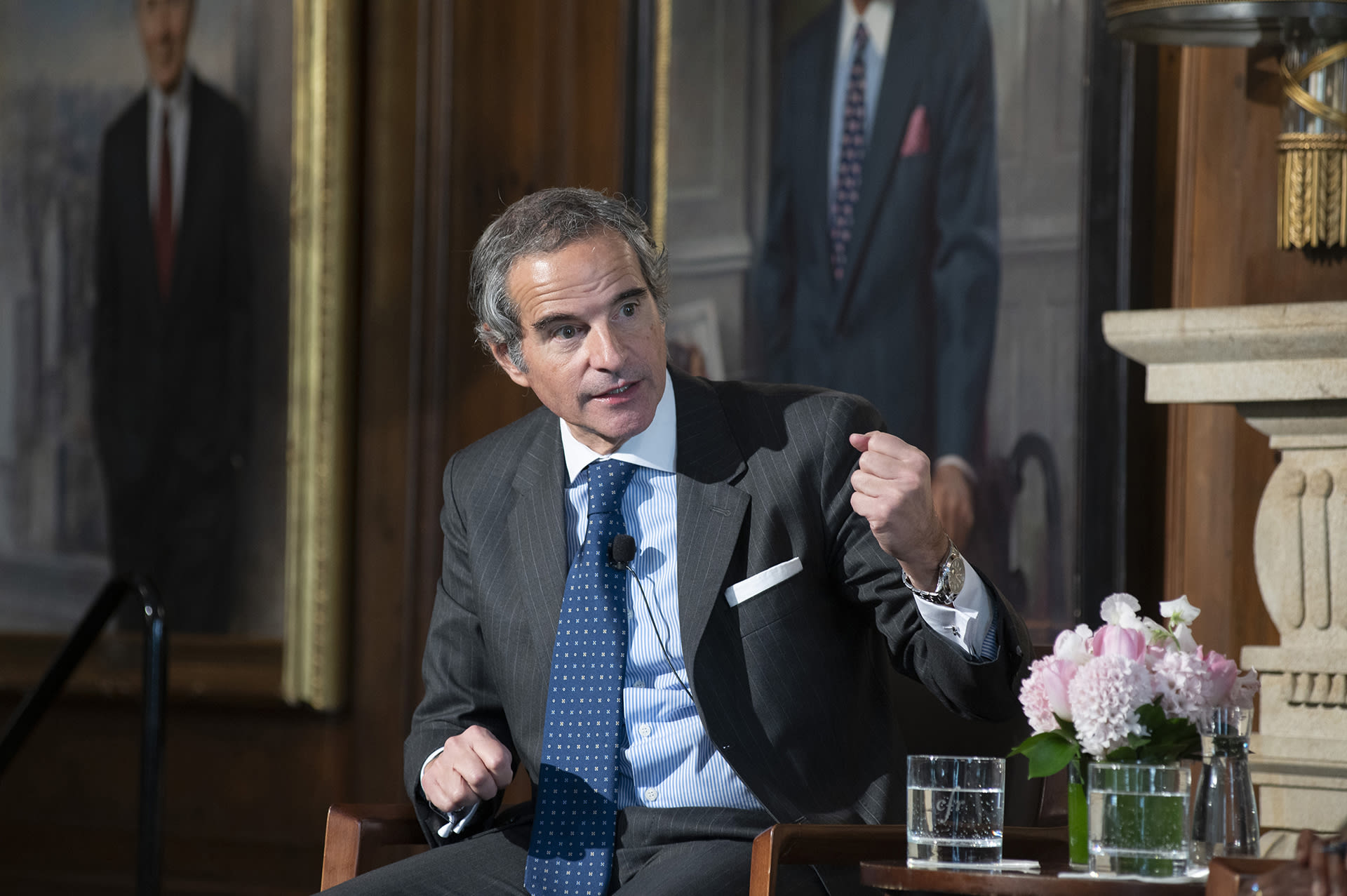
Rafael Grossi, current IAEA chief and a UN secretary-general candidate, outlined a crisis-management approach centered on pragmatic diplomacy, active Security Council engagement, and restoring trust among the P5. He highlighted his experience in Ukraine and at Zaporizhzhia as evidence he can manage high-stakes security crises and prevent escalation. The article is largely policy commentary and has limited direct market impact.
The market implication here is not about the UN itself being investable; it is about the probability of a more operational, less ceremonial multilateral backstop during geopolitical stress. That matters most for risk assets with exposure to sanctions, shipping lanes, nuclear escalation, and aid-dependent sovereigns: a credible “crisis manager” can slow tail-risk repricing even when he cannot solve the underlying conflict. The second-order effect is that a more activist secretary-general may modestly reduce the market’s expected frequency of abrupt policy shocks, which is supportive for defense primes, global logistics, and select EM credits that trade on diplomacy rather than force.
The key constraint is that this role has authority but not hard power, so any positive market effect is likely to be episodic and event-driven rather than structural. The setup favors shorter-dated volatility compression around headline risk in specific theaters, but the funding and institutional-trust issues at the UN remain secular headwinds; if member states continue to weaponize the Security Council, the secretary-general’s activism can become performative rather than catalytic. The risk is that markets overprice “stability theater” and underprice the possibility that a more engaged SG simply becomes a more visible lightning rod when crises deteriorate.
Contrarian angle: a pragmatic, transactional secretary-general may actually help in the margin because major powers often prefer a negotiator who narrows options instead of moralizing. That is mildly bullish for limited-scope conflict containment and for functional agencies tied to aviation, telecom, and nuclear safety standards. But it is not a broad bullish call on global institutions—this is a relative-value story, not a regime shift.
AI-powered research, real-time alerts, and portfolio analytics for institutional investors.
Request DemoOverall Sentiment
neutral
Sentiment Score
0.05
Ticker Sentiment
