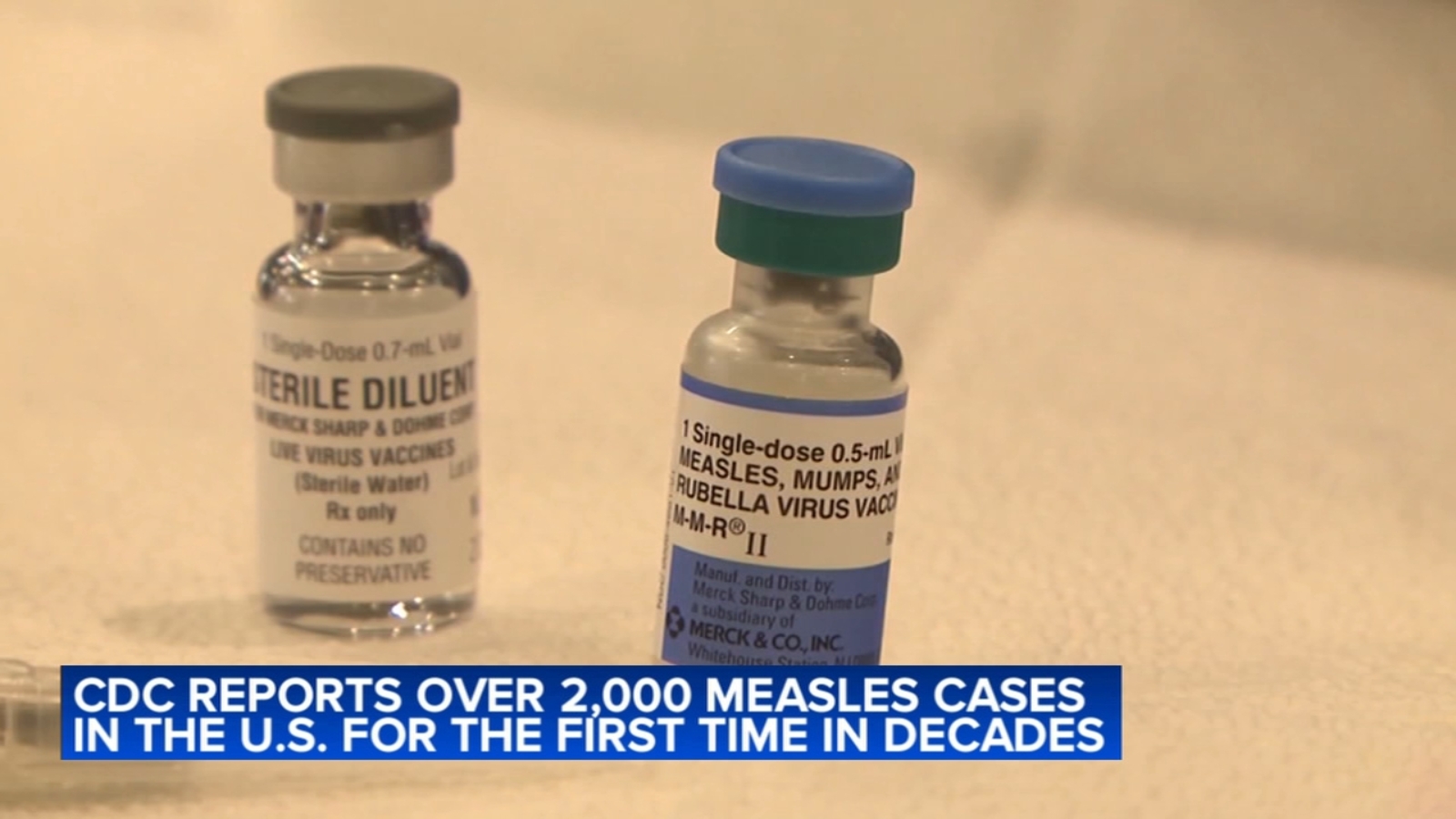
US measles cases reached 2,065 as of Dec. 30, 2025, the highest annual total since 1992, driven by ongoing outbreaks in upstate South Carolina (nearly 180 cases, ~300 people quarantined), the Utah–Arizona border (>350 cases), and an earlier West Texas cluster that produced hundreds of cases and three deaths. With MMR efficacy at ~93% (one dose) and 97% (two doses) but kindergarten vaccination coverage at just 92.5%—below the 95% herd-immunity threshold—possible genetic links between outbreaks threaten the country’s measles-elimination status, raising public-health uncertainty that could prompt localized containment measures and modest near-term impacts on healthcare providers, insurers and regional economic activity.
Market structure: The immediate winners are established pediatric vaccine manufacturers (Merck MRK) and diagnostic/lab services (Quest DGX, LabCorp LH) because outbreaks raise near-term demand for MMR doses and confirmatory testing; hospitals (HCA, UHS) see higher outpatient visits and quarantine costs. Losers are discrete: schools and local governments in high-case counties face operational disruption and potential legal/liability costs; leisure and local retail in affected counties may see 1–3% short-term revenue hit if quarantines expand. Pricing power shifts are modest — manufacturers can increase shipment volumes but not prices for mandated vaccines; labs can capture incremental high-margin testing volume for 1–3 quarters. Risk assessment: Tail risks include wider national resurgence (cases >5,000 by end of Jan) that could prompt state-level emergency vaccination campaigns, forcing large one-off procurement and political backlash against companies seen as price-gouging. Time horizons: days–weeks for testing volumes and hospital utilization spikes, weeks–months for vaccine procurement and state budget reallocations, quarters for adjusted vaccination rates to reduce outbreaks. Hidden dependencies include school-exemption policy changes and supply-chain limits at fill/finish CDMOs (Catalent CTLT) that could cap how fast doses are delivered. Catalysts: CDC case counts, state mandates, and PAHO/FDA announcements. Trade implications: Bias long MRK (MMR franchise) and DGX/LH for 1–6 months to capture testing and vaccine fulfillment, and hedge by shorting travel-exposed regional names in affected states (e.g., JBLU/ALGT regional exposures) for tactical weeks. Use options to buy 3–6 month call spreads on MRK (limit cost) and 0–3 month call options on DGX to play immediate IV lift; consider pair trade long MRK, short MRNA to isolate legacy vaccine exposure vs mRNA expectations. Reduce small-cap municipal exposure in SC/AZ/UT counties until school-vaccine rates recover above 95%. Contrarian angles: Consensus focuses on vaccines and labs; overlooked is CDMO capacity and distribution bottlenecks — long CTLT or TMO for fill/finish exposure could outperform pure-play vaccine names if demand surges. The reaction may be underdone for labs (testing volumes can rise 10–30% in hotspots) and overdone for national travel shorts if outbreaks remain geographically contained; historical parallels (post-1992 MMR policy shifts) show demand spikes are front-loaded and normalize within 6–12 months. Watch threshold triggers: national kindergarten MMR rate recovering above 95% or weekly case decline >20% — these would reverse trades within 2–3 months.
AI-powered research, real-time alerts, and portfolio analytics for institutional investors.
Request DemoOverall Sentiment
mildly negative
Sentiment Score
-0.35
