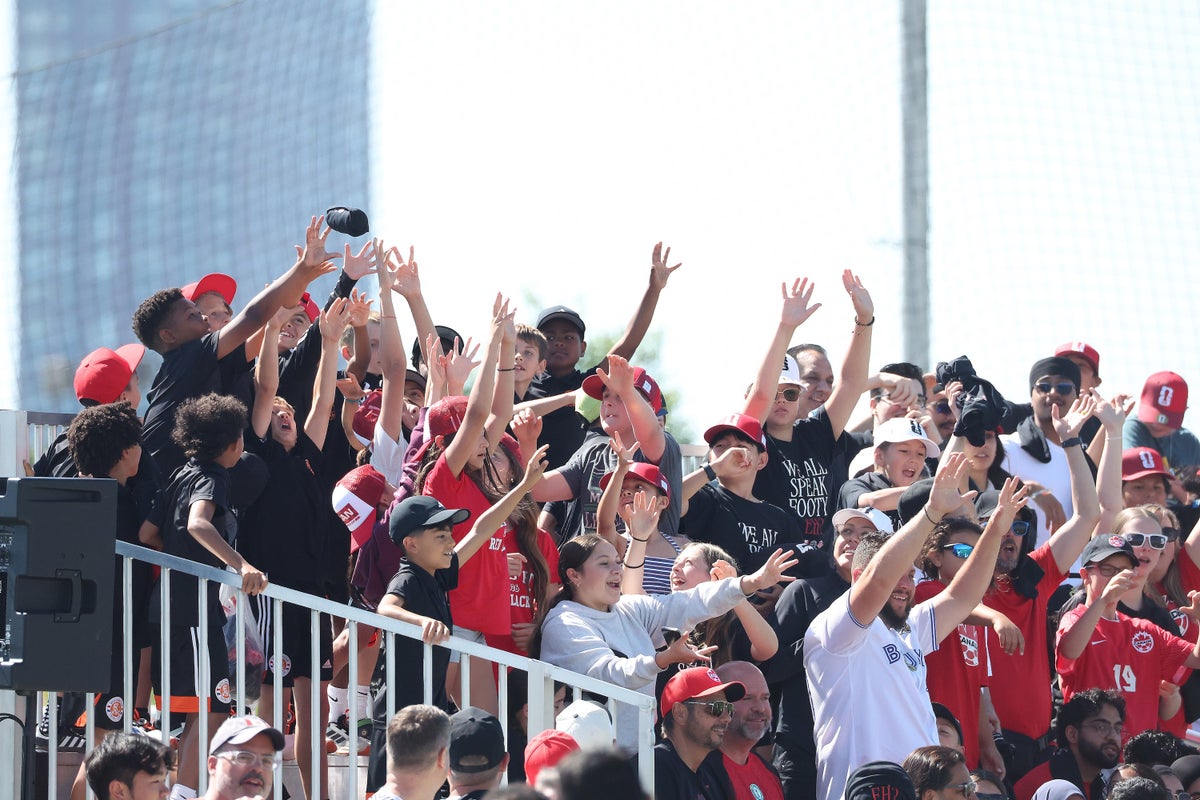
The article describes a wastewater-based disease surveillance network being deployed around the FIFA World Cup across 16 host cities in three countries to monitor pathogens including SARS-CoV-2, measles, influenza, mpox, dengue, Ebola and hantavirus. The initiative is designed to detect outbreaks days or weeks earlier than clinical surveillance and will issue daily reports to local health officials and public health agencies. It is a preparedness and monitoring story with limited direct market impact.
The investable read-through is not “health scare” in the abstract; it is a temporary demand shock to live-event ecosystems plus a modest tailwind to firms monetizing surveillance, diagnostics, and rapid response. The biggest beneficiary set is the public-health data stack: wastewater analytics, PCR/sequencing workflows, and cross-border data plumbing all get validated in a high-profile setting, which should improve procurement cycles with municipalities, airports, stadium operators, and event organizers over the next 6-18 months. Secondary winners are likely the vendors that can turn monitoring into operational decisions faster than government agencies can, because the value proposition shifts from reporting to action.
The more interesting second-order effect is on travel and hospitality operators with exposure to international inbound flows. A single localized pathogen signal can create asymmetric downside if it triggers headline risk around specific host cities, especially because fan movement is clustered by team rather than evenly distributed; that makes concentration risk higher than typical mass-gathering events. Airlines and hotels tied to the most connected hub cities are vulnerable to short-lived booking cancellations, but the impact is likely episodic unless a broadly transmissible variant appears, so any selloff should be viewed as event-risk rather than a structural demand break.
The tail risk is that wastewater becomes an early alarm for something that changes behavior before clinical cases do, creating a feedback loop of cancellations, local restrictions, and media amplification. That risk is low probability but high convexity over the next 2-8 weeks, precisely the period when fans are most mobile across host cities. The contrarian point is that the market may overestimate the odds of a meaningful outbreak while underestimating the durable adoption of decentralized biosurveillance; the former is a trading event, the latter is a product-cycle catalyst for the health-tech stack.
Net/net, this is a mild negative for travel names if headlines spike, but a constructive validation event for healthcare surveillance infrastructure. The opportunity is less in “pandemic hedges” and more in owning the picks-and-shovels of outbreak detection while fading any knee-jerk shorting of broad leisure if monitoring stays clean.
AI-powered research, real-time alerts, and portfolio analytics for institutional investors.
Request DemoOverall Sentiment
neutral
Sentiment Score
-0.05
