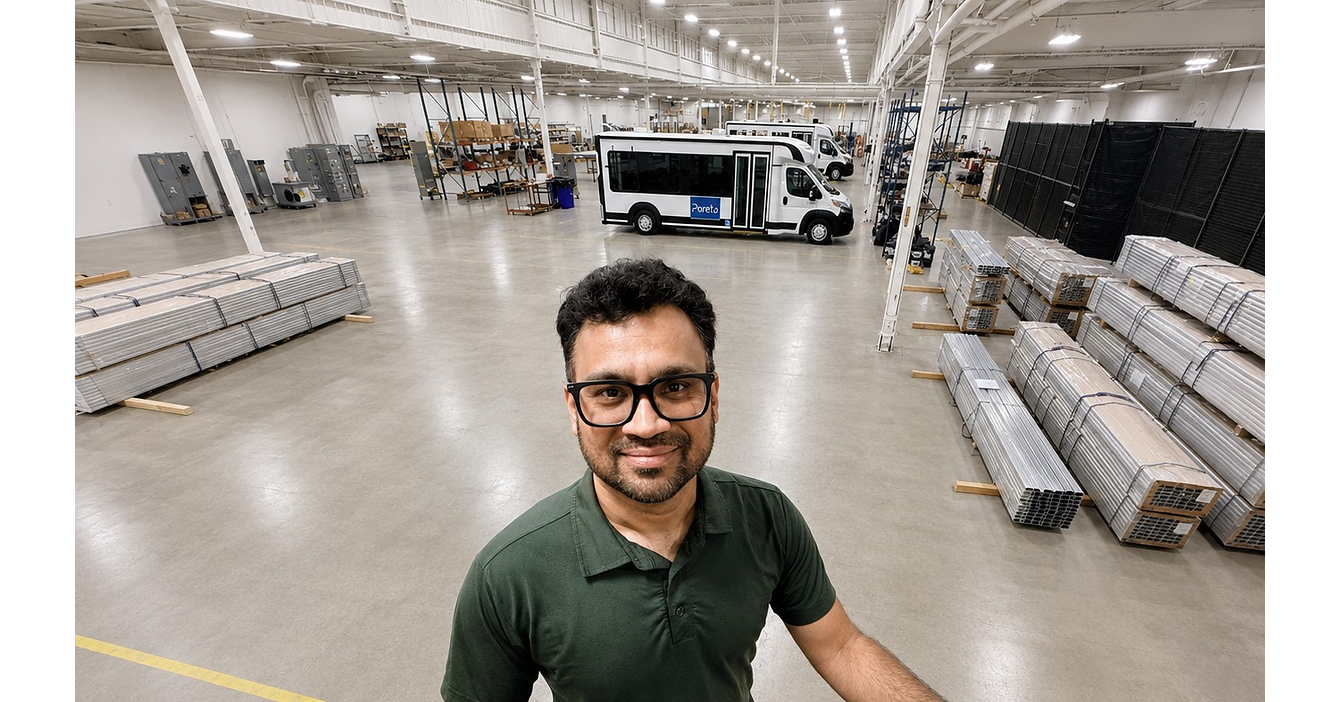
Pareto Mobility opened a 50,000-square-foot manufacturing and assembly facility in Plymouth, Michigan, bringing commercial bus manufacturing back to the state after Champion Bus shut down in 2021. The plant will produce the Step-Free™ low-floor, fully flat commercial bus—marketed as a mainstream, more affordable accessibility option—via nationwide dealer sales and delivery across the U.S. and Canada. The company highlights IP-backed technology development (7 granted U.S. patents, 4 pending) and plans to use digital twins/digital manufacturing, supporting engineering and production jobs as it scales.
This is not a direct public-market catalyst so much as a test case for whether low-floor accessibility can become a standardized feature rather than a bespoke upfit. The economic question is not the factory ribbon-cutting; it is whether a new entrant can win recurring fleet contracts without the installed base, parts network, and warranty scale that incumbent bus OEMs use to defend margins. If the product is truly simpler to board and cheaper to operate, the first beneficiaries are likely transit agencies and shuttle operators through lower downtime and fewer maintenance events, not the builder itself.
The more interesting second-order effect is on niche accessibility hardware and retrofit economics. A fully flat platform can cannibalize some lift-related content and reduce dependence on aftermarket modifications, which is negative for small suppliers of mobility hardware but potentially positive for large OEMs that can bundle accessibility into the base vehicle and spread certification costs across more units. That said, one 50,000-sq-ft facility without disclosed capacity, backlog, financing, or OEM approvals is not enough to infer a durable competitive moat; the ramp from prototype to meaningful volume usually takes 12-24 months.
Contrarian view: the market often overestimates the investability of reshoring stories in low-volume specialty manufacturing. The real moat here is not 'Made in Michigan' but dealer coverage, fleet uptime, and procurement relationships; if those are missing, the most likely outcome is a press release followed by slow order conversion. The thesis would be falsified if incumbent bus OEMs maintain pricing and backlog while this entrant fails to show serial delivery, repeat customers, or a material supplier ecosystem by the next 2-3 quarters.
AI-powered research, real-time alerts, and portfolio analytics for institutional investors.
Request DemoOverall Sentiment
mildly positive
Sentiment Score
0.15
Ticker Sentiment
