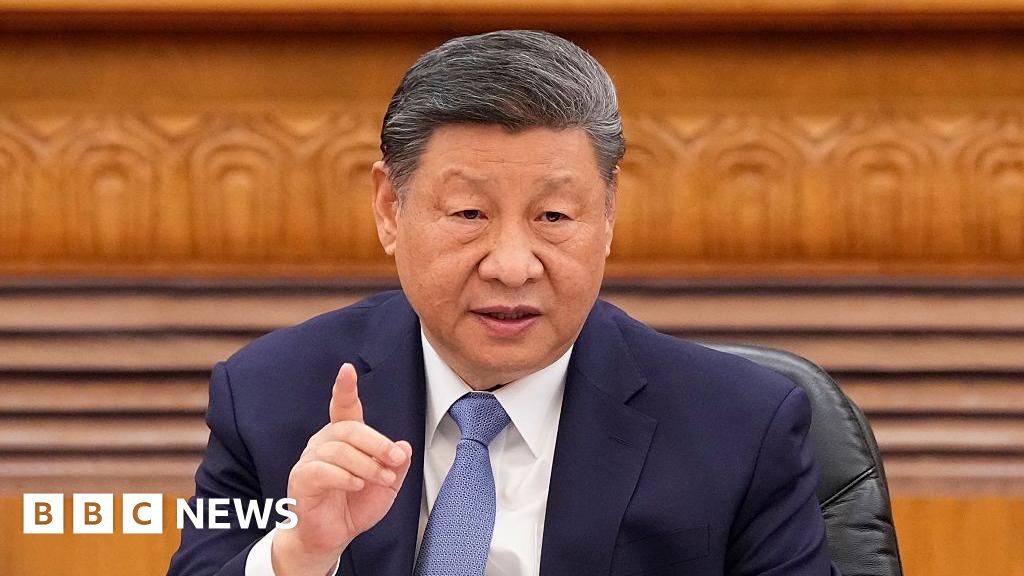
China's top legislative body has removed 19 officials from its list of lawmakers ahead of the Two Sessions, including nine military figures such as PLA Ground Force commander Li Qiaoming and former PLA Navy commander Shen Jinlong, continuing a recent pattern of high-level security-sector purges following the ouster of General Zhang Youxia. The moves, framed amid Xi Jinping's long-running anti-corruption campaign, raise political and military leadership risk ahead of the March 4–11 meetings where Beijing will announce its five-year plan and annual economic targets, likely weighing on investor sentiment toward China-sensitive assets.
Market structure: The immediate winner is safe-haven assets and non-China EM currencies as political-risk premium rises; direct losers are China risk assets—expect a tactical 3–5% downside in large-cap China ETFs (FXI/KWEB) and 1–2% CNH depreciation in the next 1–4 weeks. SOEs and centrally-controlled defense/state security suppliers may gain relative share while provincial infrastructure contractors and regional commodity demand (iron ore, copper) face interruption. Bond markets: 10y CGB yields could gap +5–20bp on outflows; onshore volatility and CDS spreads likely to widen modestly.
Risk assessment: Tail risks include a larger capital flight prompting temporary capital controls or market-crippling sanctions (low prob, high impact) and factional instability in the PLA affecting stability of policy implementation. Time horizons: immediate (days) – heightened volatility around Two Sessions (Mar 4–11); short-term (weeks–months) – policy signals in Five-Year Plan can reverse moves; long-term (quarters+) – consolidation under Xi could mean predictable industrial policy but higher political-risk discount. Hidden dependency: delays to provincial projects materially reduce commodity imports; catalyst to reverse: explicit fiscal stimulus or growth target >=5% at Two Sessions.
Trade implications: Priority is tactical risk-off hedge: use FXI put spreads (1-month) and a 2–3% notional short in FXI via futures for 1–3 months, and buy 1–3m USD/CNH forwards sized to offset 50% China-equity beta; short 3-month copper futures or JJC sized 1–2% of portfolio as a growth-sensitivity hedge. Add a small (1–2%) long in US defense (LMT or ITA) to hedge geopolitical/regime-risk tail. Entry: establish positions within 72 hours and reassess after Two Sessions; tighten stops if CNH moves >+1.5% or CSI300 gaps >8%.
Contrarian angles: Consensus overstates permanence of volatility—historical parallels (2015–16 purges) show initial drawdown then policy support; if Two Sessions shows targeted stimulus, China equities can snap back 8–15% over 3–6 months. Mispricing risk: options implied vol may be elevated—sell short-dated calls on FXI against bought puts to finance protection if policy tilt is dovish. Unintended consequence: over-hedging CNH could miss rapid reversal if the government defends currency; therefore scale hedges in tranches.
AI-powered research, real-time alerts, and portfolio analytics for institutional investors.
Request DemoOverall Sentiment
moderately negative
Sentiment Score
-0.35
