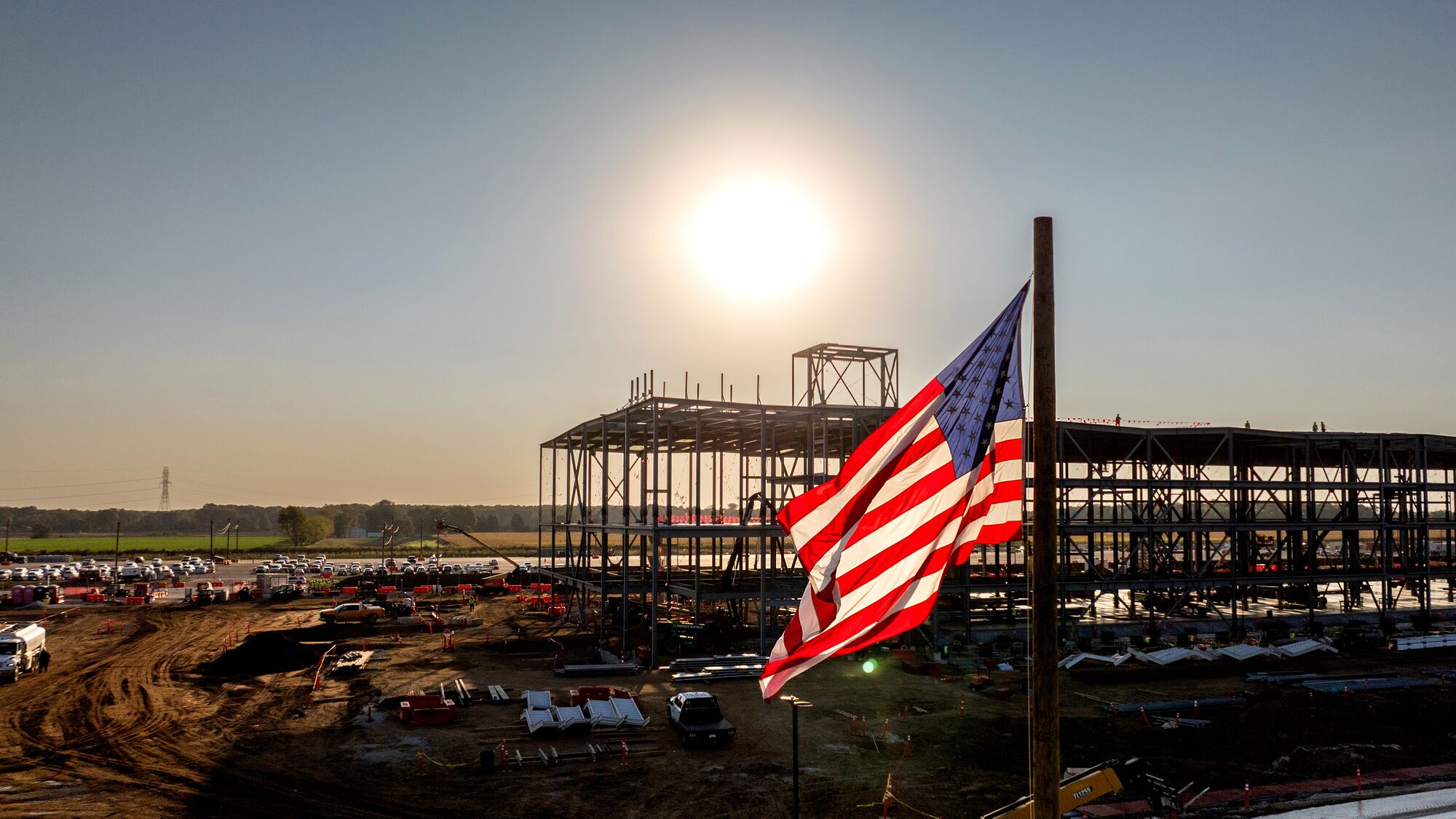
Amazon Web Services announced up to $50 billion of planned investment beginning in 2026 to build nearly 1.3 gigawatts of AI and supercomputing capacity across AWS Top Secret, AWS Secret and GovCloud (US) regions for U.S. government customers. The buildout will include NVIDIA AI infrastructure and AWS Trainium chips and expand access to SageMaker, Bedrock, Anthropic Claude and other foundation models, targeting defense, intelligence, scientific research and supply-chain modernization; the move strengthens AWS’s strategic moat in government cloud and could meaningfully increase long-term government-directed cloud demand and high-margin AI services revenue.
Market structure: AWS’s $50bn, ~1.3GW government AI/HPC buildout materially strengthens AMZN’s pricing power and switching costs in the highest‑value/government segment; expect incremental AWS government revenue to compound over 2026–2029 with outsized margins vs. commercial cloud. NVDA benefits from incremental GPU demand but not exclusivity—share gains vs. other chip vendors are likely modest (single‑digit revenue lift vs. AMZN’s multi‑billion capex). Utilities, copper, and power‑grid services see modest demand uptick; expect small upward pressure on industrial power takes and data‑center construction commodities over 2026–2028.
Risk assessment: Tail risks include stricter export controls on AI chips, federal budget cuts/sequestration, or a major operational breach that pauses classified workloads; each could cut expected revenue by 20–60% for specific programs. Immediate market moves are likely priced in (days); procurement, contract awards and physical builds drive short‑term (months) flows; capacity online in 2026 implies most cash outlays and revenue realization fall in 2026–2028. Hidden dependencies: Nvidia GPU supply, specialized systems integrators, skilled workforce, and local utility capacity — bottlenecks could delay revenue recognition by 12–36 months.
Trade implications: Favor AMZN long exposure to capture high‑margin government bookings: position for 12–24 month upside tied to capacity coming online in 2026. Add selective NVDA exposure to capture government GPU demand but size smaller and use time‑limited options to limit drawdown if export controls tighten. Relative-value: long AMZN vs. peers (MSFT/GOOGL) expresses government‑cloud skew; consider a tactical rotation into industrials (data‑center construction) and utilities for 2026 capex ramp.
Contrarian angles: Consensus underestimates procurement friction—multi‑year contracting and security accreditations typically delay revenue; market may be overpaying for near‑term NVDA exposure while underweighting AMZN’s multi‑year contractual stickiness. Historical parallel: past government cloud expansions (2014–2018) showed multi‑year revenue tails; if appropriations or supply constraints surface, re‑rating could reverse quickly. Watch for political scrutiny and procurement delays as primary downside triggers.
AI-powered research, real-time alerts, and portfolio analytics for institutional investors.
Request DemoOverall Sentiment
moderately positive
Sentiment Score
0.60
Ticker Sentiment
