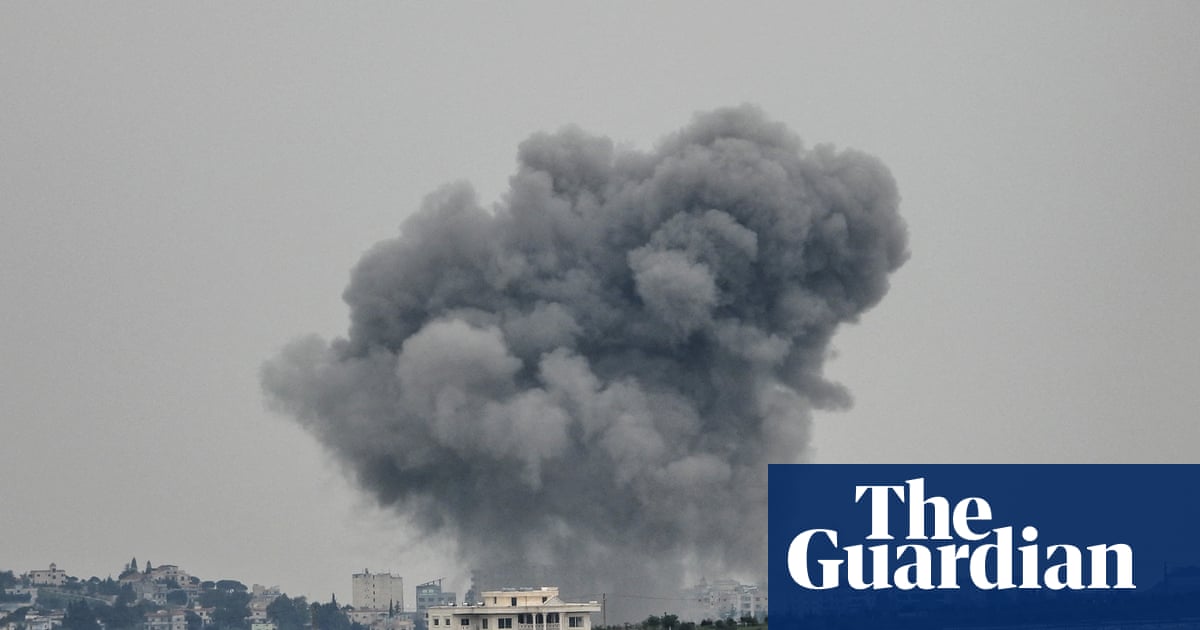
Israeli strikes in southern Lebanon killed 14 people on Sunday, including two women and two children, and wounded 37 others, marking the deadliest day since the ceasefire took effect over a week ago. Israel said one soldier was also killed, while both sides traded accusations of ceasefire breaches and continued attacks. The escalation underscores elevated regional war risk and could keep pressure on Middle East security and defense assets.
The key market implication is not the headline casualty count; it is that the ceasefire is already functioning like a semi-broken truce rather than a durable de-escalation. That changes the regime for northern Israel and southern Lebanon from a one-way decline in risk premium to a choppy, event-driven pattern where each tactical strike can reset fear of broader escalation. For energy and defense markets, the immediate effect is less about direct supply disruption and more about the probability distribution widening around shipping, insurance, and regional military procurement over the next few weeks.
The second-order effect is on reconstruction and frontier-border normalization: any expectation of rapid return of residents, reopening of local commerce, or rebuilding of damaged infrastructure is now pushed out by months, not days. That hurts Lebanese sovereign and quasi-sovereign credit through weaker confidence in deposit stabilization and reconstruction inflows, while also keeping Israeli border-area security spending elevated. If the truce degrades further, expect a nonlinear jump in civilian displacement and logistics costs, which can spill into broader Levant trade routes and raise risk premia across neighboring EM sovereigns.
The consensus is likely underpricing how quickly a "managed violation" can morph into a self-reinforcing tit-for-tat cycle. What looks contained today can become dangerous if either side suffers another high-visibility military loss; that kind of catalyst usually matters more than the absolute number of strikes. The base case remains localized conflict, but the skew is negative: a single mass-casualty event, a strike on a high-value commander, or an attack causing significant Israeli civilian harm could force broader retaliation within days.
From a portfolio standpoint, the best expression is to own convexity rather than direction. Defense names with Middle East rearmament exposure should outperform on any sustained deterioration, while Lebanese sovereign risk remains a high-beta way to express downside without needing a direct market proxy. The opportunity is in short-duration event risk: premiums should stay bid for 2-6 weeks if violations continue, but fade if mediators reimpose discipline and casualty counts fall back toward low single digits.
AI-powered research, real-time alerts, and portfolio analytics for institutional investors.
Request DemoOverall Sentiment
extremely negative
Sentiment Score
-0.85
