
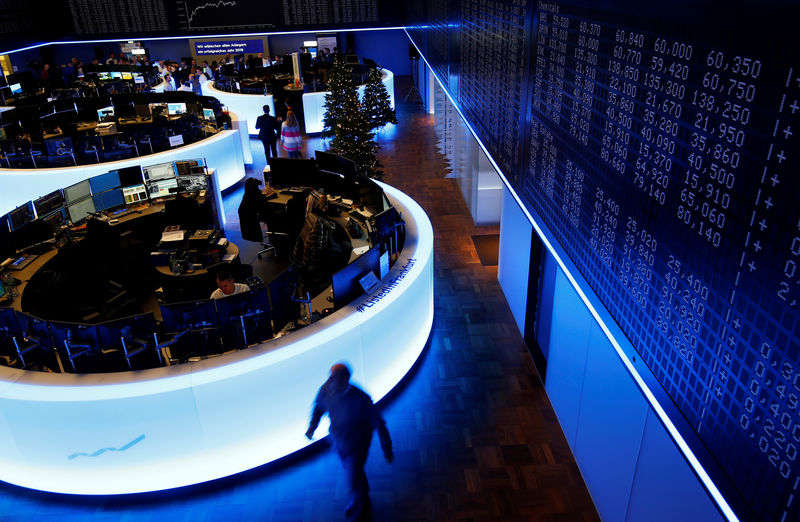
U.S.-Iran peace talk progress and the continued Hormuz blockade are keeping markets focused on geopolitical risk, while oil remains elevated with Brent at $95.10 and WTI at $91.12 per barrel. European equities were mostly stable, with the Stoxx 600 up 0.1%, as gains in ASML after a raised annual sales outlook offset weakness in Hermes, which cited slower quarterly sales growth amid Iran-related demand headwinds. Reports that more than 20 commercial vessels have recently passed through the Strait of Hormuz suggest some easing in supply disruption risk, but the blockade still threatens Gulf trade flows.
The market is treating this as a classic de-escalation tape, but the bigger second-order read is that logistics risk is now being repriced faster than energy risk. Even if headlines improve, any lingering disruption in Hormuz raises the option value of non-Gulf supply chains: North Sea, U.S. Gulf Coast, and pipeline-linked refiners gain relative resilience, while ocean freight and marine insurance can stay bid longer than spot crude. That creates a cleaner relative-value setup in transport-sensitive industrials than in outright oil length, because the equity market will likely fade headline-driven crude spikes faster than it will fully unwind supply-chain hedges.
ASML’s guidance raise matters less as a single-name story and more as a signal that AI capex remains insulated from geopolitical noise. If foundry and logic customers keep spending, the key second-order winners are the lithography-adjacent ecosystem and power/thermal infrastructure names, while consumer electronics and luxury demand remain more exposed to any Europe/Asia confidence shock from sustained oil near triple digits. TSM should benefit modestly through a higher long-cycle capex backlog, but INTC’s relative reaction is likely capped because its turnaround still depends on execution, not just sector beta.
The contrarian view is that the market may be underestimating how quickly a partial reopening of seaborne flows can deflate the geopolitical premium in crude. If vessel traffic normalizes over the next 1-2 weeks, Brent can retrace materially even without a formal ceasefire, which would relieve pressure on European consumer cyclicals and airlines. In that scenario, the real winners are not energy equities but the rate-sensitive, input-cost-sensitive parts of the market that have been selling off on a worst-case oil shock narrative.
Near term, the setup is binary: either peace-talk headlines collapse the premium, or a single fresh shipping incident re-prices the whole curve. That argues for expressing views with options rather than cash equity because the distribution is fat-tailed and time decay is manageable over 2-4 weeks. The highest-conviction opportunity is relative value, not directionality, because the market is already showing signs of separating durable AI capex strength from transitory geopolitics.
AI-powered research, real-time alerts, and portfolio analytics for institutional investors.
Request TrialOverall Sentiment
neutral
Sentiment Score
0.05
Ticker Sentiment
