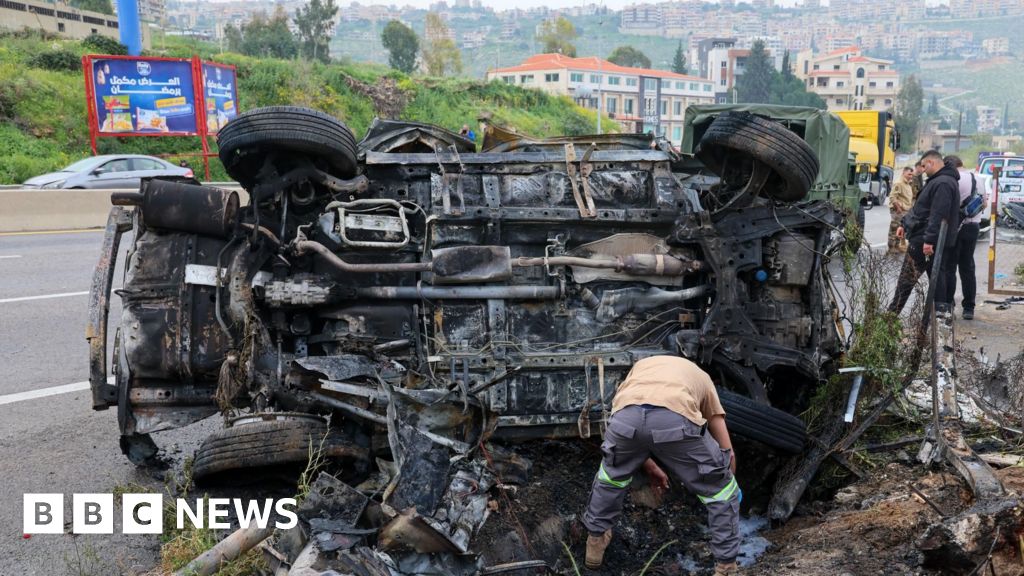
Israeli strikes and Hezbollah rocket fire continued despite the first direct US-mediated Israel-Lebanon talks in three decades, with at least 30 rockets launched into northern Israel and more than 200 Hezbollah infrastructure sites reportedly hit in the past 24 hours. Lebanon says the conflict has killed at least 2,124 people and displaced more than 1 million since fighting resumed on 2 March, while Israel says 12 soldiers and two civilians have been killed. The talks produced no ceasefire, and Israel signaled plans for an 8-10 km buffer zone inside Lebanese territory, keeping escalation risk elevated.
The market implication is not just regional escalation risk; it is a widening gap between tactical diplomacy and operational reality. When talks begin while strikes continue, the probability distribution shifts toward a longer, messier conflict with repeated headline shocks rather than a clean ceasefire, which usually supports defense, cyber, and hard-security spending while penalizing cyclicals with Middle East exposure. The most important second-order effect is that any attempt to create a buffer zone effectively formalizes a rolling occupation risk, increasing the chance of a multi-month drain rather than a quick de-escalation. The broader supply-chain impact is likely to show up first in insurance, shipping, and energy logistics rather than crude outright. Elevated risk premiums for Levantine and Eastern Med routing can hit marine insurance and delay cargo flows even without a direct hit to major export infrastructure, and that tends to bleed into higher working capital needs for importers in Europe. If the conflict expands geographically, the real market stress point is not oil supply per se but red-sea-style rerouting and port disruption, which can create second-order inflation pressure and complicate central-bank easing paths. Consensus may still be underpricing domestic political fragility inside Lebanon. A visible split between state interlocutors and armed groups increases the odds that any negotiated outcome fails to hold, which makes the conflict self-reinforcing and raises the tail risk of state-service degradation. The bearish surprise is not a sudden ceasefire; it is a slow normalization of cross-border war that becomes embedded, keeping risk assets in a higher volatility regime for months rather than days.
AI-powered research, real-time alerts, and portfolio analytics for institutional investors.
Request DemoOverall Sentiment
strongly negative
Sentiment Score
-0.85
