



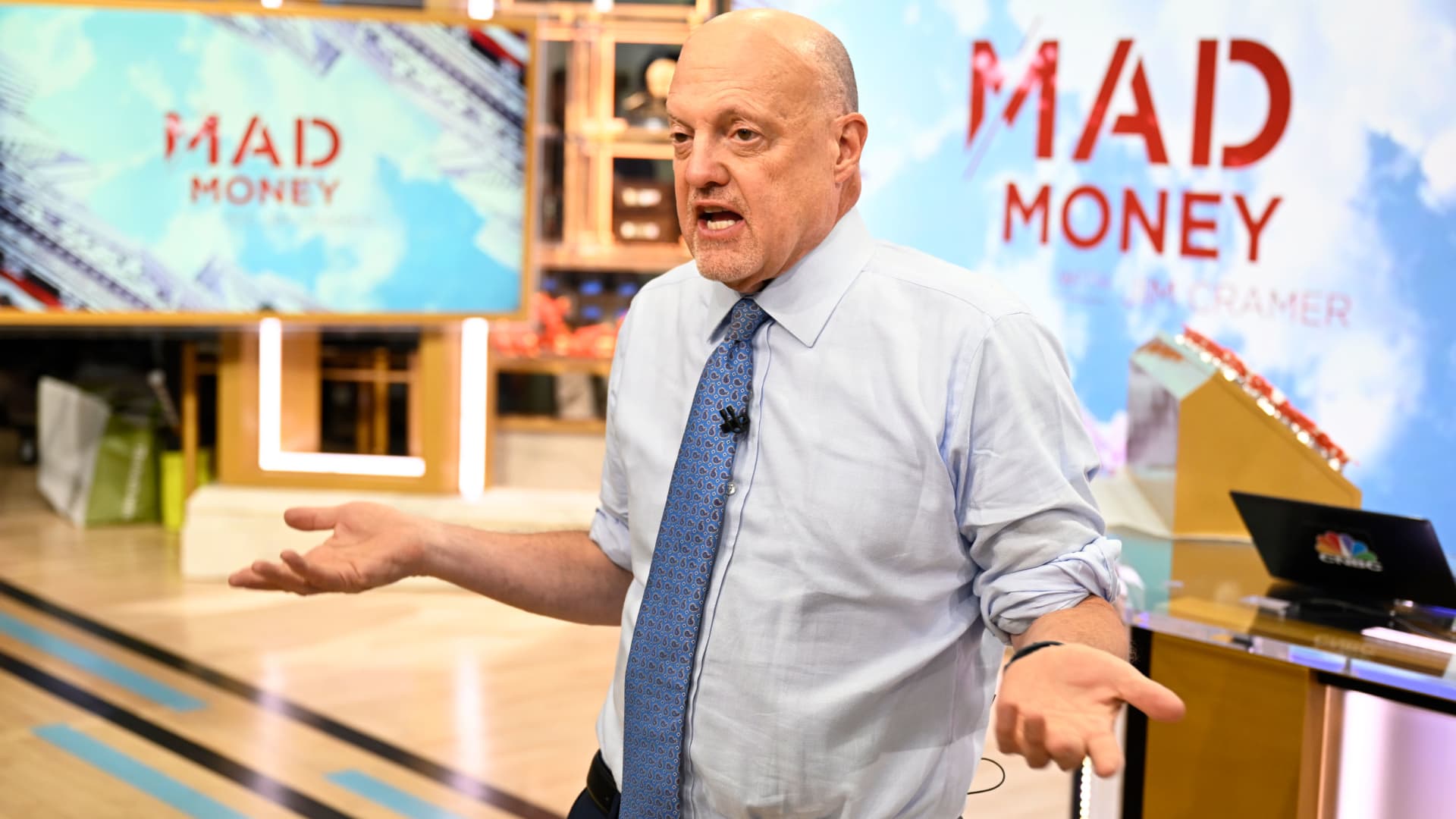
Stocks have rebounded sharply since March 30, with the Dow up 318 points (+0.66%), the S&P 500 up 1.2%, and the Nasdaq up 2.0% on Tuesday; the S&P 500 is now near its all-time closing high from Jan. 27. Jim Cramer said the rally is being driven by feared negatives that did not materialize, including an Iran-related oil/inflation spike, higher rates, private credit contagion, and continued weakness in megacap tech. He cautioned that the rally may be stretched near term, but argued the long-term lesson is to avoid being pushed out by fear-driven narratives.
The market’s message is less “all-clear” than “risk premia were too high for the actual macro path.” That matters because the advance is being driven by multiple compression trades at once: lower tail-risk pricing in rates, tighter equity volatility, and re-risking in large-cap growth/AI where duration sensitivity is highest. In that setup, the rally can extend even if earnings revisions are only modestly positive, because positioning and underownership can do a lot of the marginal buying.
The second-order effect is that the biggest beneficiaries are the names most exposed to multiple expansion rather than fundamental surprise. NVDA is the cleanest expression: if rates stay contained, the discount rate tailwind alone can support another leg higher even before estimate revisions catch up, while AMZN and GOOGL benefit from the same long-duration re-rating with less headline risk. By contrast, private-markets platforms like OWL, BX, and KKR are still carrying a sentiment discount because the market is implicitly demanding evidence that credit stress stays idiosyncratic; if defaults remain contained for another quarter, these names should mean-revert faster than most expect.
The key contrarian risk is that the market is now pricing the absence of bad outcomes as if it were an ongoing policy. That can reverse quickly if energy or rates reprice, but the more likely near-term failure mode is simply exhaustion: after a sharp three-week move, marginal buyers are thinner and any growth miss or hawkish rate surprise can trigger a fast de-grossing. The rally looks stronger on a 3-6 month horizon than on a 3-10 day horizon, because the next catalyst is not “good news” but “no bad news,” which is inherently fragile.
Consensus is probably underestimating how much this tape rewards disciplined factor exposure rather than stock-picking alone. The best expression is still long high-quality megacap growth versus the more cyclically exposed parts of the market, but the private-credit group may be the higher-beta catch-up trade if spreads stay calm. If the next macro print confirms stable yields, the underowned winners can keep running even with no fundamental excitement, because the market is effectively forced to rebalance into winners it had just abandoned.
AI-powered research, real-time alerts, and portfolio analytics for institutional investors.
Request TrialOverall Sentiment
mildly positive
Sentiment Score
0.35
Ticker Sentiment
