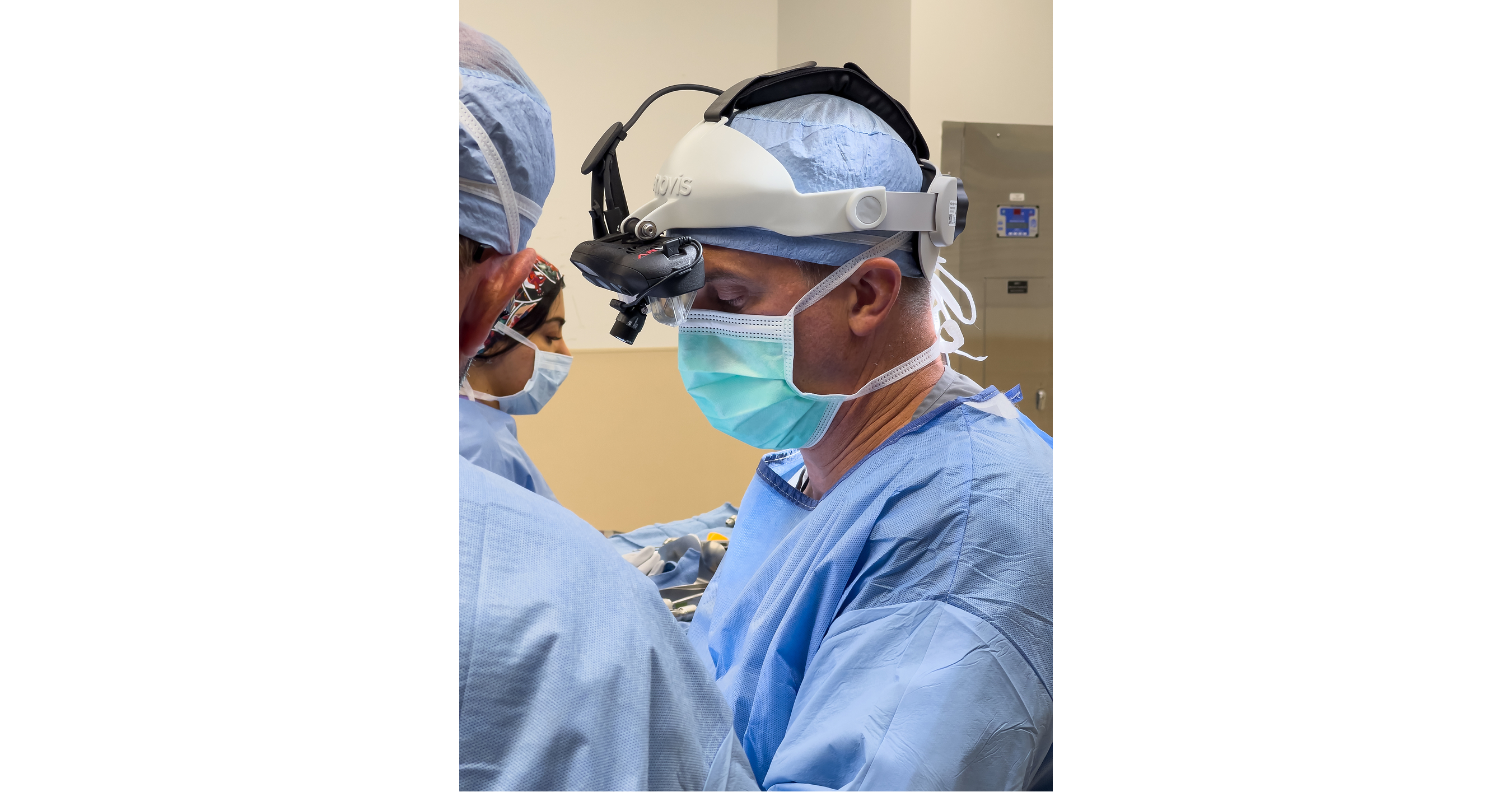
OrthoArizona (Dr. Shelden Martin) performed the first augmented-reality (AR) assisted shoulder replacement surgery in Arizona using Enovis’ ARVIS wearable guidance system. The ARVIS eyepiece enabled hands-free, real-time visual guidance and millimeter-level guide-wire placement, eliminating the need for 3D-printed patient-specific tools in this case. The group expects improved accuracy and potential benefits to survivorship and patient outcomes as AR adoption expands to broader total/reverse shoulder replacement candidates.
This is incremental validation for ENOV’s shoulder-navigation stack, but not yet a revenue inflection. The commercial value is less about one procedure and more about lowering the adoption friction for surgeons who already believe in pre-op planning but dislike the logistics of patient-specific guides; that could improve conversion rates across the next 6-12 months if the workflow is truly simpler and faster. The key second-order effect is pressure on the older 3D-guide ecosystem and imaging/planning vendors that monetize customization rather than intra-op guidance.
The market likely overweights the “first case” headline and underweights the real gating item: published evidence that AR improves room time, revision rates, or surgeon throughput enough to justify capital spend. If ENOV can show repeatable utilization across high-volume shoulder surgeons, the upside is a modest but durable mix shift in orthopedic capital; if not, this remains a marketing tool with limited P&L impact. Competitively, larger medtech peers with broader installed bases can respond quickly if they decide shoulder AR is worth bundling into existing platforms.
Time horizon matters: near-term stock reaction should be muted because this is not a reimbursed indication change or an FDA milestone. The catalyst path is 1-3 months of surgeon testimonials and conference data; the structural path is 6-18 months if AR becomes the default for complex reverse-shoulder cases and eventually spills into hips/knees. The thesis is falsified if ENOV fails to convert these pilots into measurable procedure growth or if evidence shows AR does not reduce operative complexity versus CT-guided workflows.
PPRG has no obvious direct read-through. The contrarian view is that the consensus may be too focused on robotics headlines and not enough on workflow friction: if AR can be adopted without major capex or training burden, it may be more disruptive than larger robotic systems in outpatient settings, where throughput and surgeon convenience matter more than full automation.
AI-powered research, real-time alerts, and portfolio analytics for institutional investors.
Request DemoOverall Sentiment
mildly positive
Sentiment Score
0.35
Ticker Sentiment
