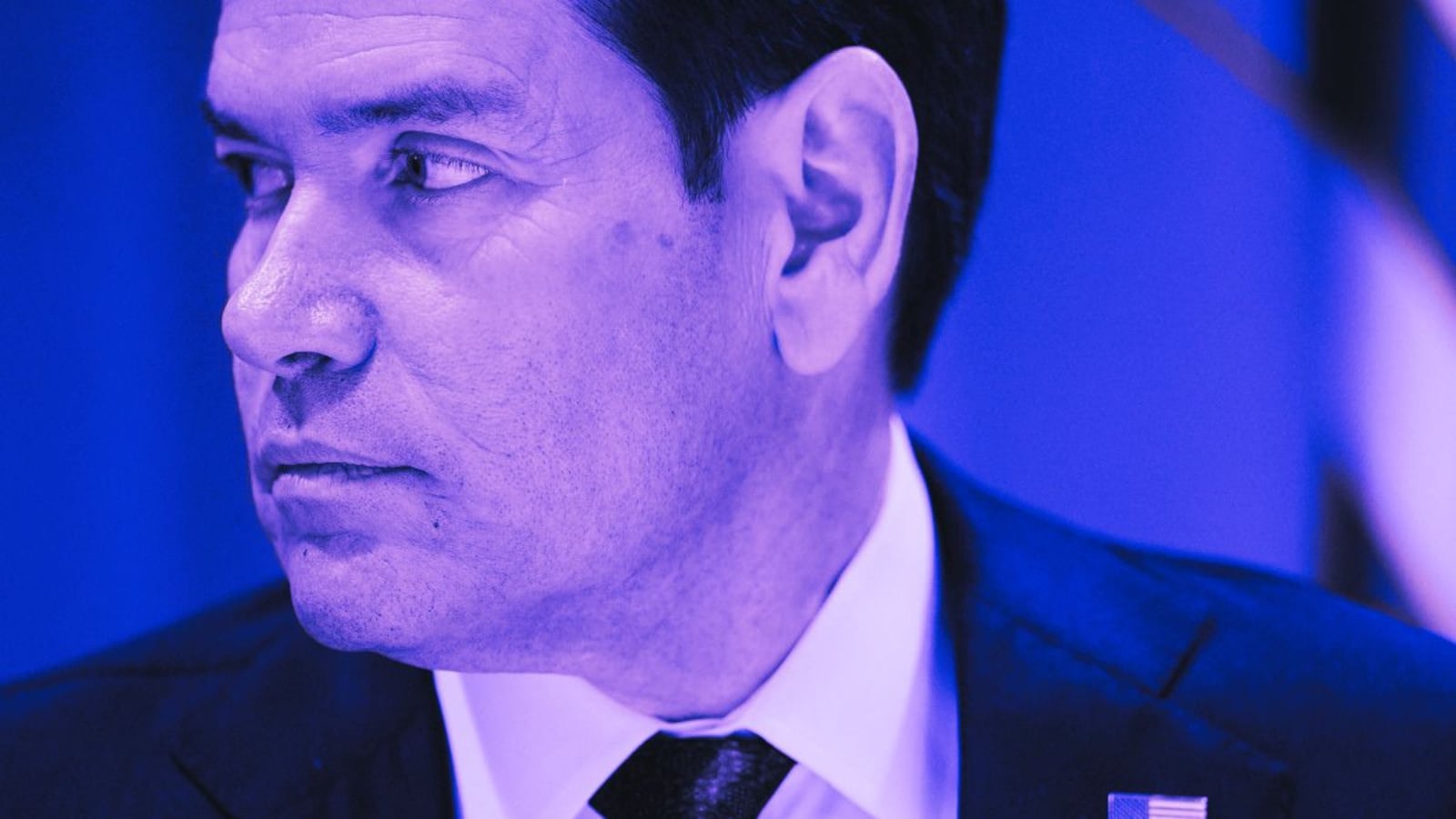
US Secretary of State Marco Rubio's four-day visit to India centers on energy security, trade frictions, critical minerals and expanded defense cooperation. The US is seeking to boost LNG and crude exports to India while both sides try to ease tariff disputes and secure supply chains for semiconductors and batteries. The trip, alongside the Quad foreign ministers' meeting, signals continued US-India strategic alignment despite recent tensions.
The market underestimates how much of this is about optionality rather than immediate trade flows. A credible US-India energy rapprochement is incremental bearish for Russian barrel displacement over 6-18 months, but the first beneficiaries are not the obvious Indian refiners — it is US LNG exporters with the best logistics and contracting flexibility, because India is likely to favor destination-flexible molecules and shorter-tenor deals before committing to large take-or-pay volumes.
The second-order winner is the US industrial complex tied to export infrastructure and defense supply chains. If India moves from a buyer of platforms to a co-production and technology-integrated partner, that shifts value away from pure prime contractors toward subcontractors, avionics, sensors, and software-enablement names with India manufacturing exposure; the real margin expansion comes from recurring MRO, spares, and upgrades over a 5-10 year cycle. For Boeing specifically, the incremental signal is less about a one-time aircraft sale and more about de-risking future defense and commercial procurement narratives after a long period of delivery skepticism.
The contrarian risk is that the diplomacy headlines outpace execution. India has strong incentives to keep energy diversification as a bargaining chip without meaningfully reducing discounted Russian imports unless sanctions enforcement tightens or Middle East supply worsens; that makes the near-term impact on LNG less linear than headline readers assume. On the defense side, co-production sounds bullish, but these deals are slow, politicized, and often dilute near-term OEM economics while improving strategic stickiness — meaning the equity impact is usually a 12-24 month story, not a weeks-long catalyst.
The biggest overdone read is that closer US-India ties automatically mean a clean decoupling from China. More likely, the outcome is a hedged rebalancing: India diversifies suppliers in semis, batteries, and minerals while preserving low-cost sourcing where possible. That favors firms with multi-jurisdiction manufacturing and export-control resilience, and it penalizes single-region supply chains that rely on frictionless China-India trade.
AI-powered research, real-time alerts, and portfolio analytics for institutional investors.
Request DemoOverall Sentiment
neutral
Sentiment Score
0.05
Ticker Sentiment
