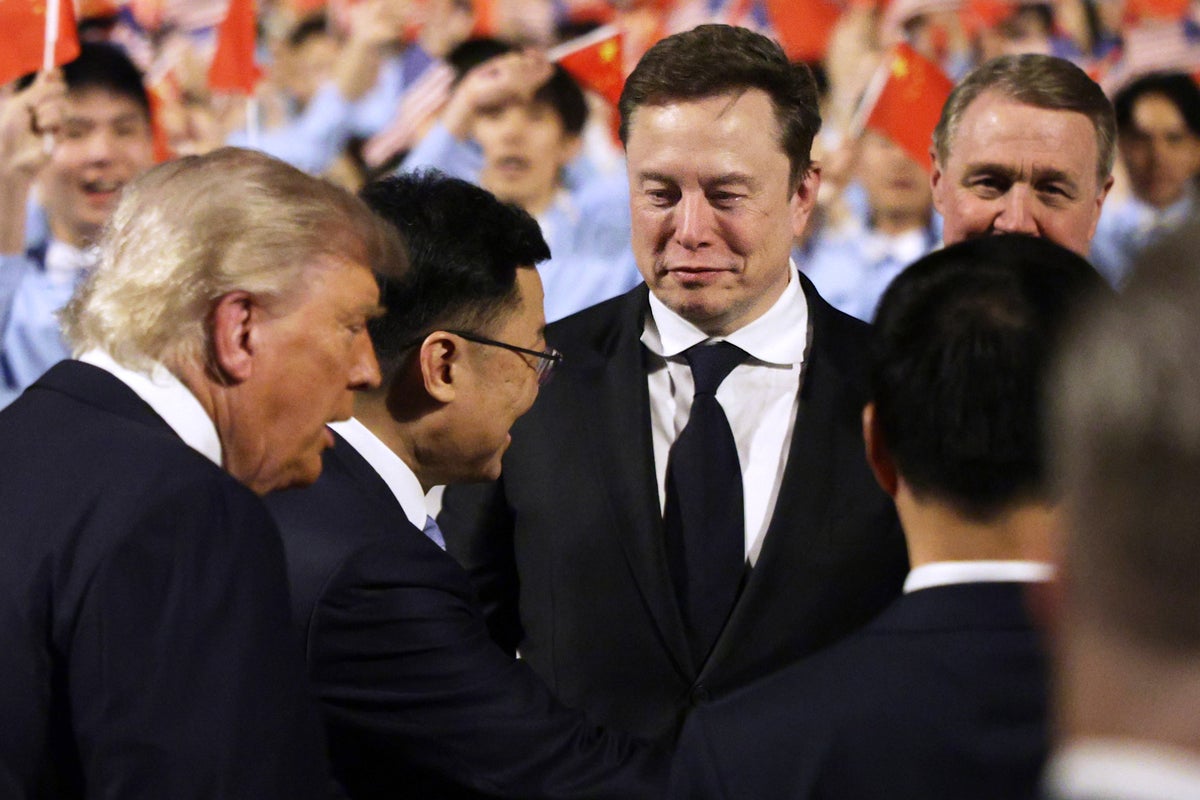
Elon Musk flew to China during the OpenAI trial despite a judge warning he could be recalled to testify, adding legal and procedural uncertainty around the case. The article centers on Musk’s lawsuit seeking to remove Sam Altman and Greg Brockman and claims $150 billion in damages to an OpenAI nonprofit. The news is primarily litigation-related and likely has limited near-term market impact beyond sentiment for OpenAI and related AI governance issues.
This is less a litigation headline than a signal about governance optionality at the highest end of AI. If the court views the witness as effectively unavailable or noncompliant, it subtly strengthens the narrative that founder-control and personality risk remain embedded in AI platform equities, especially where strategic direction is still heavily keyed to a small number of individuals. The immediate market impact is probably muted, but the medium-term effect is that capital may assign a higher discount rate to governance-heavy AI commercialization stories versus more institutionally controlled peers.
The second-order winner is likely the broader “pick-and-shovel” AI stack, not the headline names tied to founder conflict. Customers and enterprise buyers generally prefer vendors with lower legal overhang and cleaner decision-making, which can marginally favor diversified infrastructure, cloud, and model-distribution plays over politically noisy frontier labs. If the dispute escalates, the real risk is not a courtroom penalty but distraction: product cadence, partnership negotiations, and fund-raising leverage can all get worse over a 3–12 month horizon if key executives are spending time in depositions and media cycles.
The contrarian read is that the market may be overestimating the negative signaling for the AI complex. Legal conflict can actually freeze the status quo, reducing the odds of abrupt strategic changes and making the eventual settlement more predictable than headline risk suggests. In that sense, the event is more likely to compress volatility in the losing names after an initial spike than to create a durable fundamental impairment unless the court imposes concrete constraints on management or testimony access.
Near term, the cleanest setup is volatility rather than direction. If AI governance headlines continue, short-dated implied volatility in front-line AI names should stay bid, while cleaner infrastructure beneficiaries should remain relatively insulated. The key catalyst window is the next 1–3 weeks around trial developments and any judge commentary on recall status; after that, the trade becomes more about whether the legal narrative bleeds into commercial counterparties and regulators.
AI-powered research, real-time alerts, and portfolio analytics for institutional investors.
Request DemoOverall Sentiment
neutral
Sentiment Score
-0.10
