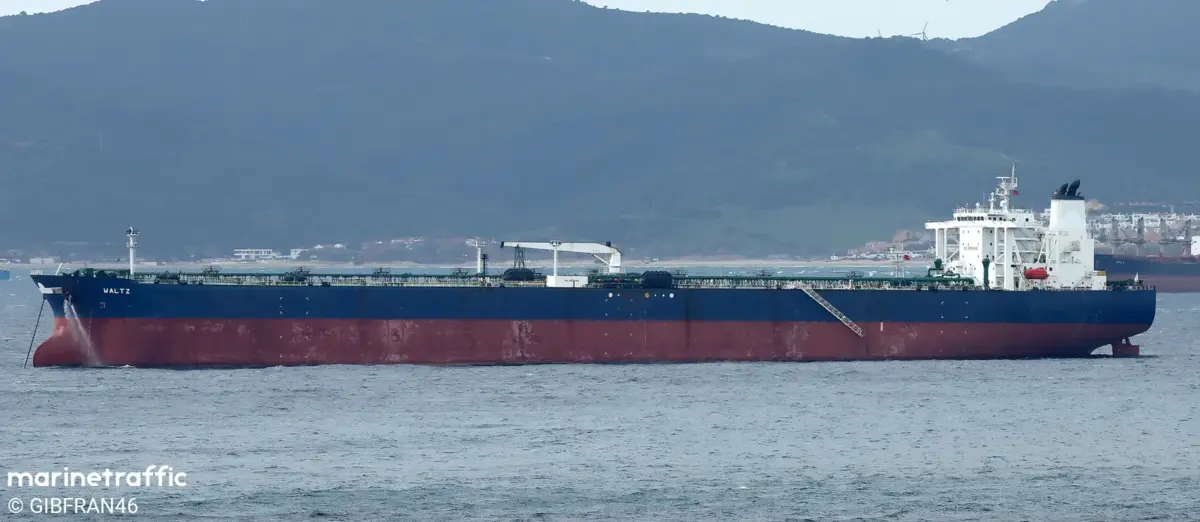
Three Russia-linked shadow fleet tankers — James II, Altura, and Velora — were attacked by drones about 50 miles off Turkey’s northern coast, underscoring persistent geopolitical risk to Black Sea shipping. The incident adds to concerns around sanctions evasion and the security of aging, underinsured vessels used to move Russian oil. While no injuries were reported, the event supports ongoing European efforts to tighten enforcement and authorization to board shadow fleet ships.
This is less a one-off shipping incident than an escalation in the enforceability regime around Russian crude. The key second-order effect is that risk premia are no longer only about sanctions compliance; they are starting to price physical interruption risk, insurance retreat, and flag-state/port-state harassment across the entire gray fleet. That tends to widen discounts on Russia-linked barrels at the margin while pushing compliant freight and marine insurance costs higher for everyone moving crude through the Black Sea, Eastern Med, and adjacent choke points.
The medium-term winner is not necessarily outright oil bulls, but non-Russian supply chains with cleaner title and lower geopolitical friction. If vessel seizures/boardings become normalized, cargo owners will accelerate route diversification, potentially tightening available ton-miles and supporting tanker rates even without a change in global oil demand. That creates a subtle inflation impulse: higher freight, higher insurance, and higher working capital needs flow through to refiners and import-dependent end users before they show up in headline crude prices.
The market may be underestimating how quickly this can metastasize into a broader maritime security framework. A credible response from Turkey, the U.K., France, and Belgium would move this from episodic drone harassment to a durable policy constraint on shadow-fleet operations over the next 1-3 months. The counter-risk is that Russia and Ukraine both have incentives to keep pressure concentrated in the maritime theater without materially disrupting global supply, which would cap the immediate oil price reaction while still sustaining elevated volatility and insurance spreads.
From a trading perspective, the cleanest expression is not directional Brent beta but relative-value in shipping and energy logistics. If enforcement intensifies, compliant crude transport and marine insurers should outperform sanctions-exposed carriers, while refiners with secured Atlantic Basin feedstock could benefit from wider regional differentials. If the attacks remain contained, the trade likely fades quickly; the edge is in owning volatility and dispersion rather than outright commodity convexity.
AI-powered research, real-time alerts, and portfolio analytics for institutional investors.
Request TrialOverall Sentiment
mildly negative
Sentiment Score
-0.35
