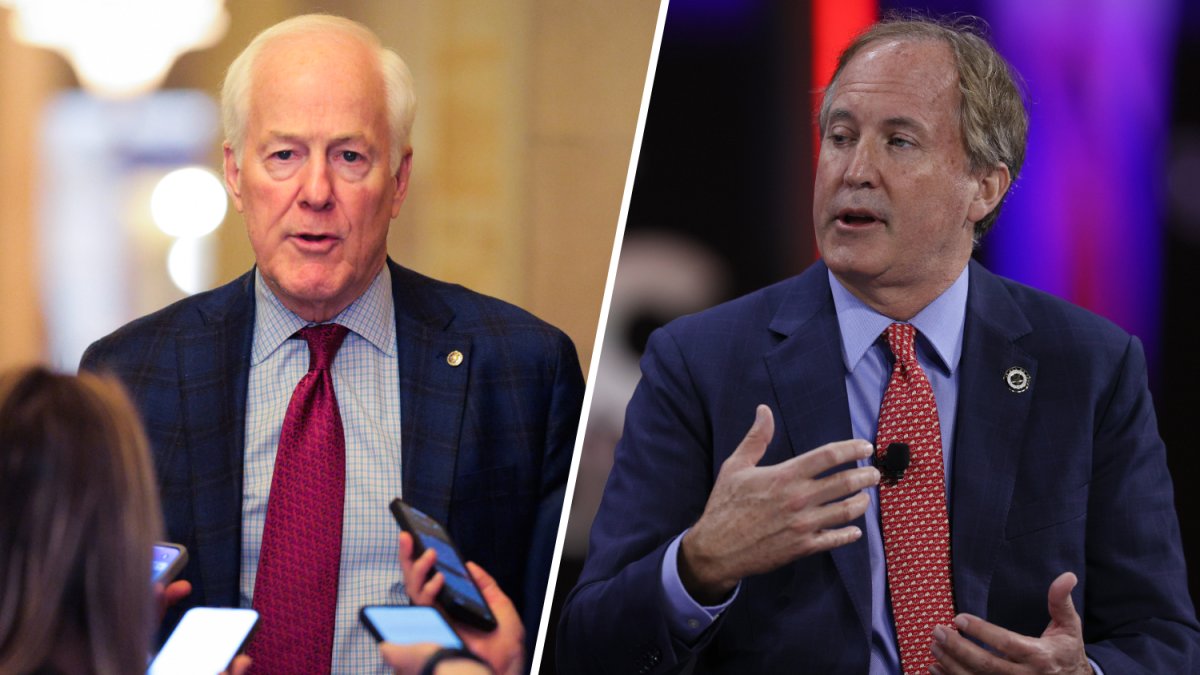
Texas Republicans are holding a runoff for the U.S. Senate nomination, with Donald Trump endorsing Ken Paxton over incumbent John Cornyn. Cornyn’s campaign and allied groups have spent roughly $90 million on advertising since last year, while pro-Cornyn groups have outspent Paxton’s side $16.5 million to $5.9 million since March 3. The winner will face Democratic state Rep. James Talarico in November; the article is primarily political and has minimal direct market impact.
This is less about Texas and more about the continuing monetization of presidential endorsement power inside low-turnout Republican primaries. The key second-order effect is not who wins a seat in November, but how much capital and message discipline the national GOP must now divert into a structurally less winnable state-level branding exercise, especially if a nominee with legal baggage forces the party into a general-election defense mode.
The market-relevant angle is governance risk: a Paxton win would signal that personal conduct and institutional legitimacy matter less than tribal alignment, increasing the odds of future candidate quality deterioration in high-profile primaries. That raises the expected cost of Republican control in marginal Senate and House races over the next 12-18 months, because more nominees will require emergency national committee support, more outside spending, and more defensive media budgets to contain self-inflicted vulnerabilities.
The near-term catalyst is turnout, not persuasion. Hyper-negative primary environments often compress participation into the most ideologically rigid voters, which tends to favor the candidate with the stronger identity signal and creates outsized tail risk for an upset relative to pre-runoff polling. If Paxton wins, the general-election line should widen immediately on the assumption that Democrats can force Republicans to spend in a state they would rather use as a donor reservoir; if Cornyn survives, it’s a signal that institutional incumbency still has defensive value even against Trump’s late intervention.
Consensus may be underestimating how much this environment helps Democrats indirectly: even if they are unlikely to win the seat, a damaging runoff can reduce GOP fundraising efficiency and force strategic retrenchment elsewhere. The bigger trade is not Texas Senate alone but the broader Republican brand premium — every high-cost intraparty fight increases the discount investors should apply to down-ballot Republican durability in 2026.
AI-powered research, real-time alerts, and portfolio analytics for institutional investors.
Request DemoOverall Sentiment
neutral
Sentiment Score
-0.05
