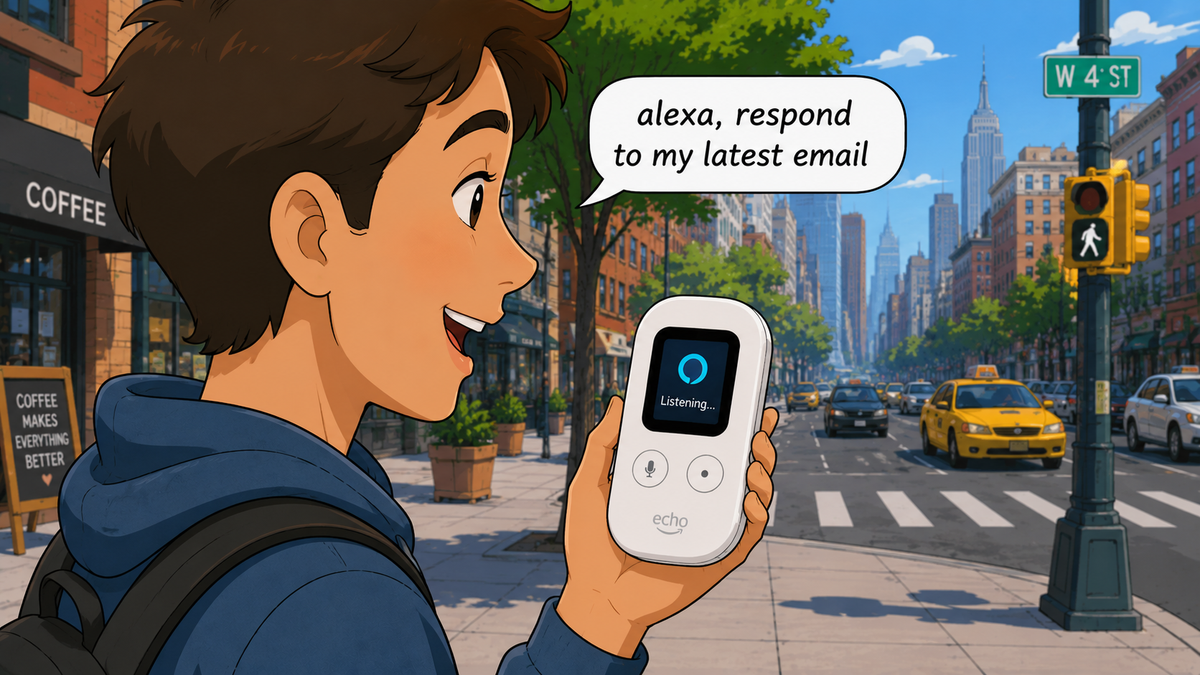
Amazon is signaling it is exploring new AI-first device form factors, but Panos Panay explicitly said it is not necessarily 'going after a phone' and there is 'no clear path' to a traditional smartphone. The article suggests Amazon may aim to build a hub-like consumer device that works with existing phones first, potentially leveraging Alexa, Alexa+, and its satellite internet project Leo. The piece is largely speculative and does not disclose a launch timeline or hard product details.
The market is underestimating how much of this is a systems-integration story rather than a handset story. Amazon’s edge is not device design; it is distribution leverage across home, cloud, commerce, and now AI assistant surface area. If they can seed a “companion” device that expands daily active engagement without requiring a full phone replacement, the economic moat comes from incrementally displacing time spent in iOS/Android, not from selling hardware margin.
The second-order winner is any company that can help Amazon bridge the gap between ambient home computing and mobile identity. That points to satellite connectivity, low-power edge silicon, sensors, and modem ecosystem partners before it points to a direct challenge to AAPL. The real threat to Apple is not unit share loss in the next 12 months; it is a slow erosion of default touchpoints if consumers begin to route payments, messaging, navigation, and shopping through Amazon-native endpoints that sit outside the App Store gravity well.
MSFT’s negative read-through is subtler: Panay’s credibility is being spent on a category where past Microsoft hardware attempts validated the problem but not the economics. That lowers confidence that Amazon will rush into a capital-intensive, consumer-facing flagship device business; more likely they iterate through peripheral form factors first. The risk is a multi-year capex sink with little adoption, but the catalyst window is 6-18 months: once one AI-first device gets meaningful traction, the competitive response cycle compresses fast and forces Apple/Google to move faster on ambient AI features.
The contrarian view is that the consensus is still framing this as a phone-vs-phone battle, which is probably the wrong lens. The actionable issue is whether Amazon can monetize an always-on assistant layer across home and mobile before platform incumbents replicate the same behavior natively. If they can, the upside is less about one killer device and more about a new distribution channel for Amazon services that gradually increases LTV per household.
AI-powered research, real-time alerts, and portfolio analytics for institutional investors.
Request DemoOverall Sentiment
neutral
Sentiment Score
0.12
Ticker Sentiment
