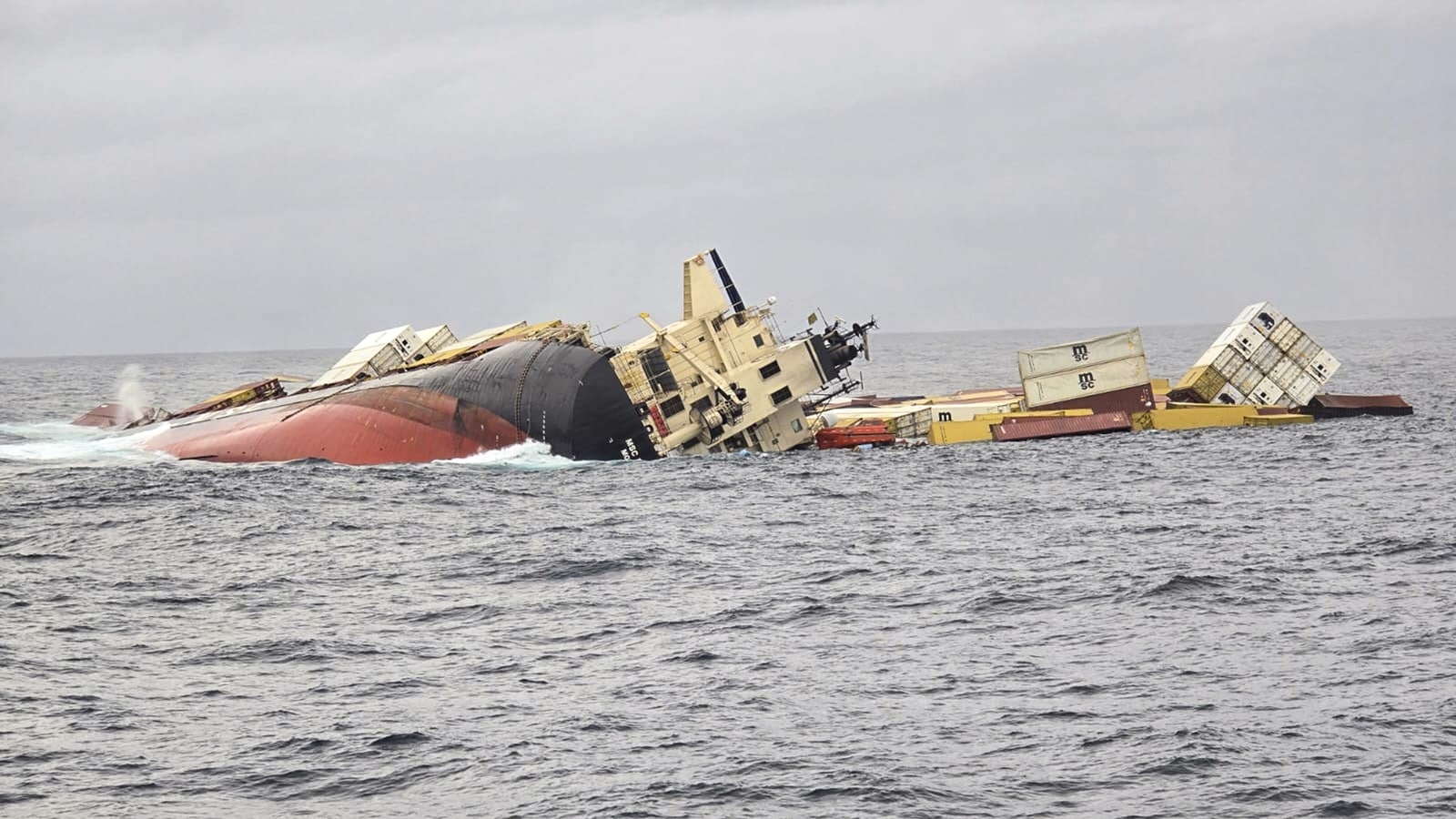
After the cargo ship MSC ELSA 3 capsized off the Kerala coast, 30 containers washed ashore, prompting a response to avert a potential oil spill. The ship contained 84.44 metric tonnes of diesel and 367.1 metric tonnes of furnace oil, as well as 13 containers with hazardous cargo, leading to the deployment of Coast Guard vessels and aircraft to contain any leakage; authorities are also preparing for potential ecological and economic impacts on marine ecosystems and fisheries, particularly during the monsoon season.
The capsizing of the Liberian-flagged cargo ship, MSC ELSA 3, off the Kerala coast presents a significant environmental and economic risk, primarily due to the potential for an oil spill. The vessel was carrying 84.44 metric tonnes of diesel and 367.1 metric tonnes of furnace oil, alongside 13 containers with unspecified "hazardous cargo" and 12 with calcium carbide, out of a total of 640 containers. While 30 containers have washed ashore and are reported not to contain harmful substances, the primary concern remains the substantial fuel oil onboard. The Indian Coast Guard has initiated a significant pollution response, deploying three vessels (Vikram, Saksham, Samarth) equipped with infrared cameras and oil spill dispersants, positioning a Dornier aircraft for aerial assessment, and mobilizing a dedicated pollution control vessel, Samudra Prahari, from Mumbai. State authorities in Kerala are preparing Rapid Response Teams. The timing of this incident during the monsoon season, a critical period for pelagic fish breeding and growth, elevates the potential for severe disruption to marine ecosystems and fishing activities, which could have long-term consequences for regional fisheries. The Indian National Centre for Ocean Information Services (INCOIS) and the ICAR-Central Marine Fisheries Research Institute (CMFRI) are set to conduct a field study to assess the fallout, with the scale of ecological and economic impact contingent on the extent of any leakage and the effectiveness of containment efforts. The situation warrants close monitoring due to the direct threat to sensitive marine species and the livelihoods of artisanal fishers.
AI-powered research, real-time alerts, and portfolio analytics for institutional investors.
Overall Sentiment
moderately negative
Sentiment Score
-0.50
