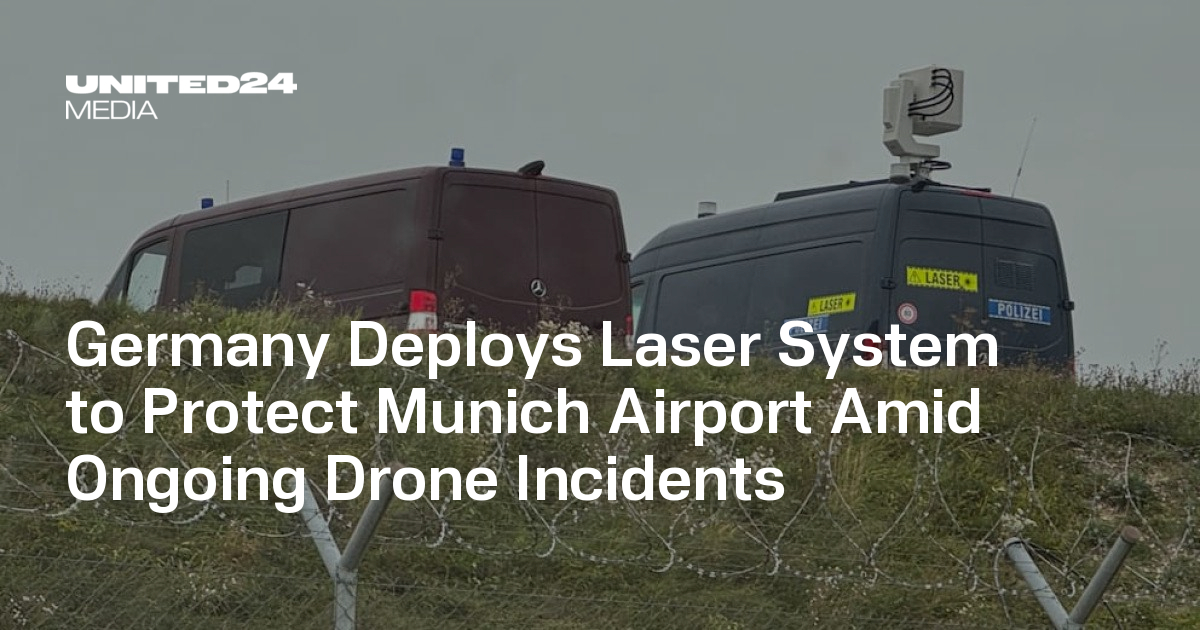
Germany has deployed a laser-based system at Munich Airport following repeated drone sightings that caused significant flight disruptions and cancellations, impacting thousands of passengers. This measure is part of an expanded national response to aerial threats, including the establishment of nationwide counter-drone units and ongoing investigations into the perpetrators. Notably, a Ukrainian official has suggested Russian sleeper agents may be behind such EU-wide drone disruptions, adding a potential geopolitical dimension to these security challenges.
Category - Latest news Germany Deploys Laser System to Protect Munich Airport Amid Ongoing Drone Incidents German police have reportedly deployed a laser-based system to secure Munich Airport following repeated drone sightings that disrupted air traffic in recent days, Bild reported on October 5. The outlet said the laser device was positioned near one of the airport’s runways to help detect and track unauthorized drones approaching the facility. According to Bild, the system is designed to determine the distance to aerial targets, giving police improved situational awareness and supporting possible interception operations. The newspaper cited security sources who described the move as part of an expanded response following a series of flight suspensions caused by drone activity. Munich Airport temporarily halted operations twice within 24 hours after unidentified drones were spotted in restricted airspace. The closures led to dozens of flight cancellations and delays, affecting thousands of passengers. The airport authority said additional emergency measures were introduced, including temporary sleeping facilities and food for stranded travelers. A spokesperson for Germany’s Federal Police confirmed that specialized units were deployed at the site, while the Federal Office for the Protection of the Constitution and the Central Office for Counterterrorism and Extremism are leading the investigation into who is behind the drone flights. The Frankfurter Rundschau reported that two police vehicles equipped with radar and laser detection systems were observed near the runway. However, official agencies have not confirmed whether the technology in use includes active laser interceptors or solely optical rangefinders for detection and tracking. According to FAZ, the Bundeswehr has provided technical assistance to police forces, particularly in the detection of drones over sensitive military and civilian sites in Bavaria. German Interior Minister Alexander Dobrindt stated that new “counter-drone units” are being established nationwide to address emerging aerial threats. Earlier, The Guardian cited Ukrainian Deputy Foreign Minister Sergiy Kyslytsya, who said Russia had activated sleeper agents across the EU to stage drone disruptions near airports and military sites. The deployment of a laser-based counter-drone system at Munich Airport highlights the escalating operational and economic threat posed by unauthorized drone activity to critical infrastructure. Significant disruptions, including dozens of flight cancellations and temporary airport closures affecting thousands of passengers, have necessitated a direct security response. This incident is not isolated, but rather part of a broader German national security strategy that includes the establishment of nationwide "counter-drone units" and involves federal police, intelligence agencies, and technical assistance from the Bundeswehr. The use of radar and laser detection systems points to an emerging market for advanced anti-drone technologies. Critically, the situation is framed with a geopolitical dimension, as a Ukrainian official has suggested Russian sleeper agents may be responsible for such disruptions across the EU. This elevates the incident from a localized security issue to a potential act of hybrid warfare, increasing the risk profile for European transportation and infrastructure assets.
AI-powered research, real-time alerts, and portfolio analytics for institutional investors.
Request DemoOverall Sentiment
moderately negative
Sentiment Score
-0.45
