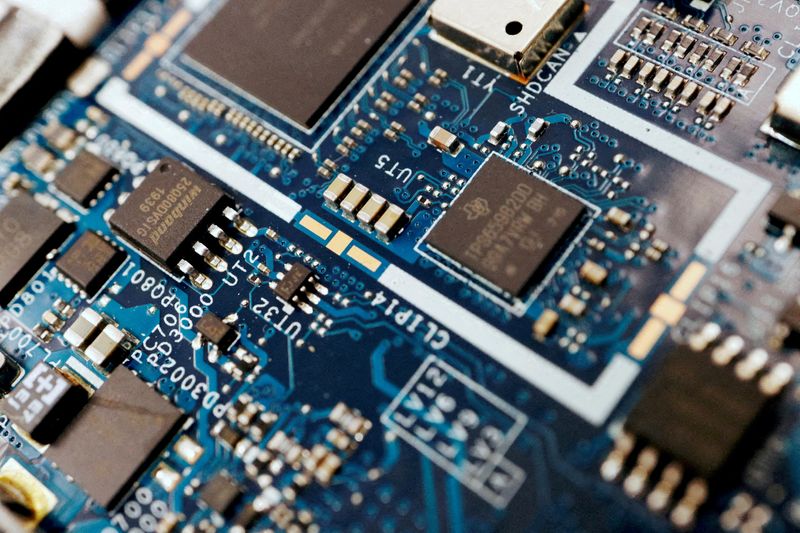
JPMorgan upgraded PSMC to overweight and doubled its June 2027 price target to NT$100 from NT$50, implying roughly 35% upside from the June 18 close of NT$74.20. The brokerage cited stronger memory foundry pricing, possible Micron collaboration in HBM packaging and DDR4 technology, and silicon capacitor opportunities, while lifting 2026/2027 EPS estimates to NT$6.41 and NT$6.52. It also expects gross margin to improve to 47% by end-2027 from 10% in Q1 2026, with the stock surging as much as 10% intraday.
This is less a one-name rerating than a signal that the memory cycle is broadening beyond DRAM commodity recovery into a higher-margin packaging and process-services complex. If a mid-cap foundry can reprice memory work this aggressively, the second-order read-through is that advanced memory bottlenecks are shifting from wafer supply to backend integration and yield management, which favors suppliers with process know-how rather than pure capacity. That creates a cleaner earnings lever for upstream equipment, specialty materials, and any co-packaging ecosystem exposed to HBM buildout.
The most important competitive implication is for Chinese memory producers: the combination of capital infusion and node migration raises the probability that non-China supply keeps gaining share in niche, higher-spec segments even if commodity DRAM remains cyclical. In practice, that means price competition may intensify at the low end while margins expand at the high end, widening the performance gap between technologically constrained players and those with access to advanced packaging/customer relationships. For Micron, the collaboration angle matters more as a signaling device than as near-term revenue; it suggests the market may be underestimating how quickly backend capacity can become the gating item for HBM monetization.
The contrarian risk is that the stock is likely discounting a near-perfect execution path over a 18-24 month horizon. Memory ASPs and utilization can improve quickly, but gross margin expansion to the implied levels requires not just pricing strength, but also a sustained mix shift and no major capex overhang or yield hiccups. If DRAM pricing rolls over before the technology migration is established, the valuation rerate could compress just as the market extrapolates peak margins.
The cleanest tactical setup is to buy the complex on pullbacks rather than chase the gap: the move is likely to be less about one-day momentum and more about a multi-quarter estimate revision cycle. The highest-quality expression is probably a relative long in the beneficiary ecosystem versus a short in lagging memory names or China-exposed competitors, because the structural wedge is execution and product mix, not just cyclical beta.
AI-powered research, real-time alerts, and portfolio analytics for institutional investors.
Request DemoOverall Sentiment
strongly positive
Sentiment Score
0.70
Ticker Sentiment
