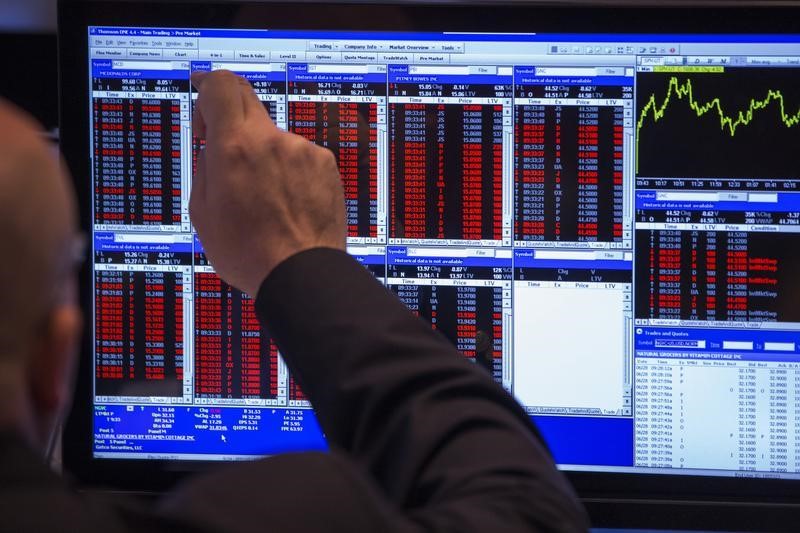
ASML fell 7.9% to $1,776.18 as U.S. authorities alleged possible EUV export-control violations, while a bipartisan bill to ban all DUV shipments to China would threaten roughly 20% of 2026 revenue. ASML denied the allegations, but the unresolved regulatory dispute adds material risk to its China exposure even after Wells Fargo and Bank of America raised price targets to $2,200 and $2,345. Weak tech markets are amplifying the sell-off, with the NASDAQ down 1.9% and the S&P 500 off 1.3%.
The immediate loser is not just ASML’s equity multiple but the entire EUV/DUV ecosystem’s legal optionality. Even if the current allegation never becomes a formal enforcement action, the market will start discounting a longer approval queue for every China-adjacent tool shipment, which pressures near-term order conversion and raises working-capital intensity for the supply chain. That creates a second-order headwind for suppliers and service providers with higher China mix, while domestic Chinese semi-equipment names become relative beneficiaries as customers accelerate substitution and inventory builds.
The real asymmetry is that this headline lands at a fragile point in the AI capex cycle: semicap leadership has been priced on multi-year scarcity, so any disruption to the most concentrated tool vendor gets magnified in factor exposures and systematic de-risking. If the bill advances, the issue shifts from idiosyncratic headline risk to a policy regime change, and that could compress the stock’s multiple for months even if revenue is only partially affected. In the near term, the tape matters more than fundamentals; the stock can underperform peers simply because it is the cleanest way for macro funds to express “China + tech regulation” risk.
Consensus may be underestimating how little bad news is needed to re-rate this name lower from premium to merely expensive. The bullish analyst targets assume the China revenue stream is mostly preserved, but the market will likely price in a higher probability distribution around a 10-20% haircut to that pool if rhetoric hardens into enforceable restrictions. Counterintuitively, the strongest relief rally would likely require procedural, not substantive, de-escalation: public clarification that no violation occurred, or signs the bill is being watered down before floor action.
For WFC and BAC, this is a modest relative winner only through factor rotation, not direct business exposure: if the selloff broadens beyond semis into quality-growth derating, banks can capture passive inflows from defensive reallocation. NDAQ is the quiet loser if volatility persists, because options/market activity helps but sustained risk-off typically hurts equity issuance and valuation-rich tech listings. The broader takeaway is that this is a sentiment event with a potential policy tail, so positioning should respect both a fast technical bounce and a slower multiple compression regime.
AI-powered research, real-time alerts, and portfolio analytics for institutional investors.
Request DemoOverall Sentiment
strongly negative
Sentiment Score
-0.62
Ticker Sentiment
