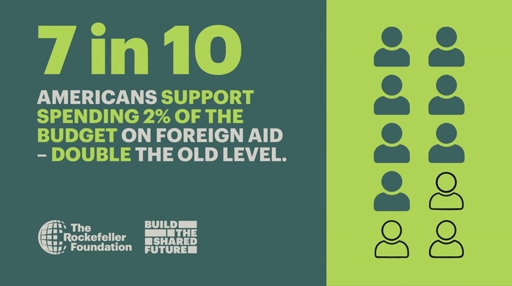
A year after USAID was dismantled, a new survey finds 54% of Americans favorable toward foreign aid (net +19 points), rising to 70% after respondents learn what it costs and accomplishes. Support is broad for specific missions—90% back humanitarian relief and preventing disease outbreaks, and 78% support peacekeeping/conflict resolution—and 8 in 10 favor reform/strengthening (81% overall, including 83% of Republicans). Despite the ~1% of the federal budget figure before 2025 cuts, 70% would fund foreign aid at 2% of the budget, which respondents view as about-right or too low once the true cost is revealed (78%).
This is a sentiment catalyst, not a cash-flow catalyst. The investable signal only appears if lawmakers translate abstract bipartisan sympathy into appropriations, and that path is slow, noisy, and usually smaller than the rhetoric implies. For public markets, the upside is concentrated in a narrow set of global-health suppliers, diagnostics, and compliance-heavy implementers; the broad aid universe is mostly private, so equity beta is limited.
The second-order winner is anyone with auditable delivery capability, not the lowest-cost NGO or the loudest policy advocate. If funding returns, procurement likely shifts toward measurable outcomes, monitoring, and outbreak response, which favors scale players with federal procurement relationships and data infrastructure. That is more supportive of large-cap health care and defense-adjacent systems vendors than of small humanitarian names.
Timing matters: the next 1-3 months are about budget markups and any escalation in Ebola/global-health headlines; 6-18 months is where any structural restoration would matter. The contrarian view is that consensus is overstating how much abstract survey support changes actual outlays; once offsets, deficits, and administrative capacity enter the frame, most of the headline enthusiasm can dissipate. The trade is to wait for bill language, not opinion data.
AI-powered research, real-time alerts, and portfolio analytics for institutional investors.
Overall Sentiment
mildly positive
Sentiment Score
0.15
Ticker Sentiment
