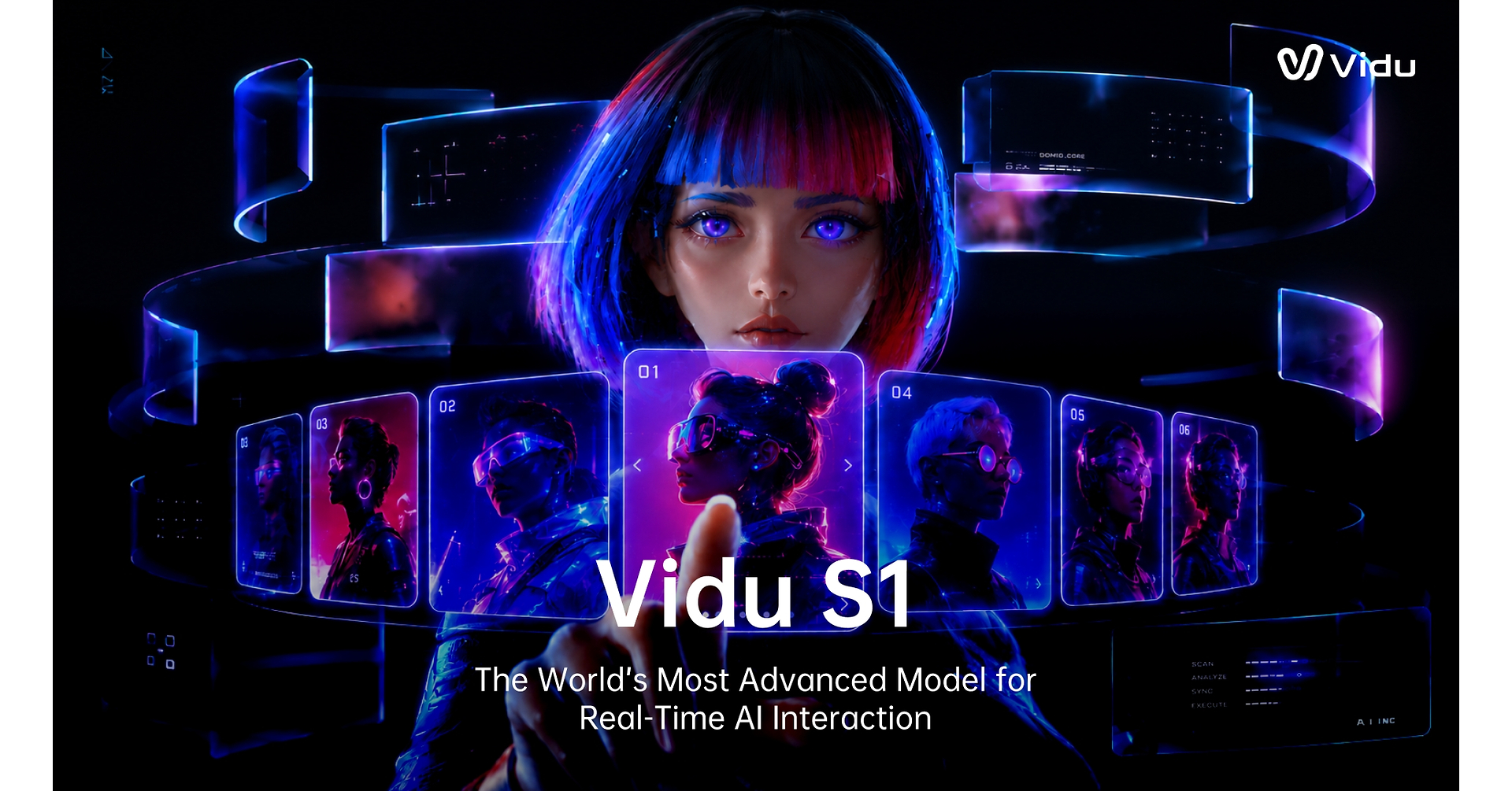
ShengShu Technology launched Vidu S1, a “real-time interactive” AI video foundation model enabling continuous, voice-guided character conversations rather than fixed-length clip generation. The system targets video-call-quality performance at 540P (960x540) and 25 FPS (up to 42 FPS) and is designed to run on consumer-grade GPUs, aiming to lower hardware requirements for live interactive video. It also supports creating interactive characters from a single image with customizable voice control and is now publicly available via an API platform for developers.
This is more of a capability milestone than an investable revenue inflection. The near-term winner is any platform that can distribute interactive avatars inside an existing user loop; the model itself matters less than whoever owns engagement, identity, and billing. That points to consumer social / gaming layers like META, SNAP, and RBLX rather than stand-alone model vendors, because the moat shifts from generation quality to distribution, moderation, and retention.
The second-order loser is the “AI video as compute sink” thesis. If real-time interaction can run on consumer GPUs, the market may need to mark down some of the assumed scarcity premium around hosted inference and premium cloud GPU utilization for this use case. That does not mean less AI spending overall; it means a larger share of value accrues to workflow/app layers while infrastructure monetization per interaction could be lower than bullish sell-side models imply.
The bigger risk is not technical demonstration but adoption friction: identity rights, consent, abuse moderation, and latency at scale. Those are 1-3 month gating items for any commercialization, while the structural 6-18 month question is whether users want persistent agents enough to pay for them versus treating them as a novelty. If engagement falls after the first-session wow factor, the addressable market shrinks to gaming and creator tools, not broad consumer entertainment.
Contrarian view: the market may be underestimating how quickly incumbents can copy the feature and overestimating the standalone vendor’s pricing power. Real-time avatar control is likely to become a feature embedded in larger platforms, not a durable product category by itself. That argues for caution on chasing the private launch as a standalone catalyst and for preferring long incumbents with distribution over pure AI-video names.
AI-powered research, real-time alerts, and portfolio analytics for institutional investors.
Request DemoOverall Sentiment
mildly positive
Sentiment Score
0.35
Ticker Sentiment
