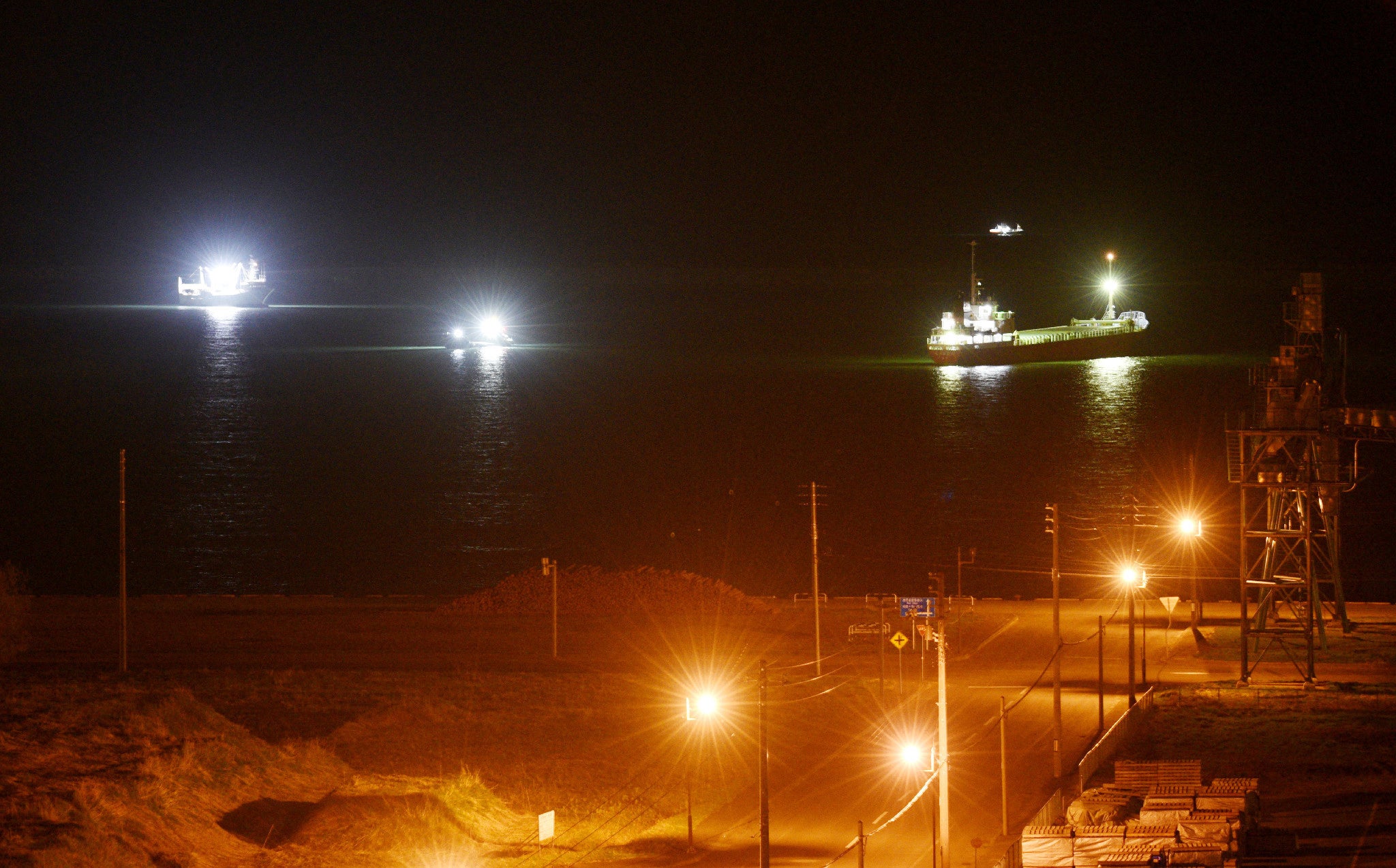
Japan was struck by a 7.7 magnitude earthquake off its northeastern coast, triggering tsunami warnings and the evacuation of more than 156,000 people across five prefectures. Bullet train services were halted, some motorways were closed, and roughly 100 homes lost power, though no casualties or major damage were reported. Authorities said the chance of a magnitude 8.0+ quake is now about 1%, roughly ten times normal, keeping the country on high alert.
The immediate market read is not the quake itself, but the forced repricing of Japan’s tail risk: when the state explicitly says the probability of a larger event is materially elevated, insurers, transport operators, utilities, and retailers with coastal exposure all face a higher short-dated volatility regime. The first-order shutdowns are manageable; the second-order effect is a jump in precautionary behavior that can persist for days to weeks, depressing throughput in ports, rail, and last-mile logistics even if physical damage stays limited.
The bigger issue is not direct loss severity but the convexity of Japanese balance sheets to repeated disruption. Airlines, rail, and industrials can absorb one event; a second event inside the same quarter would push them into capex deferrals, maintenance overruns, and working-capital drag as inventories are repositioned away from coastal nodes. That tends to favor domestic resilience spend—engineering, retrofitting, backup power, monitoring—while pressuring sectors that rely on just-in-time execution.
Consensus is likely underestimating how quickly “no major damage” can still become a macro drag through behavioral channels: households delay discretionary spending, tourists pause bookings, and corporates slow procurement until the alert window closes. The contrarian risk is that the selloff in Japan-exposed cyclicals overdiscounts a brief disruption if warnings are downgraded and grid/transport normalization is fast; in that case, the best trade is volatility, not directional beta.
For the global market, this is a modest risk-off catalyst rather than a systemic shock unless nuclear or port infrastructure issues emerge. The clean expression is to own insurers and resilience beneficiaries against transport/logistics names, with the main timing edge in the next 1-3 sessions while precautionary closures and headline risk remain elevated.
AI-powered research, real-time alerts, and portfolio analytics for institutional investors.
Request DemoOverall Sentiment
strongly negative
Sentiment Score
-0.55
Ticker Sentiment
