
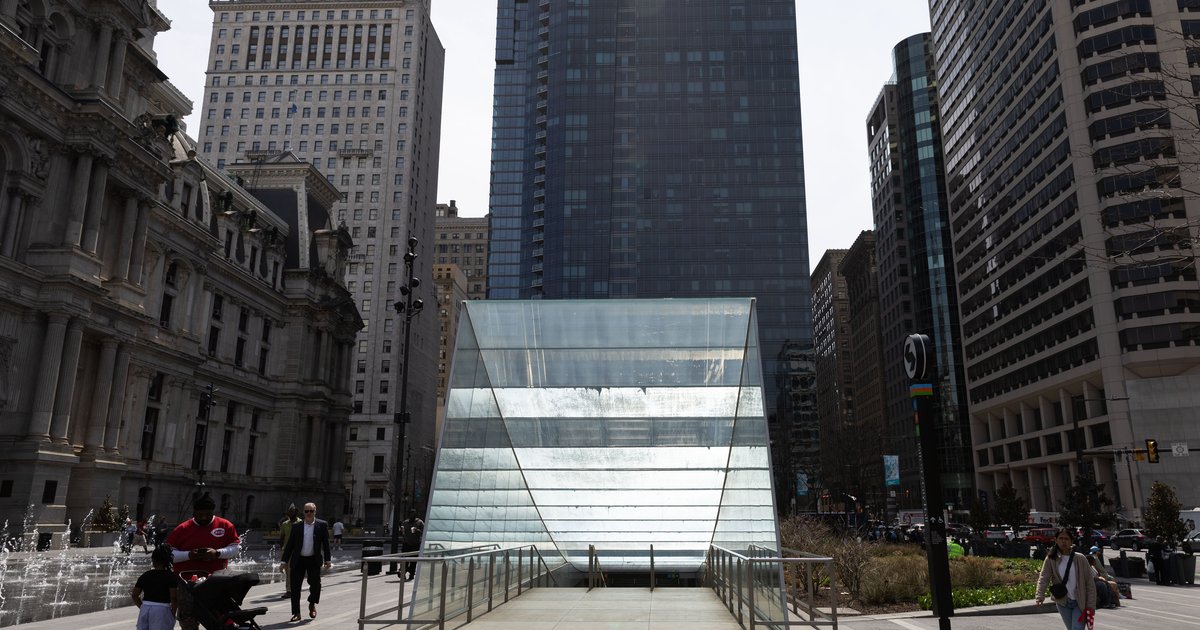
SEPTA will keep fares at $2.90 per ride for the six World Cup matches in Philadelphia after securing $5.5 million in federal grant funding to help cover an estimated $21.5 million in added summer service costs. By contrast, Boston and New Jersey transit agencies are planning steep event fares, with some tickets rising to as much as $80 in Boston and $150 from Penn Station to MetLife Stadium. The article is primarily a pricing and funding update for World Cup transportation, with limited direct market impact.
The market implication is less about headline fare policy and more about who gets forced to absorb volatility in a tightly scheduled, low-flexibility operating environment. Public transit agencies that can tap grant funding or political subsidy are effectively monetizing event demand through retained goodwill rather than direct pricing power, while agencies without that cushion are being pushed into one-shot revenue extraction that risks future political backlash and ridership erosion. That dynamic should keep investor focus on municipal finance quality, labor overtime exposure, and the probability that governments socialize event-related transport costs after the fact.
For consumer-adjacent venues and local hospitality, the biggest second-order effect is not the ticket price itself but the accessibility differential across host cities. Philadelphia’s relatively frictionless transit setup should support higher realized attendance conversion and more dispersed spending into restaurants, bars, and short-stay lodging versus cities where transport economics become a gating factor. Conversely, punitive event fares can shift demand toward private cars, ride-hail, or informal parking markets, which increases congestion and security costs and can impair the fan experience enough to pressure local organizer optics.
The contrarian read is that these pricing fights are likely a short-lived negotiating phase rather than a durable margin reset. Once event windows close, public pressure to moderate fares usually snaps back quickly, but the reputational damage to agencies that overcharged can persist into future capital and operating debates. The more investable angle is whether governments use the World Cup as precedent to force broader transit subsidy commitments, which would be mildly positive for operators with strong political support but negative for systems already stretched by labor costs and aging infrastructure.
For NYT specifically, the story is not fundamentally earnings-relevant, but it does reinforce the value of its sports/events coverage as a subscription retention lever around high-attention windows. The broader trade is in infrastructure and mobility names: the near-term winner is any operator or contractor that benefits from incremental public transit spend and security/logistics outlays, while the loser is any transit system with thin farebox recovery and weak state backstop. The key catalyst is the pricing decisions over the next 1-2 weeks, which will determine whether this becomes a one-time event issue or a template for future mega-event cost shifting.
AI-powered research, real-time alerts, and portfolio analytics for institutional investors.
Request TrialOverall Sentiment
neutral
Sentiment Score
0.05
Ticker Sentiment
