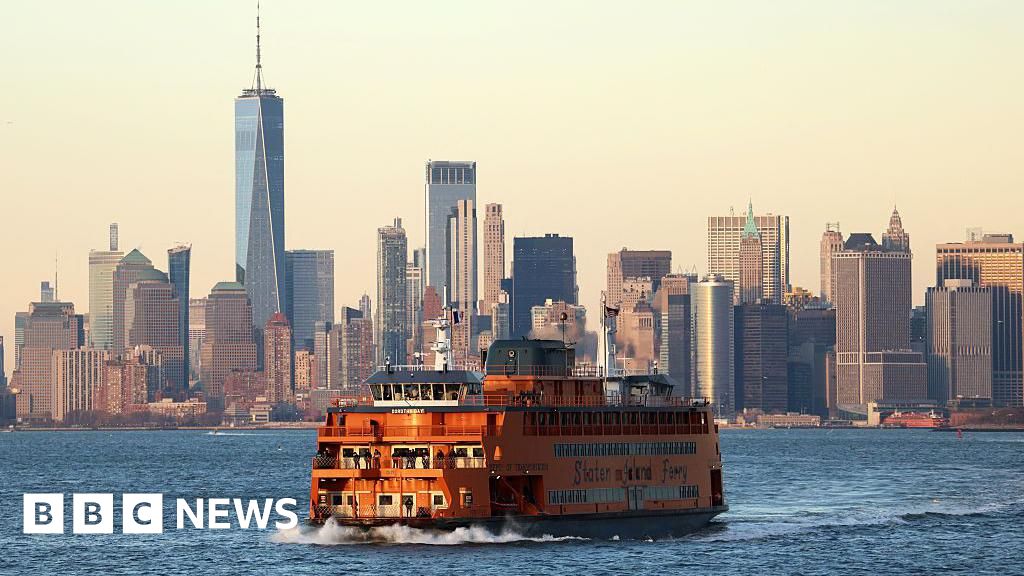
An explosion at a Staten Island shipyard injured at least 34 people and killed one civilian, including firefighters and first responders, with one fire marshal critically injured and one firefighter in serious condition. The fire began around 15:30 local time and the blast followed roughly 50 minutes later, but officials said the cause remains unknown. The incident is likely to create localized disruption through traffic delays and road closures, but broader market impact should be limited.
The immediate market impact is not in the accident itself, but in the higher probability of operational scrutiny across port-adjacent industrial assets: marine terminals, shipyards, tank farms, and contractors with exposed labor-force / safety records. In the near term, this tends to favor businesses with the cleanest EHS profiles and the lowest dependence on municipal or federal permitting, while raising the odds of work stoppages, inspection delays, and insurance re-pricing for smaller operators. The second-order effect is that even a single high-visibility event can tighten underwriting standards for a broad swath of waterfront infrastructure for 1-2 quarters, particularly where combustible materials, confined-space work, or aging metal structures are involved.
For transportation and logistics, the loser is any operator with meaningful exposure to the New York harbor ecosystem or similar constrained ports, because congestion risk rises faster than the direct physical damage. Expect a temporary but potentially meaningful hit to throughput, crane utilization, and drayage efficiency as authorities cordon off the area and review adjacent facilities; this can ripple into same-day delivery, regional freight, and short-sea shipping schedules over the next several days. Over a multi-month horizon, the bigger issue is cost inflation: more inspections, higher maintenance capex, and potentially higher liability premiums for terminals and contractors, which is structurally negative for small/mid-cap operators and only modestly negative for large diversified logistics firms.
The contrarian angle is that the headline may overstate systemic risk if the incident proves isolated and unrelated to any sector-wide defect. If investigators determine the event was idiosyncratic rather than procedural, the selloff in infrastructure-adjacent names should fade quickly, while the premium on “safe” operators could mean-revert. That creates an asymmetry: near-term downside if more sites are flagged, but a fast reversal if regulators stop at one-off enforcement rather than industry-wide remediation.
AI-powered research, real-time alerts, and portfolio analytics for institutional investors.
Request DemoOverall Sentiment
strongly negative
Sentiment Score
-0.80
From a defense and public-sector angle, this is a reminder that domestic industrial resilience is becoming a procurement theme, not just a policy theme. Firms selling inspection, fire suppression, environmental remediation, and port hardening solutions may see a modest pipeline uplift over the next 6-18 months if municipalities and port authorities respond with accelerated spending, even if the first-order headlines are negative. The key catalyst to watch is whether officials announce a broader port safety review; that would extend the event from a local tragedy into a sector-level compliance cycle.
