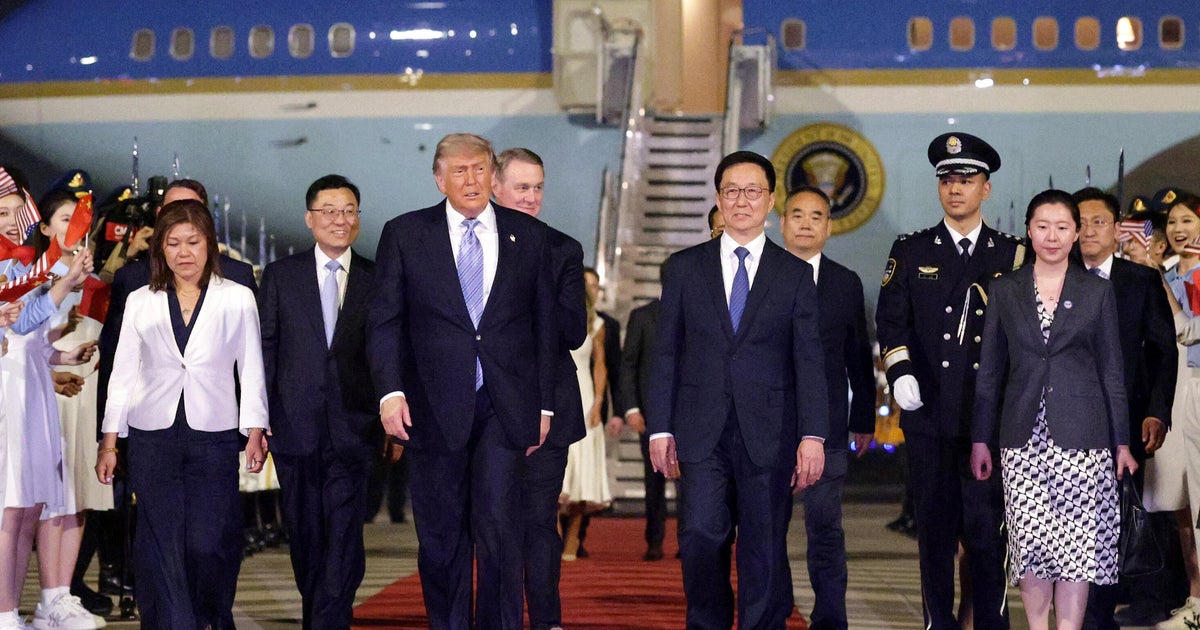
Trump traveled to China with a high-profile U.S. business delegation that includes Elon Musk, Jensen Huang, Tim Cook, Larry Fink and other major CEOs, highlighting $1 trillion in combined executive net worth and significant corporate exposure to China. The trip comes as Washington and Beijing negotiate over trade, AI and broader geopolitical issues, with Nvidia's China ties and access to the market a key focus. The news is largely factual, but it may matter for sentiment around U.S.-China trade and technology policy.
This is less a bilateral-policy headline than a signaling event that compresses geopolitical uncertainty into a few large-cap balance sheets. The first-order beneficiaries are the firms with the most China-sensitive revenue and the most to gain from licensing, customs, or export-control flexibility; the second-order beneficiary is the “China access premium” embedded in mega-cap hardware and platform names, which can re-rate before any policy is actually announced. The market will likely treat this as a short-term de-risking catalyst for semis and global franchises, but the real effect is on option value: a modest thaw can meaningfully improve expected earnings trajectories even if headline trade progress is thin.
The biggest asymmetry sits in NVDA and QCOM, where even small changes in regulatory friction can alter addressable demand and product mix. For NVDA, the upside is not just incremental China shipments; it is the possibility that customers front-load orders and re-enter planning cycles, which can pull demand forward by 1-2 quarters. But that same dynamic raises reversal risk if Washington re-tightens export rules or Beijing uses procurement delays as leverage, making the trade more suitable through calls than outright stock if you want convexity without absorbing policy whiplash.
Apple is a slower-burn beneficiary: the path is less about near-term unit growth and more about preserving ecosystem share, carrier relationships, and supply-chain optionality. A China détente also helps suppliers and logistics-adjacent names indirectly by reducing the probability of manufacturing re-routing and tariff-driven inventory distortions. Conversely, domestically oriented or policy-insensitive names in the group are less compelling from a pure catalyst standpoint; the main market error would be to extrapolate diplomatic optics into a durable tariff unwind.
The contrarian takeaway is that the setup may be over-interpreted as bullish for the whole basket, when in reality it is highly uneven. The likely winner is not broad-market exposure but a narrow set of names with direct China revenue and high policy beta, while any broad “peace dividend” in cyclicals is probably overstated unless there is a follow-through on export controls, tariffs, or licensing. If talks disappoint, the unwind can be fast because positioning will have chased the headline before evidence of durable change arrives.
AI-powered research, real-time alerts, and portfolio analytics for institutional investors.
Request DemoOverall Sentiment
neutral
Sentiment Score
0.05
Ticker Sentiment
