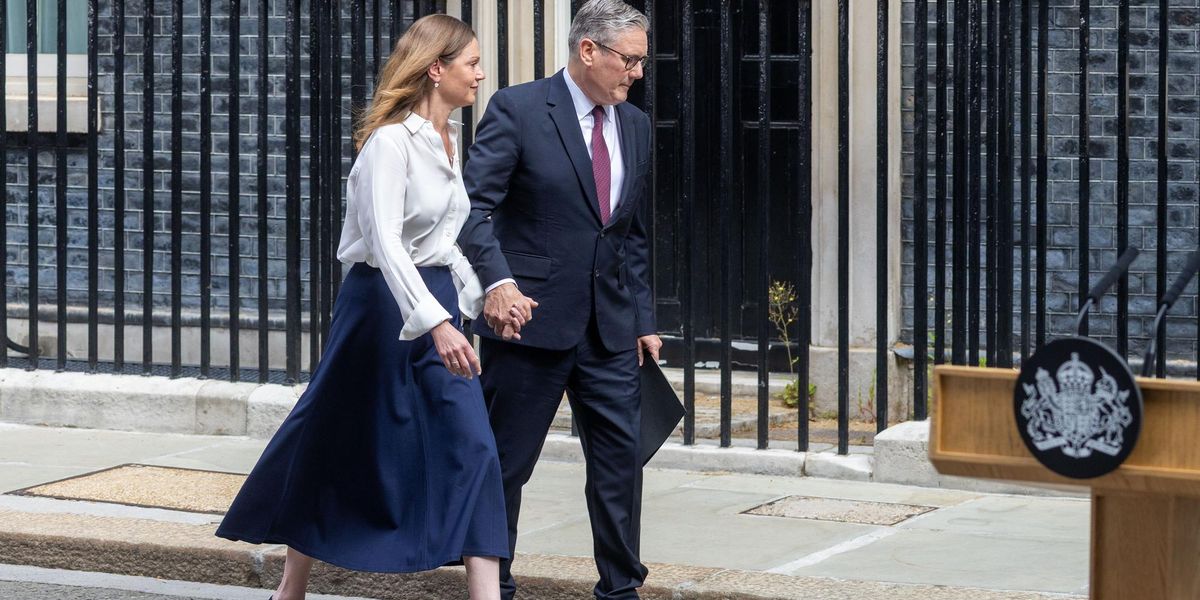
Sir Keir Starmer resigned as Labour leader and UK prime minister, with Andy Burnham expected to replace him after an internal party contest. The article highlights a tight fiscal backdrop, including national debt at 94% of GDP, pressure to raise defense spending, and continued funding for Ukraine, all of which constrain policy options. It also flags a likely pivot toward a more Trump-aligned peace approach in Europe, though Labour's anti-Trump stance could limit how far that shift goes.
The market implication is less about the personality swap in Downing Street than a forced repricing of UK fiscal priorities. A leadership change that improves polling but tightens the political constraint set tends to widen the gap between rhetoric and implementation: investors should expect more noise around welfare, defense, and Ukraine funding, but fewer credible multi-year savings measures because Labour’s internal coalition is likely to punish visible austerity faster than bond markets do. That creates a short-lived “competence premium” for UK risk assets if Burnham is seen as more effective than Starmer, but the longer-run arithmetic still points to higher supply of gilts unless growth surprises meaningfully.
The second-order effect is on the sovereign curve, not just headlines. If the new leadership pivots toward a U.S.-aligned peace posture, the most immediate market beneficiary is duration: even a modest reduction in future defense-related outlays can improve medium-dated gilt supply expectations and ease term premium. The bigger move would come if the market starts to believe that political capital is being spent on domestic services rather than external commitments; that scenario supports a flattening bias as front-end policy credibility improves while long-end issuance risk falls only gradually.
The geopolitical overlay is asymmetric. A warmer line to Washington would likely be read as a de-escalation signal for Europe more broadly, which is supportive for UK real assets and domestic cyclicals if household sentiment improves. The counterpoint is that any visible break with the anti-Trump wing of Labour could trigger an internal revolt, which would shorten the policy runway and keep UK risk premia elevated; in that case the market would trade the leader’s honeymoon, not the policy shift.
The contrarian view is that the consensus may overestimate how much fiscal room can be created by a Ukraine reset. The real budget relief from foreign policy is small relative to the structural drag from weak growth and politically protected spending, so the trade is not “peace equals fiscal fix” but rather “peace buys time.” If that time is not used to deliver credible supply-side reform, gilts and sterling can still underperform once the initial political relief fades.
AI-powered research, real-time alerts, and portfolio analytics for institutional investors.
Request DemoOverall Sentiment
mildly negative
Sentiment Score
-0.25
