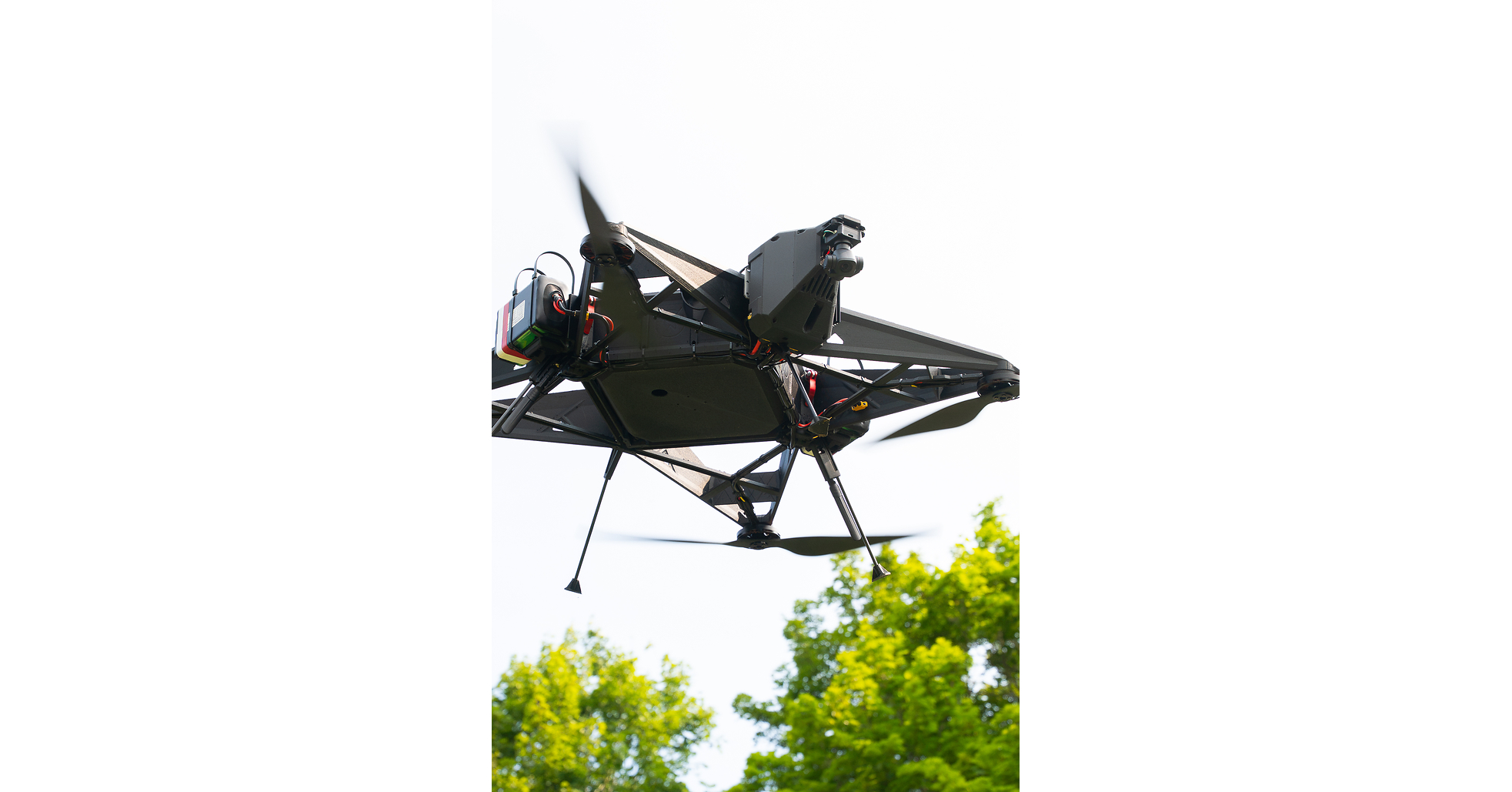
BQP and Modovolo announced a milestone integration of BQPhy into Modovolo’s UAV design pipeline, claiming quantum-inspired simulation compresses tens of thousands of simulations into a fraction of the usual development time by eliminating trial-and-error bottlenecks. Modovolo used BQPhy to optimize patent-pending 3D-printed propellers, aiming for a major improvement in performance-to-cost metrics, including higher flight time and payload lift capacity. Overall, the news is positive on technology adoption and competitive differentiation but appears more product/process-focused than earnings or broader market-moving.
This is more important as a signal on design-cycle compression than as evidence of an investable moat. If the workflow is real and repeatable, the economic winner is whoever can turn faster simulation into faster field iteration and manufacturing learning curves; that favors scaled drone/defense operators over pure software narrators. For public comps, the nearest beneficiaries are UAV names with recurring procurement and manufacturing leverage (AVAV, KTOS, RTX), while the only plausible losers are niche CAE/simulation vendors if buyers conclude cheaper optimization can be commoditized.
The market should be skeptical because the claimed edge is still upstream of revenue, certification, and production yield. In the next 1-3 months, the key catalyst is not the press release but whether there is a third-party benchmark, repeat order, or measurable improvement in unit economics; absent that, this is venture-marketing, not a public-equity repricing event. Over 6-18 months, the more durable effect may be broader: cheaper design iteration can lower barriers to entry in small UAVs, increasing competition and pressuring gross margins unless the incumbent owns manufacturing or distribution.
Contrarian view: consensus may be overpricing the ‘quantum’ label and underpricing the fact that incumbents already have entrenched CAD/CFD stacks, test ranges, and certification pathways. The real moat is likely data + manufacturing process control, not solver speed, so the burden of proof is on conversion from prototype performance to scalable production. Falsifiers include no follow-on customer wins, no independent validation, or evidence that incumbent toolchains can replicate the same gains with existing HPC budgets.
AI-powered research, real-time alerts, and portfolio analytics for institutional investors.
Request DemoOverall Sentiment
mildly positive
Sentiment Score
0.35
Ticker Sentiment
