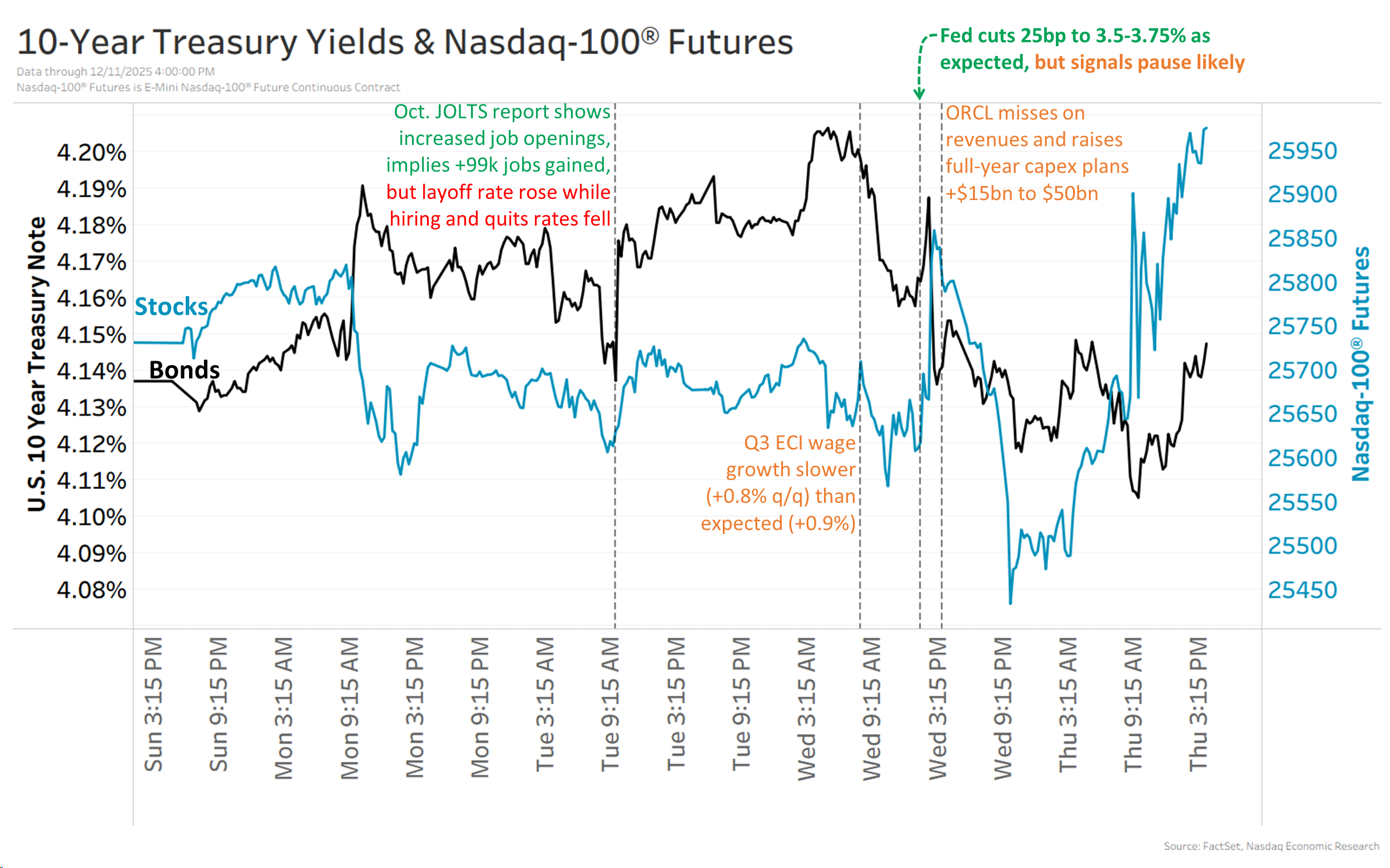
The Fed cut rates 25 bps for a third straight meeting to 3.75% but signaled a likely pause, citing a weak labor market and forecasting stronger 2026 GDP (2.3% vs. 1.7% in 2025), slower core inflation (2.5% vs. 3.0%), slightly lower unemployment (4.4% vs. 4.5%) and only one additional cut (markets expect two), underscoring a modest divergence with market expectations; concurrently Oracle missed revenue and operating income targets while boosting full‑year capex by over 40% to $50 billion, renewing investor concern that heavy AI spending may pressure near‑term profitability and delay returns on AI investments. Markets were muted for the week—Nasdaq‑100 and 10‑year yields were roughly flat—leaving investors to weigh Fed guidance against elevated corporate AI capex when positioning ahead.
The Federal Reserve cut the fed funds rate 25 basis points for the third straight meeting to 3.75% but signaled a likely pause thereafter, forecasting stronger real GDP in 2026 (2.3% vs. 1.7% in 2025), slower core inflation (2.5% vs. 3.0%), and modestly lower unemployment (4.4% vs. 4.5%); the Fed expects one additional cut while markets price two, creating a modest policy divergence that dampens the chance of near-term easing-driven rallies. Oracle missed on revenue and operating income while increasing full-year capital expenditures by over 40% to $50 billion, a large jump framed as AI investment that renews investor concern about the timing of returns from elevated capex. Market reaction was muted—Nasdaq-100 and the 10-year Treasury were roughly flat for the week—and the article-level sentiment is mildly negative (score -0.25) with ORCL sentiment more negative (-0.6), indicating skepticism about near-term profitability. Given a market-impact score of 0.35, investors should treat upcoming labor-market and inflation releases plus corporate earnings as the likely catalysts that will determine whether heavy AI spending translates into sustainable revenue and margin expansion.
AI-powered research, real-time alerts, and portfolio analytics for institutional investors.
Overall Sentiment
mildly negative
Sentiment Score
-0.25
Ticker Sentiment
